
Russia tells WHO no plague cases in Irkutsk after lab worker’s death
Darya Shipilova’s death from pneumonia of unknown origin triggered quarantines, contact tracing and international concern over possible pneumonic plague; WHO says the risk to the general population remains low
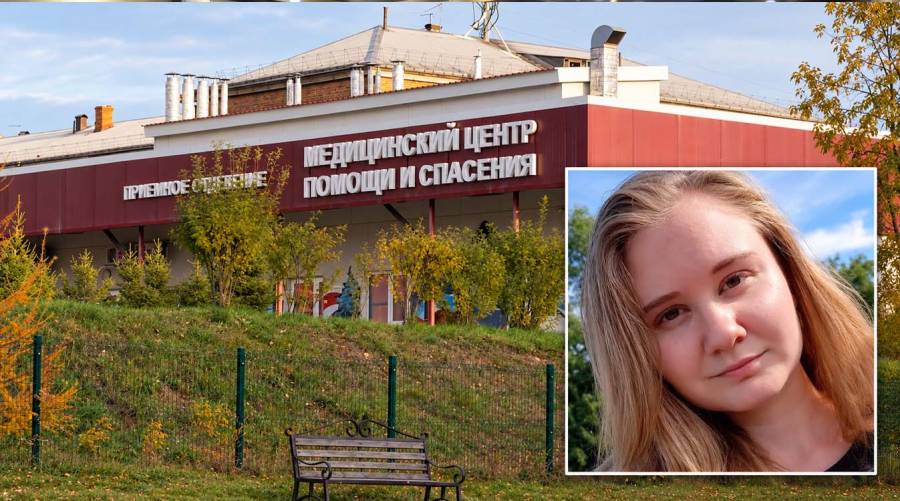
GENEVA: Russian authorities have told the World Health Organization (WHO) that no cases of plague have been recorded in the Siberian city of Irkutsk after the death of a laboratory worker at an anti-plague research institute, the latest development in a case that has prompted quarantines, contact tracing and international concern.
WHO spokesperson Christian Lindmeier said at a Geneva briefing on Tuesday that Russia had responded to a WHO request for information by stating that no case of the disease had been recorded in Irkutsk. Russian authorities also said they had identified people who had been in contact with the deceased laboratory worker and that tests for dangerous infectious pathogens had returned negative results.
The statement, however, does not by itself resolve the central question surrounding the case: what caused the death of the 28-year-old laboratory worker, Darya Shipilova?
Reuters reported that it could not immediately establish whether the Russian authorities’ negative test results also applied to Shipilova herself or whether plague had definitively been ruled out in her case. The Russian diplomatic mission to the United Nations in Geneva did not immediately respond to a request for comment.
The WHO has said that, based on the information available so far, the risk to the general population appears low.
How the concern began
The alarm centres on Shipilova, a laboratory worker at the Irkutsk Anti-Plague Research Institute of Siberia and the Far East, a facility specialising in research involving plague and other infectious diseases.
Russian and international media reports identified Shipilova as a 28-year-old laboratory technician. She was reportedly admitted to hospital in the nearby town of Shelekhov on September 29 after developing a severe respiratory illness and died during the night of October 1-2, with October 2 widely reported as the date of death. Russian authorities have officially described the illness as pneumonia of unknown aetiology, meaning that the cause of the pneumonia had not been established.
The circumstances surrounding how she became ill quickly became the focus of intense speculation.
One unconfirmed account circulating in local and Russian media said Shipilova may have accidentally broken a test tube containing Yersinia pestis, the bacterium that causes plague, while working at the institute. Another reported possibility was that she had recently travelled to the neighbouring Republic of Buryatia on work-related business and could have been exposed there.
Neither explanation has been officially established.
Russia’s Federal Service for Surveillance on Consumer Rights Protection and Human Wellbeing, known as Rospotrebnadzor, said its investigations had found no evidence of an accident involving pathogenic microorganisms at the institute. It also said expanded testing of material from Shipilova did not identify microorganisms associated with her professional activities.
That distinction is crucial: the existence of a reported laboratory accident has not been independently established, and neither has plague been confirmed as the cause of Shipilova’s death.
Why the Buryatia report added to the concern
The reported possibility of exposure during travel added another layer of uncertainty.
Buryatia, a Russian republic bordering the Irkutsk region and close to Mongolia, is among areas where plague has a natural presence in wildlife. Unconfirmed reports said Shipilova had recently travelled there for work.
Alexei Tsydenov, head of the Republic of Buryatia, initially wrote on social media that a woman in neighbouring Irkutsk had possibly died from plague. He later clarified his statement, while also saying that the woman had not entered Buryatia.
The conflicting accounts — a possible laboratory exposure on one hand and a possible travel-related exposure on the other — have remained unresolved.
Quarantine measures followed the death
Although the diagnosis was not confirmed as plague, Russian authorities responded with extensive precautionary measures.
Around 200 people who had potentially been in contact with Shipilova were reported to have been placed under medical observation or quarantine. Earlier reports put the number of people under observation at about 189 or nearly 200.
Sections of the hospital in Shelekhov where Shipilova was treated were cordoned off, while staff at the Irkutsk Anti-Plague Research Institute were isolated as authorities traced possible contacts.
Several hospitals in the region were also reported to have introduced quarantine measures, with restrictions reportedly affecting patients, visitors and staff. A maternity hospital in Irkutsk introduced additional precautions, including temperature checks and mask requirements, although reports stressed that the measures were precautionary and followed uncertainty surrounding the possible infection.
At one point, local authorities also issued and later removed public advice relating to travel around Shelekhov after unofficial reports of a possible plague case circulated.
The response extended beyond hospitals. An aluminium plant in Shelekhov introduced a mask requirement for workers as a precaution, while several public events in Irkutsk were reportedly cancelled.
Russia’s top health officials moved in
The seriousness of the precautionary response was underscored by the arrival of Anna Popova, head of Rospotrebnadzor and Russia’s chief sanitary doctor, who travelled to the Irkutsk region and took part in an emergency meeting of the regional sanitary and anti-epidemic commission.
Igor Kobzev, governor of the Irkutsk region, urged residents to remain calm and said all identified contacts had been placed under medical observation.
Kobzev said that, at the time of his statement, none of the identified contacts was showing signs of illness and laboratory tests had returned negative results.
Russia’s health authorities also said there had been no new reports of illness among staff at the anti-plague institute in the days following Shipilova’s death. Rospotrebnadzor said no infectious diseases had been reported among institute staff over the preceding 10 days and that extensive testing had not found microorganisms connected to Shipilova’s work.
By Tuesday, Elena Sofina, deputy head of the Shelekhov district, said that the “dangerous diagnosis” had not been confirmed and that about 60% of those placed under precautionary quarantine had already been released.
Why plague was considered in the first place
The concern is understandable because of where Shipilova worked and the nature of the disease being investigated.
Plague is caused by the bacterium Yersinia pestis, which is naturally maintained among small mammals and their fleas. Humans can become infected through infected flea bites, direct contact with infected tissues or materials, or inhalation of infectious respiratory particles in cases of pneumonic plague.
There are three principal clinical forms: bubonic, septicaemic and pneumonic plague.
Bubonic plague is the most common form and typically causes painful swollen lymph nodes, or buboes. Septicaemic plague occurs when the infection spreads through the bloodstream. Pneumonic plague affects the lungs and is the form that raises the greatest concern for person-to-person respiratory transmission.
Pneumonic plague can progress rapidly. WHO says symptoms can appear as soon as 24 hours after infection and that untreated pneumonic plague can be fatal, while early diagnosis and appropriate antibiotics can lead to recovery. Laboratory testing is required to confirm infection.
That makes a suspected case at an institution handling plague pathogens a situation in which authorities would be expected to investigate aggressively even before a diagnosis was confirmed.
Plague is endemic in parts of Siberia — but human cases are rare
The presence of plague in the region does not mean that an outbreak is underway.
Plague remains naturally endemic in parts of Siberia and the Russian Far East, where Yersinia pestis circulates among wildlife and their fleas. Human infection, however, is rare.
Before the current incident, Russia’s most recent confirmed human plague case was reported in 2016, when a 10-year-old boy in the Altai Republic contracted plague after contact with a marmot killed by his grandfather while hunting. He survived after receiving treatment.
Globally, plague also continues to occur, particularly in parts of Africa. WHO says that during 2019-2025, most reported human plague cases occurred in the Democratic Republic of the Congo and Madagascar.
The WHO’s role and Russia’s latest response
The international dimension grew as WHO sought information from Moscow.
Under the International Health Regulations (IHR), countries have obligations to notify and respond to WHO regarding events that may constitute a public-health emergency of international concern. In this case, WHO sought clarification from Russian authorities about the situation.
On Tuesday, Russian authorities told WHO that there were no plague cases in Irkutsk.
Lindmeier said Russia had identified contacts of the deceased woman and reported negative test results for dangerous infectious pathogens. However, Reuters noted that it remained unclear whether those results definitively ruled out plague in Shipilova herself.
That leaves an important distinction between “no cases detected among contacts” and “the cause of the laboratory worker’s death has been established.”
The first has been communicated by Russian authorities. The second remains unresolved in the information publicly available.
What the United States has said
The case has also drawn attention in Washington.
The US State Department said it was closely monitoring the situation together with the Centers for Disease Control and Prevention (CDC) and other agencies. US officials urged Russian authorities to share accurate information quickly and openly.
US President Donald Trump also offered assistance to Russia, while US Secretary of State Marco Rubio confirmed that Washington was monitoring the case. Kremlin spokesman Dmitry Peskov expressed appreciation for the offer of help, although it was not immediately clear whether Moscow intended to accept it.
The international attention reflects the unusual combination of circumstances: a fatal unexplained pneumonia in a worker at a specialist plague institute, precautionary quarantines involving a large number of contacts, uncertainty over the source of infection and the possibility — still unconfirmed — of pneumonic plague.
What is known — and what is not
At this stage, several facts are established by official statements and consistent reporting:
- A 28-year-old laboratory worker identified as Darya Shipilova died after developing severe pneumonia.
She worked at the Irkutsk Anti-Plague Research Institute of Siberia and the Far East.
Russian authorities officially describe the illness as pneumonia of unknown aetiology.
People who had contact with her were identified and placed under medical observation or quarantine.
Russian authorities say tests among contacts have not identified plague.
Rospotrebnadzor says it found no evidence of a laboratory accident involving pathogenic microorganisms.
WHO says Russia has reported no plague cases in Irkutsk.
WHO has assessed the risk to the general population as low based on the information currently available.
But several questions remain unanswered:
- Was Shipilova infected with Yersinia pestis?
- Was there any laboratory accident?
- Did she have a relevant exposure during travel?
- What exactly caused the fatal pneumonia?
- And critically, do the negative test results reported by Russian authorities definitively exclude plague in Shipilova herself?
Those questions are why the case remains under international observation despite Russia’s latest assurance to WHO.
Why the distinction matters
The current evidence does not establish a plague outbreak in Irkutsk.
It also does not establish that Shipilova died from pneumonic plague.
What it does establish is that a laboratory worker at a specialist anti-plague institute died from severe pneumonia of undetermined origin, prompting authorities to identify and monitor contacts and take extensive precautionary measures.
For the wider public, the WHO’s assessment is reassuring: based on the information currently available, the general public-health risk appears low.
At the same time, the unresolved cause of death means the investigation remains important. In an event involving a pathogen capable of respiratory transmission, confirmation of the cause — rather than speculation about it — is the key to determining what happened, whether anyone was exposed and whether any further measures are necessary.
For now, Russia says there are no plague cases in Irkutsk. The WHO says the general risk is low. But the question of what killed Darya Shipilova remains open.
Stay connected with Medical News Pakistan
CLICK HERE TO FOLLOW the official Medical News Pakistan WhatsApp Channel for verified global medical breakthroughs, FDA approvals, healthcare innovations, clinical research updates, public-health developments and important medical news affecting Pakistan and the world.

Advertisement
E-PAPER
Trending
Popular
Global life expectancy rebounds, but healthy years lag behind
-
Scientists discover new human blood ...
04:49 PM, 2 Oct, 2026 -
Obesity linked to 229 diseases, may ...
05:28 PM, 21 Sep, 2026 -
Pakistan’s Dr. Misha Tanveer takes ...
04:03 PM, 16 Sep, 2026 -
Calorie deficit for weight loss: How to ...
06:00 PM, 24 Aug, 2026
Follow us on Facebook
Follow us on Twitter
Copyright ©2026 Medical News. All Rights Reserved.