
WHO warns cholera deaths are rising as meningitis vaccination shows major gains
Cholera deaths climbed 30% in 2025 despite fewer reported cases, while vaccination has cut meningococcal serogroup A disease by more than 99% in vaccinated populations, according to the latest WHO global update
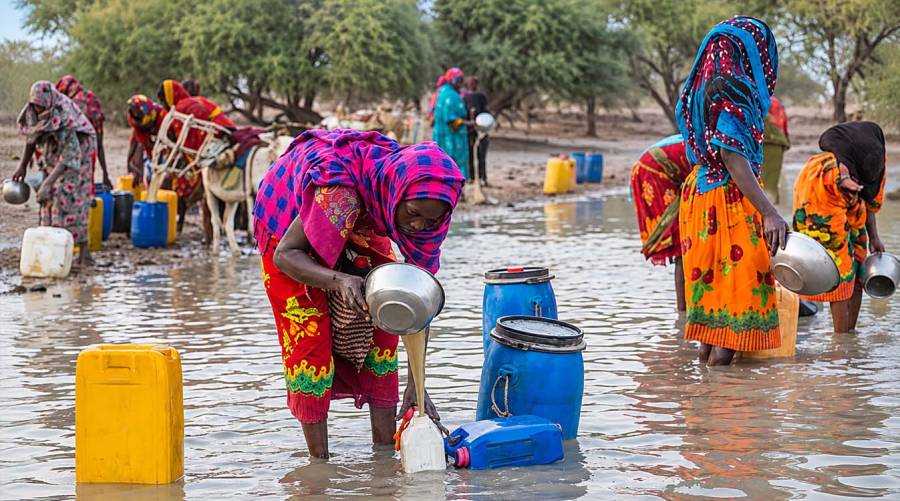
GENEVA: Global surveillance data show a sharply contrasting picture for three epidemic-prone bacterial diseases, with cholera deaths rising to their highest reported annual level since 1999, major gains against meningococcal meningitis through vaccination, and plague continuing to require sustained surveillance and rapid outbreak response.
The findings were released by the World Health Organization (WHO) in its latest global update on cholera, meningitis and plague, published alongside the Weekly Epidemiological Record.
The data highlight a critical public-health lesson: having effective prevention and treatment tools does not automatically prevent deaths when people lack safe water and sanitation, vaccination coverage remains uneven, disease surveillance is weak, or patients cannot reach appropriate care quickly.
Cholera deaths rose even as fewer cases were reported
The most concerning development is cholera.
In 2025, 47 countries reported 451,499 cholera cases and 7,870 deaths to WHO, representing a 30% increase in reported deaths compared with 2024.
The 2025 death toll was the highest number of annual cholera deaths reported to WHO since 1999. Yet the number of reported cases was lower than the previous year.
WHO cautioned that these figures should not be interpreted as the true global burden of cholera. They represent cases and deaths reported through national surveillance systems, while the actual burden is believed to be substantially higher because many infections are never reported or diagnosed.
Seven countries — Angola, Bangladesh, the Democratic Republic of the Congo, Nigeria, South Sudan, Sudan and Yemen — accounted for around 90% of all reported cholera cases and deaths globally in 2025.
The WHO African Region carried the largest burden, recording a 34% increase in reported cases and a 58% increase in deaths compared with 2024.
For global health authorities, the disparity between reported cases and deaths is particularly important because it can signal gaps in surveillance, access to treatment and the ability of health systems to detect and manage severe disease.
Why cholera can become deadly so quickly
Cholera is an acute diarrhoeal infection caused by the bacterium Vibrio cholerae. It is primarily transmitted when people consume food or water contaminated with faecal matter, making access to safe drinking water, sanitation and hygiene central to prevention.
Most people with cholera develop mild or moderate illness and can be treated with oral rehydration solution. Severe disease, however, can cause rapid and potentially fatal dehydration if treatment is delayed.
WHO reported that more than one in five reported cholera deaths in 2025 occurred outside health facilities.
Among patients who reached health facilities, the global case fatality rate remained below 1%, a level WHO identifies as consistent with adequate case management. However, the fatality rate exceeded 1% in 12 countries during 2025.
The figures point to a critical divide in cholera survival: treatment can be highly effective, but it must reach patients in time.
Cholera vaccine supply is expanding
Global production of oral cholera vaccine (OCV) doses more than doubled between 2022 and 2025, rising from approximately 30 million doses to about 80 million doses annually.
In 2025, the International Coordinating Group (ICG) on Vaccine Provision approved 71 million doses for use in countries affected by cholera, including 20 million doses for preventive vaccination.
Preventive oral cholera vaccination resumed earlier in 2026 after being suspended for more than three years because of severe constraints on global vaccine supply.
But vaccines are only one part of the response. WHO continues to emphasise safe water, sanitation and hygiene, disease surveillance, risk communication, community engagement and access to quality treatment as interconnected components of cholera control.
Meningitis shows what vaccination can achieve
The global picture becomes markedly different when looking at meningococcal meningitis.
Bacterial meningitis remains a major public-health concern, particularly across Africa's meningitis belt, a region stretching from Senegal to Ethiopia where epidemics occur periodically.
In 2025, 24 of the 26 countries in the meningitis belt reported 21,526 suspected cases and 971 deaths to WHO, corresponding to a reported fatality rate of 4.5%.
Among countries that reported comparable data for both years, suspected meningitis cases declined by 5.9% compared with the previous year.
Meningitis refers to inflammation of the tissues surrounding the brain and spinal cord. Although several organisms can cause the disease, bacterial meningitis is particularly serious, with the potential to cause death and long-term neurological complications.
One of the clearest successes has come from vaccination against meningococcal disease.
One meningitis strain has fallen by more than 99%
Since the introduction of the meningococcal A conjugate vaccine in 2010, cases caused by meningococcal serogroup A have fallen by more than 99% among vaccinated populations.
WHO also reports that no confirmed serogroup A case has been reported since 2017 in countries that introduced the vaccine.
The achievement demonstrates the potential of sustained vaccination programmes to dramatically reduce epidemic disease.
But meningococcal A is not the only threat.
A newer vaccine offering broader protection against five meningococcal serogroups, known as Men5CV/MMCV, is now being introduced in the African meningitis belt.
The vaccine is being used both for outbreak response through the International Coordinating Group on Vaccine Provision and in preventive vaccination campaigns.
In 2025, Niger became the first country to conduct a nationwide campaign using Men5CV/MMCV.
The broader vaccine strategy forms part of international efforts under the Defeating Meningitis by 2030 roadmap.
Plague remains rare but demands vigilance
Plague attracts far less attention globally than cholera or meningitis, but WHO continues to classify it as an epidemic-prone bacterial disease requiring surveillance.
Plague is caused by Yersinia pestis and usually circulates among animals, with transmission to humans often occurring through infected fleas.
Between 2019 and 2025, 10 countries reported suspected human plague cases to WHO, while six reported confirmed cases.
During that period, 3,847 suspected cases and 423 deaths were reported, corresponding to a reported case fatality rate of 11%.
Most reported cases came from the Democratic Republic of the Congo and Madagascar, where plague remains endemic in some areas.
WHO cautioned that plague can also occur in countries that do not report cases, while annual case numbers can vary according to the timing, location and scale of outbreaks.
Why animal surveillance matters
Because plague circulates in animal populations, monitoring rodents and other susceptible animals can provide an important early warning.
WHO says continued surveillance of animal populations, combined with rapid outbreak response, is essential for detecting plague early, limiting transmission and preventing outbreaks from becoming larger.
This approach also reflects a broader public-health principle: diseases that move between animals and humans cannot always be controlled through human healthcare systems alone.
Three diseases, three different public-health lessons
Taken together, WHO's latest data show why infectious-disease control requires more than a single intervention.
For cholera, safe water, sanitation, hygiene, vaccination, surveillance and rapid treatment remain fundamental. The rise in reported deaths despite fewer reported cases also shows why surveillance gaps and delayed access to care can have serious consequences.
For meningitis, vaccination has demonstrated that sustained prevention can virtually eliminate transmission of a targeted meningococcal serogroup in populations with effective vaccine programmes. The expansion of Men5CV/MMCV could broaden that protection.
For plague, continued monitoring of animal populations and rapid detection of human infections remain essential because the disease persists in endemic areas and can cause serious illness when outbreaks occur.
The warning behind the numbers
WHO's latest report is therefore not simply a catalogue of disease statistics.
The cholera figures show that a preventable and treatable infection can still cause thousands of deaths when basic infrastructure, surveillance and timely healthcare access fall short.
The meningitis figures demonstrate how vaccination can fundamentally change the trajectory of an epidemic disease.
And the plague data show why diseases that appear relatively rare still require functioning surveillance systems.
Dr Chikwe Ihekweazu, Executive Director of WHO's Health Emergencies Programme, said the increase in cholera deaths underscores the challenge ahead and highlighted targeted investment in safe water, sanitation and hygiene, together with stronger surveillance, community engagement, vaccination and access to quality care.
The common thread is clear: prevention works, but only when the systems needed to deliver it reach the people and communities at risk.
Key figures at a glance
- 7,870 — reported global cholera deaths in 2025
- 30% — increase in reported cholera deaths from 2024
- 451,499 — reported cholera cases in 2025
- 47 — countries reporting cholera cases and deaths to WHO
- 90% — approximate share of reported cholera cases and deaths concentrated in seven countries
- 80 million — approximate annual global oral cholera vaccine production in 2025
- 21,526 — suspected meningitis cases reported across 24 African meningitis-belt countries in 2025
- 971 — reported meningitis deaths in those countries
- More than 99% — decline in meningococcal serogroup A cases among vaccinated populations since introduction of the conjugate vaccine in 2010
- 3,847 — suspected human plague cases reported from 2019 to 2025
- 423 — plague deaths reported during the same period
WHO's latest global assessment ultimately points to two realities existing side by side: some of the world's most dangerous bacterial diseases remain capable of causing preventable deaths, while modern public-health tools can produce extraordinary gains when they are consistently deployed.
Stay connected with Medical News Pakistan
CLICK HERE TO FOLLOW the official Medical News Pakistan WhatsApp Channel for verified global medical breakthroughs, FDA approvals, healthcare innovations, clinical research updates, public-health developments and important medical news from Pakistan and around the world.

Advertisement
E-PAPER
Trending
Popular
Obesity linked to 229 diseases, may shorten life by 11 years, experts ...
-
Pakistan’s Dr. Misha Tanveer takes ...
04:03 PM, 16 Sep, 2026 -
Calorie deficit for weight loss: How to ...
06:00 PM, 24 Aug, 2026 -
Vaccine maker warns of wider TBE, ...
05:00 PM, 21 Aug, 2026 -
FDA authorizes first robot to draw ...
06:11 PM, 20 Aug, 2026
Follow us on Facebook
Follow us on Twitter
Copyright ©2026 Medical News. All Rights Reserved.