
DRAP issues safety alert over heart, epilepsy and sleep medicines in Pakistan
Pakistan's drug regulator has flagged specific batches of flecainide, modafinil and Mysoline as unregistered, warning of potential treatment failure and unknown safety risks. Authorities have ordered supply-chain surveillance as patients are urged to check their medicines.
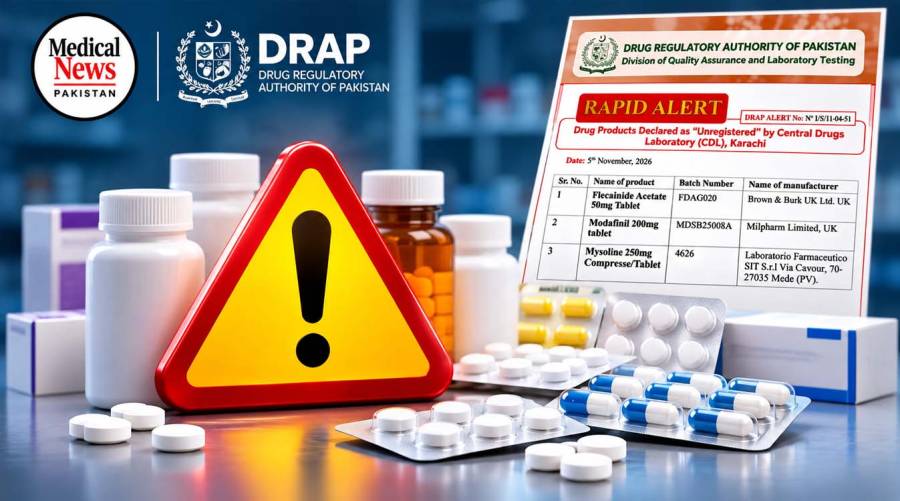
KARACHI: Patients in Pakistan taking medicines for serious heart rhythm disorders, epilepsy and excessive sleepiness have been urged to check their medication supplies after the Drug Regulatory Authority of Pakistan (DRAP) issued a safety alert involving three drug products declared unregistered by the Central Drugs Laboratory (CDL), Karachi.
The alert identifies specific batches of Flecainide Acetate 50mg, Modafinil 200mg and Mysoline 250mg, medicines associated with the management of potentially serious cardiac arrhythmias, sleep-related conditions and epileptic seizures.
DRAP has warned that the identified products may pose significant public health concerns, including therapeutic failure, adverse health consequences and exposure to unknown safety risks.
The regulator has instructed provincial drug control authorities to intensify surveillance throughout the pharmaceutical supply chain and confiscate the affected products.
For patients who depend on these treatments, the warning creates an immediate need to verify medicine packaging and batch numbers while ensuring that any necessary treatment changes are made under medical supervision.
The critical distinction is that the alert concerns three identified drug batches, not every medicine used to treat heart conditions, epilepsy or sleep disorders.
Which heart, epilepsy and sleep medicines are covered by DRAP's warning?
The rapid alert, issued through DRAP's Division of Quality Assurance and Laboratory Testing, identifies three products whose samples were declared unregistered by the Central Drugs Laboratory in Karachi.
The medicines, affected batch numbers and manufacturers named in the official document are:
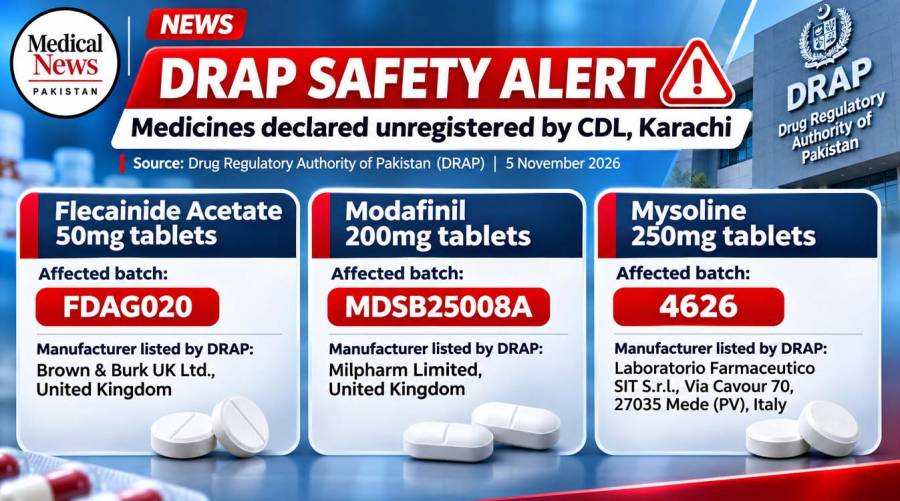
DRAP's findings concern the identified samples and products. The notice does not establish that all medicines containing the same active ingredients, or all batches associated with the named manufacturers, are affected.
Patients and pharmacists should therefore verify the complete product details rather than relying on the medicine name alone.
Flecainide: Why the heart medicine warning matters
Flecainide Acetate 50mg, identified under batch FDAG020, is an antiarrhythmic medicine used to treat certain abnormal heart rhythms.
Flecainide works by influencing electrical conduction within the heart, helping control selected rhythm disturbances in patients for whom the treatment is clinically appropriate.
For individuals with cardiac arrhythmias, effective and consistent treatment can be critical. An ineffective or otherwise unsuitable medicine could leave an underlying rhythm disorder inadequately controlled.
DRAP's alert identifies the product associated with Brown & Burk UK Ltd., United Kingdom, as unregistered.
The warning does not establish that the medicine has caused harm to a patient, but the potential consequences of inadequate treatment make prompt verification important.
Patients taking flecainide should not abruptly stop or alter their prescribed treatment without medical advice. Anyone possessing the specified batch should contact their cardiologist or prescribing physician promptly to arrange a safe, appropriate alternative.
Mysoline: Particular concerns for patients with epilepsy
The second major patient-safety concern involves Mysoline 250mg, a medicine containing the active ingredient primidone.
Primidone is an anticonvulsant used to control certain types of epileptic seizures by reducing abnormal electrical activity in the brain.
DRAP has declared samples from batch 4626 unregistered. The manufacturer listed in the notice is Laboratorio Farmaceutico SIT S.r.l., located at Via Cavour 70, 27035 Mede (PV), Italy.
For people living with epilepsy, reliable access to appropriate medication is essential. A disruption in seizure-control treatment can have significant consequences, particularly for patients whose condition has remained stable on a prescribed regimen.
Abrupt discontinuation of primidone can worsen seizures. Consequently, patients who discover they possess the affected batch should urgently consult their treating neurologist or physician rather than stopping treatment independently.
A healthcare professional can assess the situation and arrange an authorised alternative, with any necessary adjustments made safely.
Modafinil: Sleep disorder medicine also identified
DRAP's alert additionally covers Modafinil 200mg tablets, batch MDSB25008A, with Milpharm Limited, United Kingdom, listed as the manufacturer.
Modafinil is a wakefulness-promoting medicine prescribed for excessive daytime sleepiness associated with conditions including narcolepsy.
It is also used in the management of excessive sleepiness associated with shift work sleep disorder and, alongside appropriate underlying treatment, obstructive sleep apnoea.
Although modafinil is sometimes discussed outside medical settings for its wakefulness-promoting effects, its legitimate clinical use requires appropriate prescribing and monitoring.
Patients using the identified 200mg batch should contact their pharmacist or prescribing physician to verify the product and obtain guidance on suitable treatment.
What risks has DRAP identified?
The Drug Regulatory Authority of Pakistan states that the use of the identified unregistered products may create serious safety and quality concerns.
The regulator's risk assessment highlights three potential consequences:
- Therapeutic failure: Treatment may not provide the intended clinical benefit, potentially allowing an underlying condition to remain uncontrolled.
- Adverse health consequences: Patients could experience harmful outcomes associated with the use of products whose regulatory status is not established.
- Unknown safety risks: There may be insufficient regulatory assurance regarding the products supplied to patients.
These concerns are especially important when medicines are used to manage heart rhythm abnormalities or seizures, where inadequate treatment may have significant clinical consequences.
However, unregistered does not automatically mean counterfeit, contaminated, substandard or proven ineffective.
The published alert specifically reports that the Central Drugs Laboratory declared the samples unregistered. It does not provide laboratory results demonstrating incorrect ingredients, contamination or a confirmed failure of the active pharmaceutical ingredients.
Nor does the notice identify any confirmed deaths, injuries or adverse reactions attributed to the three batches.
This distinction is important because patients need accurate information about potential risks without unnecessary alarm or the mistaken belief that all medicines in these treatment categories are unsafe.
DRAP orders provincial authorities to trace, confiscate affected stock
Following the laboratory findings, DRAP has directed the regulatory field forces of provincial drug control departments to undertake surveillance activities throughout the medicine supply chain.
The purpose is to identify and confiscate the specified products.
The action brings pharmacies, drug distributors, wholesalers, hospital medicine stores and other pharmaceutical supply points into focus.
Healthcare establishments and pharmacy operators have been urged to exercise increased vigilance, particularly where the affected products may have been purchased, stored, distributed or dispensed.
For pharmacists and healthcare institutions, checking existing inventories against the identified product names, strengths and batch numbers is an important precaution.
Suspected matching stock should be isolated from dispensing and referred to the relevant regulatory authorities.
The notice does not specify the total number of medicine packs affected, the geographical distribution of the batches or how many patients may have received them.
It also does not establish whether all affected stock has been recovered.
These unanswered questions underline the importance of continued surveillance and timely communication with healthcare professionals and patients.
What should patients do if they have any of these medicines?
DRAP has advised consumers not to use the identified products and to contact a physician or healthcare provider if they have experienced any problem associated with taking them.
Patients who discover a matching batch should seek prompt professional guidance, particularly if they depend on the medicine for heart rhythm control or epilepsy.
The immediate priority is to avoid using the identified stock while arranging an appropriate medical treatment plan—not to abandon essential treatment without supervision.
Patients should carefully examine the packaging, including the medicine's name, strength, batch number and manufacturer information.
Where a batch number matches the alert, the packaging and purchase details should be retained to assist verification and any regulatory investigation.
Individuals who develop concerning symptoms, experience unexpected deterioration in their condition or suspect an adverse drug reaction should obtain medical assessment. Severe symptoms such as chest pain, fainting or a prolonged seizure require emergency care.
DRAP has also reminded the public to purchase therapeutic products only from licensed pharmacies and other authorised retail outlets.
Consumers should check the apparent authenticity and condition of their medicines and consult a pharmacist or healthcare professional whenever they have doubts.
Doctors, pharmacists asked to report adverse reactions
DRAP has directed healthcare professionals to remain alert to potential problems involving the identified products.
Doctors, pharmacists and healthcare institutions are requested to report suspected adverse reactions or medicine-quality concerns to the National Pharmacovigilance Centre or the relevant Provincial Pharmacovigilance Centres.
Reports can help regulators identify patterns of concern, investigate suspected product problems and take further action where appropriate.
Patients may also report suspected medicine-related problems through the relevant DRAP safety-reporting channels.
Why medicine registration matters in Pakistan
Drug registration is a fundamental component of pharmaceutical regulation because it establishes whether a specific medicinal product has obtained the necessary authorisation for the market.
In Pakistan, DRAP oversees the regulation of therapeutic goods, including the registration and regulatory monitoring of pharmaceutical products.
The registration process involves evaluation under applicable regulatory requirements, helping establish the basis on which medicines may be marketed and supplied.
A product found to be unregistered raises concerns about whether the required regulatory authorisation and associated safeguards are in place.
However, regulatory registration status is distinct from laboratory confirmation of a medicine's composition, potency or clinical performance.
The distinction is especially relevant to DRAP's latest notice, which identifies three specific drug products as unregistered without publishing evidence that every medicine containing the corresponding active ingredients is defective.
For healthcare professionals, the incident reinforces the need for reliable pharmaceutical procurement, accurate stock records, batch traceability and immediate action when official regulatory warnings are issued.
For patients, it is a reminder that buying medication from licensed sources and retaining packaging information can support their safety when a medicine alert emerges.
A drug safety warning patients should not overlook
DRAP's latest alert brings together three very different therapeutic areas—cardiology, neurology and sleep medicine—but the underlying patient-safety issue is the same.
People receiving regular prescription treatment need confidence that the medicines supplied to them have the necessary regulatory authorisation and come through legitimate pharmaceutical channels.
The regulator's warning is intended to prevent the continued circulation and use of the identified unregistered products.
Patients should check the three affected batch numbers, seek medical guidance where necessary and avoid using the specified stock.
For those whose health depends on continuing treatment for abnormal heart rhythms or epilepsy, prompt contact with a healthcare professional is essential to prevent an unsafe interruption in care.
The key message is straightforward: identify the medicine, verify the batch and act on the official safety warning without making unsupervised changes to treatment.
Stay ahead of critical drug safety alerts
A medicine safety alert can be especially important when it concerns treatment that someone in your family depends on every day. Timely, verified information can help patients and healthcare professionals recognise affected products and take appropriate precautions.
CLICK HERE TO FOLLOW Medical News Pakistan's official WhatsApp channel for important DRAP alerts, pharmaceutical recalls, patient-safety warnings and other significant healthcare developments in Pakistan.
Stay informed, check the facts and share important drug safety information with the people who may need it most.

Advertisement
E-PAPER
Trending
Popular
Pakistan pharma sector profits rise 11% in 1QFY27 as margins reach ...
-
37 AKU researchers join world's top 2% ...
06:47 PM, 16 Oct, 2026 -
Could a heart calcium scan reveal your ...
01:36 PM, 13 Oct, 2026 -
One blood test, 50+ cancers: What the ...
05:27 PM, 12 Oct, 2026 -
WHO rules out weight-loss drugs for ...
04:38 PM, 9 Oct, 2026
Follow us on Facebook
Follow us on Twitter
Copyright ©2026 Medical News. All Rights Reserved.