
Eye, ear and oral-care products declared spurious, adulterated and unregistered
Sindh Drug Testing Laboratory identifies nine products, including four mouthwashes and two eye preparations, with serious quality and regulatory deficiencies. Reports reveal missing active ingredients, sharply reduced medicinal concentrations, contamination concerns and absent registration details.
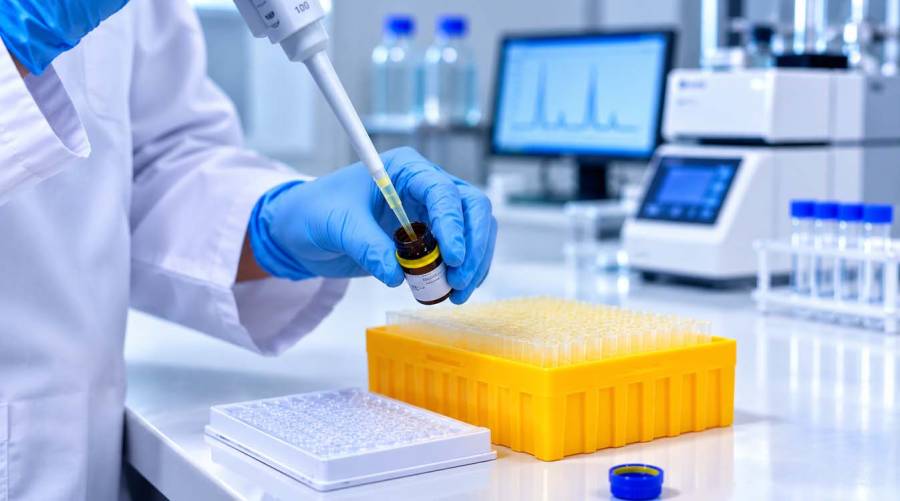
KARACHI: The Sindh Drug Testing Laboratory has declared nine healthcare products spurious, adulterated and unregistered after laboratory examinations uncovered serious deficiencies in their composition, quality and regulatory identification. The products include eye preparations, ear creams, four mouthwashes and a skin lotion, raising patient-safety concerns extending from eye and ear treatment to everyday oral hygiene.
The findings are documented in nine laboratory test reports dated October 28, 2026, signed by Syed Adnan Rizvi, Provincial Government Analyst and Director of the Sindh Drug Testing Laboratory, Karachi.
The documents identify seven products as purportedly originating from LC Care Pharma and two ear creams as products of New Herbal Care.
In addition to problems with medicinal ingredients, all nine reports contain a striking observation: the examined samples were described as containing "filthy and putrid substances."
The laboratory also recorded that the products' labels did not bear manufacturing licence or registration numbers, raising further questions about their regulatory status.
All nine questioned products identified
Unlike earlier accounts that did not identify the individual products, the laboratory documents name all nine preparations examined.
Eye products
• Baby Eye Spray
• Tobramycin Ophthalmic Solution
Oral-care products
• Total Care Mouthwash
• Denziclor Mouthwash
• Anti Plaque Mouthwash
• Happy Tooth Kids Mouthwash
Skin preparation
• Magic Lotion
Ear preparations
• Baby Care Ear Cream
• Vital Ear Cream
The first seven products are recorded under LC Care Pharma, while the two ear creams are listed under New Herbal Care.
The inclusion of four mouthwashes significantly broadens the public-health implications of the investigation. The products were marketed for oral hygiene, plaque control, gum-related complaints and, in one case, use by children.
Two mouthwashes found without declared benzydamine
Among the most concerning results were those involving Total Care Mouthwash and Denziclor Mouthwash, both described as containing benzydamine hydrochloride and chlorhexidine gluconate.
Benzydamine is used in certain oral preparations to relieve pain and inflammation, while chlorhexidine is an antiseptic used to control oral bacteria.
Total Care Mouthwash, laboratory report No. 3307/2026, showed no detectable benzydamine hydrochloride despite a stated concentration of 0.15%.
The same sample contained only 0.01969% chlorhexidine against the declared 0.2%, equivalent to approximately 9.85% of the stated amount.
Similarly, Denziclor Mouthwash, report No. 3303/2026, contained no detectable benzydamine hydrochloride. Its chlorhexidine concentration was measured at 0.0148% against a stated 0.2%, or approximately 7.4% of the declared strength.
Both samples were classified as spurious, adulterated, substandard and unregistered.
These findings raise concerns that consumers relying on the questioned mouthwashes may not receive the anti-inflammatory or antiseptic effects represented by their formulations.
Children's mouthwash, anti-plaque product also questioned
Two further oral-care preparations were identified in the laboratory investigation.
Anti Plaque Mouthwash, report No. 3309/2026, contained an identified chlorhexidine gluconate concentration of 0.0148% weight per volume.
Happy Tooth Kids Mouthwash, report No. 3308/2026, contained chlorhexidine gluconate at 0.0134% weight per volume.
Both reports classified the samples as spurious, adulterated and unregistered.
The reports do not specify a corresponding declared concentration for these two products, so the exact percentage shortfall cannot be established from the laboratory tables alone.
The inclusion of Happy Tooth Kids Mouthwash is particularly important because its packaging markets the product for children. Products intended for younger consumers require careful scrutiny of composition, intended use, labelling and safety.
The laboratory findings do not establish that children were harmed or even that the questioned products reached consumers. Nevertheless, the results warrant attention from pharmacists, dental practitioners, retailers and parents.
Eye preparations contained substantially reduced antibiotic concentrations
The investigation also identified serious quality concerns involving two preparations containing tobramycin, an antibiotic used to treat certain bacterial eye infections.
Tobramycin Ophthalmic Solution, report No. 3306/2026, contained 0.02532% tobramycin against a declared 0.3%.
This represented only 8.44% of the stated concentration, substantially below the 90–110% acceptance range recorded in the laboratory report.
Baby Eye Spray, report No. 3304/2026, also had a detected tobramycin concentration below the stated 0.3%. The report's figures require clarification because its recorded concentration and calculated percentage are not internally consistent.
The reports classified both products as spurious, adulterated, substandard and unregistered.
Inadequate antibiotic concentrations in an ophthalmic preparation can compromise treatment effectiveness. Patients using ineffective eye medication may experience persistent symptoms, delayed recovery or worsening of the condition for which the treatment was prescribed.
Because eye products may come into contact with sensitive tissues, the laboratory's observations concerning product cleanliness and quality add to the seriousness of the findings.
Two ear creams listed under a different producer
Another significant detail emerging from the documents is that the two questioned ear creams are not listed under LC Care Pharma.
Baby Care Ear Cream, report No. 3302/2026, and Vital Ear Cream, report No. 3301/2026, are identified in the laboratory records as products of New Herbal Care, Karachi.
Both samples were described as translucent ointments containing lidocaine, a local anaesthetic.
The laboratory detected lidocaine at 0.0479% weight per weight in Baby Care Ear Cream and 0.0774% in Vital Ear Cream.
However, the reports do not provide corresponding declared concentrations against which these measurements can be compared.
Both samples were classified as spurious, adulterated and unregistered, with the laboratory additionally recording contamination concerns and absent manufacturing licence and registration numbers on their labels.
These results establish serious regulatory and quality concerns, although the available quantitative information does not establish the precise strength discrepancy, if any, for either ear preparation.
Magic Lotion also fails laboratory assessment
The ninth product, Magic Lotion, was examined under report No. 3305/2026.
The sample, identified as a pink liquid, contained calamine, an ingredient commonly associated with topical preparations used to soothe irritated skin.
The laboratory classified the sample as spurious, adulterated, substandard and unregistered.
Its report also records contamination-related concerns and the absence of manufacturing licence and registration details on the label.
The numerical assay entries for calamine require clarification before an exact concentration shortfall can be reported. Nevertheless, the laboratory's final classification identifies the sample as failing its assessment.
Magic Lotion is the only product among the nine for which the laboratory report explicitly provides a batch number: 002.
Reports describe contamination concerns across all nine samples
One of the most consequential findings is the laboratory's repeated description of the samples as containing filthy and putrid substances.
This observation appears in the remarks section of all nine reports.
The documents do not identify the individual contaminants, provide microbiological counts or specify whether particular disease-causing organisms were detected. Accordingly, the findings should not be interpreted as proof of contamination by a named pathogen.
However, the laboratory's recorded observations raise serious concerns about manufacturing hygiene, product integrity and the suitability of the questioned preparations for their intended use.
These concerns are particularly relevant to ophthalmic preparations and products used by children or on sensitive parts of the body.
Missing registration, batch information raises traceability concerns
The laboratory reports also identify significant gaps in the products' regulatory and identification details.
All nine record manufacturing licence numbers and registration numbers as not mentioned.
The absence of those numbers from the submitted product labels is an important regulatory warning sign.
Traceability is another concern.
Eight reports record the relevant batch numbers as either not mentioned or nil. Only Magic Lotion is assigned a specific batch number in the documents.
Batch identification is important for isolating questionable products, determining their origins and conducting effective recalls or market surveillance.
Where reliable batch information is unavailable, it may become more difficult for pharmacies, regulators and consumers to distinguish affected stock from other products.
Findings forwarded for regulatory, legal proceedings
The nine laboratory reports identify the Provincial Inspector of Drugs, Karachi Central, as the submitting authority.
Each report records referral to the Provincial Inspector of Drugs, Karachi Central, and the Secretary of the Sindh Quality Control Board, Karachi.
The findings were recorded under the Drugs Act, 1976, and the reports also reference the DRAP Act, 2012.
The classifications and referrals establish that the laboratory identified serious concerns requiring regulatory consideration. They do not constitute a final judicial determination of responsibility.
The available documents do not establish the quantities manufactured or distributed, the number of retail outlets that may have stocked the products, or whether any patients experienced harm.
They also do not include responses from LC Care Pharma or New Herbal Care to the findings.
What patients, pharmacists and dental professionals should do
The laboratory findings underline the importance of purchasing medicines and medicated oral-care products through licensed and authorised sources.
Pharmacists, healthcare facilities and dental professionals should check their inventories against the nine product names identified in the laboratory documents and seek clarification from the relevant drug-control authorities where questionable stock is found.
Consumers who possess any of the identified products should consult a qualified pharmacist or healthcare professional before using them and seek appropriate guidance regarding verification or replacement.
Anyone experiencing continuing symptoms, an unexpected reaction or worsening eye, ear, skin or oral-health problems after using a questioned product should obtain medical or dental assessment.
Because several reports lack usable batch identifiers, consumers should not assume that packaging appearance alone can establish the authenticity or regulatory status of a product.
The investigation highlights a wider patient-safety issue: medicines and medicated healthcare products must contain their declared ingredients in appropriate quantities, meet acceptable quality standards and be supported by reliable regulatory and manufacturing records.
For patients relying on eye and ear treatments, and for families purchasing oral-care products, failures in those safeguards can mean delayed treatment, ineffective care and avoidable health risks.
Stay informed with Medical News Pakistan
CLICK HERE TO FOLLOW Medical News Pakistan's official WhatsApp channel for verified healthcare developments, medicine safety alerts, medical innovations, clinical research and important public-health updates.

Advertisement
E-PAPER
Trending
Popular
37 AKU researchers join world's top 2% scientists list for 2026
-
Could a heart calcium scan reveal your ...
01:36 PM, 13 Oct, 2026 -
One blood test, 50+ cancers: What the ...
05:27 PM, 12 Oct, 2026 -
WHO rules out weight-loss drugs for ...
04:38 PM, 9 Oct, 2026 -
Global life expectancy rebounds, but ...
03:17 PM, 5 Oct, 2026
Follow us on Facebook
Follow us on Twitter
Copyright ©2026 Medical News. All Rights Reserved.