
Bangladesh battles world’s worst measles outbreak, nearing 1,000 deaths as vaccine gaps fuel spread
Bangladesh records more than 166,000 suspected cases as hospitals struggle with measles and dengue surges, while experts warn immunity gaps are leaving children vulnerable
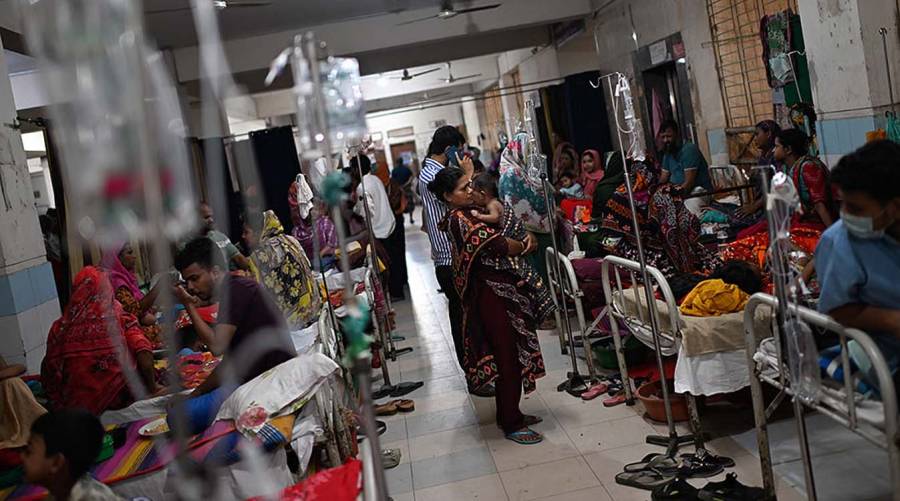
DHAKA: Bangladesh is facing its worst measles outbreak on record, with 999 suspected and confirmed measles-related deaths reported since March, as a prolonged surge in infections overwhelms hospitals and exposes major gaps in childhood immunisation.
More than 166,000 suspected measles cases have been recorded since the outbreak emerged in March, including 19,835 laboratory-confirmed infections, according to Health Ministry data cited by Reuters. More than 146,000 suspected patients have been hospitalised, placing additional pressure on a healthcare system already confronting a sharp rise in dengue cases.
The scale of the outbreak marks a dramatic reversal for a country that had made substantial progress toward measles elimination. Bangladesh had maintained measles vaccination coverage around or above the 95% level recommended by the World Health Organization (WHO) for much of the past decade, although coverage declined during the COVID-19 pandemic and subsequent disruptions.
Nearly 1,000 deaths as measles spreads across Bangladesh
Of the 999 measles-related deaths reported since March, 100 have been laboratory-confirmed as measles deaths, while the remainder are suspected cases, according to Health Ministry figures cited by Reuters.
The outbreak has affected children particularly heavily. WHO reported earlier in the outbreak that children under 5 accounted for the majority of cases, with substantial numbers occurring among children who were unvaccinated or had received only one dose of a measles-containing vaccine. Infants younger than 9 months face an additional vulnerability because they may become infected before reaching the age for routine measles vaccination.
WHO's April assessment found that the outbreak was already affecting 58 of Bangladesh's 64 districts, indicating widespread transmission across the country. The agency assessed the national risk as high because of ongoing transmission, large numbers of susceptible children and documented immunity gaps.
What went wrong with measles vaccination?
Health officials and infectious-disease experts cited by Reuters have pointed to disruptions in routine immunisation during 2024 and 2025, along with vaccine supply problems and changes to procurement policies.
Bangladesh Health Minister Sardar Md. Sakhawat Husain told parliament that procurement changes contributed to a vaccine shortage. A vaccination programme was also postponed in 2024, while a nationwide measles-rubella campaign planned for the following year was cancelled, according to the report.
The disruption created pockets of children with insufficient immunity, allowing measles transmission to accelerate.
The World Health Organization has similarly identified nationwide measles-rubella vaccine stockouts during 2024-2025, gaps in routine immunisation and the absence of regular nationwide supplementary measles-rubella campaigns since 2020 as important factors behind the growing pool of susceptible children.
Professor Mahmudur Rahman, an epidemiologist and former director of the Institute of Epidemiology, Disease Control and Research, told Reuters that Bangladesh had missed its measles elimination target because of vaccination gaps in 2024 and 2025.
He described the scale of child deaths and measles patients as unprecedented for Bangladesh and said closing immunity gaps, increasing vaccination coverage and strengthening public awareness were immediate priorities.
Emergency vaccination campaign reaches millions
Bangladesh has responded with a nationwide emergency measles-rubella vaccination campaign.
The campaign was launched in phases beginning in April, initially targeting children aged 6 months to under 5 years in high-risk areas before expanding nationwide. WHO, UNICEF and Gavi, the Vaccine Alliance, supported the government response.
The campaign initially targeted about 18 million children, while Health Ministry data cited by Reuters indicate that more than 19.7 million children have since been vaccinated.
The scale of the vaccination effort, however, has not immediately ended the outbreak. Experts say Bangladesh will need stronger routine immunisation, catch-up vaccination and sustained surveillance to close the immunity gaps that allowed transmission to accelerate.
UNICEF's mid-year assessment similarly found that the measles outbreak remained Bangladesh's most acute public-health emergency, with more than 100,000 suspected cases and 625 suspected deaths recorded by the end of June.
Hospitals overwhelmed as dengue adds to pressure
The measles crisis is unfolding alongside another major infectious-disease surge.
More than 45,000 people have been admitted to hospitals for dengue this year, according to Health Ministry data cited by Reuters. On Tuesday, dengue deaths reached nine in a single day, while hospital admissions climbed to 1,571, both reported as daily highs for the year.
The simultaneous outbreaks are stretching hospital capacity, particularly in Dhaka.
Dr. Nanda Dulal Saha, acting director of the state-run Shaheed Suhrawardy Medical College Hospital in Dhaka, told Reuters that the hospital had 60 beds designated for measles patients, but some patients were being treated on the floor.
The hospital, designed for approximately 1,350 patients, was caring for more than 2,350, he said. A shortage of paediatric saline was also complicating treatment.
The overcrowding reflects a wider problem: hospitals are being asked to manage a vaccine-preventable childhood disease outbreak while simultaneously absorbing rising numbers of patients with dengue.
Families struggle to find care
For families affected by the outbreak, the health crisis has translated into repeated hospital visits, treatment costs and uncertainty over access to care.
Nasima Begum, a 35-year-old house help, told Reuters that her 13-month-old son developed measles nearly two months ago. After failing to secure a bed at four hospitals, the child was eventually admitted and discharged after 10 days but continued to experience recurring fever.
Begum said her son had missed vaccination because he was sick. When the family later returned to a vaccination centre, they were told the vaccine was unavailable. Her four older children had received their routine vaccinations.
Another parent, Mohammad Ripon, said his eight-month-old daughter developed a rash and other measles-like symptoms shortly after being discharged from hospital. The family visited several facilities before seeking care at a hospital dedicated to measles patients.
The experiences illustrate how the outbreak is affecting families beyond the disease itself, with overcrowding and uncertainty making it harder for parents to obtain timely care.
Why measles remains a major threat
Measles is among the world's most contagious infectious diseases. It spreads through the air when an infected person coughs, sneezes or breathes, allowing the virus to move rapidly through communities where immunity is insufficient.
The disease can cause serious complications, particularly in young children and those who are malnourished or have weakened immune systems. Complications can include pneumonia, diarrhoea, hearing loss, blindness and encephalitis, and severe disease can lead to death.
Yet measles is also highly preventable through vaccination.
WHO recommends two doses of measles-containing vaccine through routine immunisation programmes. Maintaining high population immunity is critical because measles can spread rapidly once the number of susceptible people becomes large enough.
Bangladesh's measles progress under threat
The current outbreak is particularly significant because it follows years of progress.
WHO data show that Bangladesh substantially increased measles vaccination coverage over the past two decades, while confirmed measles incidence fell sharply. The recent decline in routine vaccination and interruption of supplementary campaigns, however, created conditions for the virus to regain ground.
WHO has also warned that the outbreak carries a risk of cross-border spread because of population movement between Bangladesh and neighbouring countries, including India and Myanmar. Major urban and transport hubs such as Dhaka, Chattogram, Sylhet and Cox's Bazar can facilitate transmission among people who are unvaccinated or inadequately vaccinated.
The emergency campaign has now reached millions of children, but the outbreak demonstrates how quickly years of immunisation gains can be threatened when routine vaccination systems develop gaps.
For Bangladesh, the immediate challenge is to stop transmission and prevent further deaths. The longer-term challenge is to restore consistently high routine immunisation coverage, close missed-dose gaps and ensure that vaccine supply remains reliable.
With measles and dengue simultaneously pushing hospitals toward capacity, the outbreak has become more than a vaccination problem. It is now a test of Bangladesh's ability to protect children through routine public-health services while responding to multiple infectious-disease threats at once.
Stay connected with Medical News Pakistan
CLICK HERE TO JOIN the official Medical News Pakistan WhatsApp Channel for verified global medical breakthroughs, FDA approvals, healthcare innovations, clinical research updates and the latest developments shaping medicine around the world.

Advertisement
E-PAPER
Trending
Popular
Pakistan’s Dr. Misha Tanveer takes air pollution research to Europe ...
-
Calorie deficit for weight loss: How to ...
06:00 PM, 24 Aug, 2026 -
Vaccine maker warns of wider TBE, ...
05:00 PM, 21 Aug, 2026 -
FDA authorizes first robot to draw ...
06:11 PM, 20 Aug, 2026 -
One blood test for multiple cancers ...
04:52 PM, 11 Aug, 2026
Follow us on Facebook
Follow us on Twitter
Copyright ©2026 Medical News. All Rights Reserved.