
Can AI predict drug trial failures before patients enroll?
Virtual-patient simulations are moving beyond drug discovery into clinical development. After one AI platform anticipated five of six high-profile trial outcomes — including Novartis’ del-desiran setback — pharma companies and regulators are asking whether predictive models can help prevent years of wasted investment and expose fewer patients to trials unlikely to succeed.
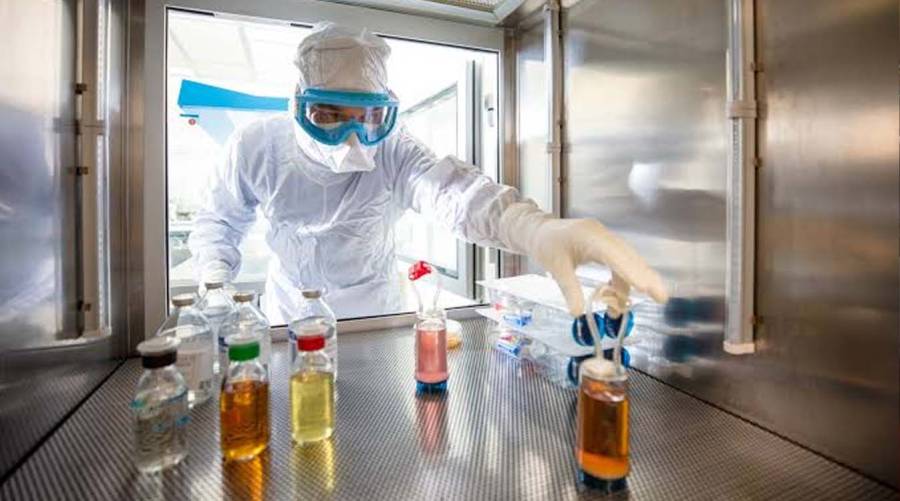
A drug expected to become a multibillion-dollar product failed a crucial Phase 3 test in September. An artificial intelligence platform had called the result weeks earlier.
That contrast has pushed an increasingly important question into pharmaceutical development: could AI identify clinical trial failures before companies spend years, billions of dollars and thousands of patient-hours discovering the same answer?
Novartis’ experimental del-desiran, being developed for myotonic dystrophy type 1, had been viewed as a potential commercial winner, with the company’s chief executive forecasting annual peak sales of around $5 billion. But the Phase 3 HARBOR study failed to show a statistically significant improvement on its primary endpoint. Novartis shares subsequently fell sharply, wiping about $30 billion from the company’s market value. Novartis confirmed on September 8 that HARBOR missed its primary endpoint, although secondary and exploratory analyses showed evidence of clinical activity. Novartis
What made the setback particularly striking was that BioinvestGPT, a Copenhagen-based artificial intelligence company, had predicted the failure in July.
Its virtual clinical trial model forecast that del-desiran would produce an insignificant clinical benefit compared with placebo. BioinvestGPT’s public trial database records the prediction as having been made 44 days before the September readout. BVCT Prediction Record | BioinvestGPT
That does not mean AI has solved clinical research.
But it shows why pharmaceutical companies are beginning to look beyond AI-designed molecules and towards AI clinical trial simulation, virtual patients and predictive modelling as possible tools for deciding which experimental medicines deserve to reach expensive human studies.
Why one failed drug trial can cost so much
Traditional drug development is built around human clinical trials.
Phase 1 studies generally begin with relatively small groups and focus heavily on safety. Phase 2 trials examine early evidence of efficacy while continuing safety assessment. Phase 3 studies are much larger, designed to provide the evidence regulators require before deciding whether a medicine should be approved.
The process can take years.
The global biopharmaceutical industry spends around $140 billion annually on human clinical testing, yet only about 12% of drug candidates entering clinical development ultimately reach regulatory approval, according to figures cited in the Reuters investigation.
That failure rate has remained stubbornly high despite decades of advances in biology, imaging, genomics and drug design.
AI companies argue that the industry may therefore be asking the wrong question.
Instead of focusing only on making clinical trials faster, they say pharmaceutical developers should identify more programmes that are likely to fail before those trials begin.
Francisco Beca, Chief Medical Officer at QuantHealth, an AI clinical-trial simulation company headquartered in Tel Aviv, put the challenge succinctly: the industry should be considering how to run fewer trials that are likely to fail, rather than simply accelerating every programme.
Some AI simulations can be completed in a month or less, compared with years for conventional clinical development.
How does a ‘virtual drug trial’ actually work?
The technology varies significantly between companies.
BioinvestGPT, co-founded in 2024 by Bragi Lovetrue and Idonae Lovetrue, says its platform uses DNA-sequencing information and biological modelling to construct a simulated human body matching the eligibility criteria of a particular clinical trial.
Researchers can then model how those virtual patients may respond to an experimental drug.
The aim is not merely to return a yes-or-no prediction. According to Bragi Lovetrue, the platform is intended to identify why a drug could be effective, ineffective or unsafe in a particular patient population.
QuantHealth takes a different approach, using real-world healthcare data and artificial intelligence to simulate patient-level responses to therapies. It has published simulation work involving ulcerative colitis and cholesterol-lowering drug trials.
Pharmaceutical companies can potentially use such modelling before committing major capital to a programme, while investors and drugmakers may also use it when assessing whether an acquisition target has a credible clinical pipeline.
That could make virtual trials relevant not only to medical research but also to some of the most consequential financial decisions in the pharmaceutical industry.
Five predictions right — and one important miss
BioinvestGPT shared prospective analyses of several major drug trials with Reuters in July, before their results were publicly known.
So far, according to Reuters, the platform was correct on five of six trial outcomes it had forecast. Reuters
Those included the failure of Novartis’ del-desiran, the positive outcome for Moderna and Merck’s experimental melanoma vaccine, limited clinical benefit from AstraZeneca and Ionis’ Wainua in a heart-disease study, the failure of Novo Nordisk’s ziltivekimab to reduce cardiovascular risk in one trial, and success for Vaxcyte’s VAX-31 pneumococcal vaccine.
Vaxcyte subsequently reported that VAX-31 met all prespecified primary endpoints in its pivotal OPUS-1 adult Phase 3 study. Vaxcyte, Inc.
But the sixth prediction is arguably just as important.
BioinvestGPT expected positive results from Novartis’ pelacarsen, a drug designed to reduce lipoprotein(a), or Lp(a), an inherited cardiovascular risk factor.
The prediction was wrong.
Novartis announced in September that pelacarsen's Phase 3 trial failed to reduce the risk of major cardiovascular events in the targeted patient population. Novartis
Bragi Lovetrue later said the model had incorrectly understood part of the drug’s biological mechanism because it failed to account adequately for genetically determined variation in lipoprotein particle size.
That error exposes one of the fundamental limitations of predictive AI in medicine.
A model can process enormous amounts of data, but if its biological assumptions are incomplete, a confident computational prediction can still be wrong.
Pharma investment in AI is soaring — but mostly before clinical trials
Investment in AI-enabled drug discovery reached $8.4 billion in 2025, up from $4.1 billion in 2023, according to McKinsey. McKinsey & Company
Yet much of that money has gone into areas where AI is already comparatively mature — particularly molecule design and early-stage drug discovery.
That is not necessarily where the industry’s biggest losses occur.
A beautifully designed molecule can still fail if researchers selected the wrong biological target, recruited the wrong patient population or misunderstood the disease mechanism.
Alex Devereson, Partner at McKinsey, told Reuters that pharmaceutical companies are beginning to “dip their toes” into AI-based clinical modelling, using internal systems and external partners to evaluate drug candidates before committing capital.
For now, however, predictive trial simulation remains an emerging tool rather than an established regulatory replacement for conventional evidence.
The next test: Biogen and Takeda
BioinvestGPT has already made predictions for upcoming studies whose results are expected before the end of 2026.
The platform predicts failure for two Phase 3 trials of Biogen’s litifilimab in systemic lupus erythematosus, the most common form of lupus.
It has also forecast disappointing results for Phase 2 studies of Takeda’s zasocitinib in Crohn’s disease and ulcerative colitis.
According to the AI model, both experimental drugs may be suboptimal for the particular patient populations being studied.
But the companies are not conceding that point.
Andy Plump, President of Research and Development at Takeda, said the TYK2 biological pathway targeted by zasocitinib was identified through human genetics, while machine learning was used to optimise the structure of the daily oral therapy.
Takeda has already sought U.S. approval for zasocitinib in plaque psoriasis and is studying it in Phase 3 for psoriatic arthritis.
Plump said he retains strong confidence in the mechanism and cautioned that AI is not yet capable of making definitive clinical predictions.
Diana Gallagher, Biogen’s Head of Clinical Development for Multiple Sclerosis, Immunology and Alzheimer’s, similarly said the company uses AI among a broad range of research tools.
She also raised a crucial methodological concern.
Because lupus has historically had a high clinical-trial failure rate and only a limited number of biologic therapies have been approved, an AI system trained heavily on historical data could potentially become biased towards predicting failure.
That is a familiar problem across medical artificial intelligence: models learn not only from biological reality, but also from the limitations and biases embedded in past datasets.
Regulators are beginning to explore simulation-based trials
The idea is also gaining attention in the regulatory sphere.
On September 30, the U.S. Department of Health and Human Services, through the Advanced Research Projects Agency for Health (ARPA-H), launched the Simulation-augmented, Real-time Platform Adaptive Seamless Trials (SURPASS) programme.
SURPASS aims to combine predictive computational models, common control groups, shared trial infrastructure and real-time analysis to evaluate drugs and biologics faster, at lower cost and potentially with fewer participants. ARPA-H
ARPA-H says clinical development today can take more than a decade, cost between $1 billion and $2 billion, and fail around 90% of the time. Its programme is exploring whether computational modelling and adaptive trial designs can enable earlier decisions about which therapies should continue.
That is an important distinction.
Regulators are not proposing that virtual patients simply replace real patients.
Rather, predictive modelling could increasingly influence how human trials are designed, which programmes advance and how many patients may ultimately need to be exposed to experimental treatments.
Could AI make failed human trials an ethical issue?
This may become the most consequential part of the debate.
Clinical trials necessarily involve uncertainty. That is why they are conducted.
But if predictive technologies become sufficiently reliable at identifying medicines with little chance of success, researchers may eventually face a new ethical question: when does it become unreasonable to expose patients to a study that advanced simulations strongly predict will fail?
Beca and other experts interviewed by Reuters stressed that human clinical trials will remain necessary.
No simulation can yet reproduce the full complexity of a living patient, including genetics, comorbidities, adherence, environmental exposures, biological variability and unexpected adverse events.
Yet Beca argues the ethical calculation could change as predictive accuracy improves.
Today, virtual trials are largely a decision-support tool.
By 2027, 2028 or 2029, he suggested, regulators and researchers may increasingly ask whether simulations should become part of the evidence considered before a conventional trial receives patients at all.
AI's biggest breakthrough may be knowing when not to proceed
Artificial intelligence has already transformed how pharmaceutical researchers search biological databases, design molecules and identify potential drug targets.
Clinical development could represent its next major frontier.
The early evidence remains too limited to conclude that virtual trials can reliably predict human outcomes across diseases and drug classes. BioinvestGPT’s five-of-six record is intriguing, but it is a small sample, while its pelacarsen miss demonstrates how easily incomplete biological assumptions can produce a wrong answer.
Human trials therefore remain indispensable.
But the potential value of simulation may lie elsewhere.
If AI can identify even a proportion of weak drug programmes before they reach large Phase 2 or Phase 3 studies, pharmaceutical companies could redirect billions of dollars towards stronger candidates, researchers could design better trials — and fewer patients might enter studies that had little prospect of delivering meaningful clinical benefit.
For an industry accustomed to learning from failure only after years of clinical development, that would represent a fundamental change.
The most disruptive role for AI in drug development may not be discovering the next medicine. It may be identifying, early enough, which medicines should never reach a large human trial at all.
Stay connected, stay ahead
CLICK HERE TO JOIN Medical News Pakistan official WhatsApp channel for verified global medical breakthroughs, FDA approvals, healthcare innovations, clinical research updates, public-health developments and the latest developments shaping healthcare in Pakistan and around the world.

Advertisement
E-PAPER
Trending
Popular
Global life expectancy rebounds, but healthy years lag behind
-
Scientists discover new human blood ...
04:49 PM, 2 Oct, 2026 -
Obesity linked to 229 diseases, may ...
05:28 PM, 21 Sep, 2026 -
Pakistan’s Dr. Misha Tanveer takes ...
04:03 PM, 16 Sep, 2026 -
Calorie deficit for weight loss: How to ...
06:00 PM, 24 Aug, 2026
Follow us on Facebook
Follow us on Twitter
Copyright ©2026 Medical News. All Rights Reserved.