PIMS Islamabad's medical waste allegedly sold in Lahore; FIA arrests eight
FIA recovers 4,272kg of hazardous hospital waste, books 11 suspects and investigates alleged collusion between PIMS personnel and a disposal contractor, raising concerns over infectious waste entering commercial recycling channels.
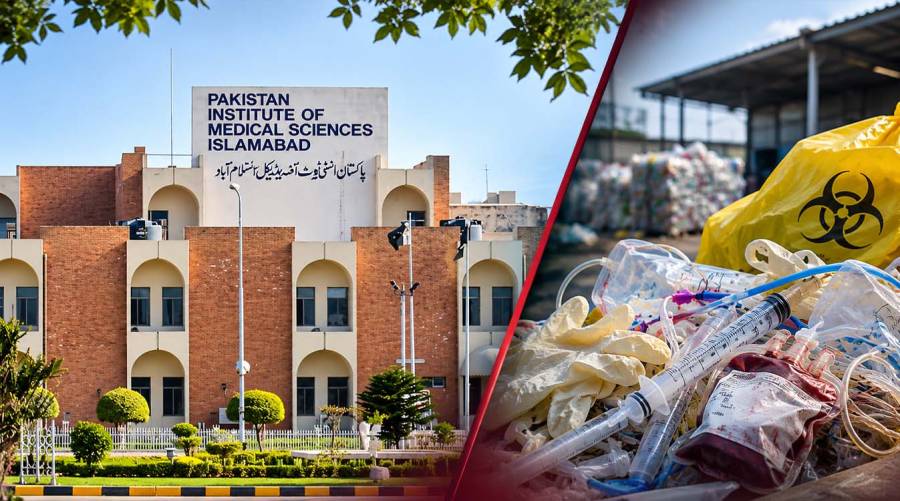
ISLAMABAD: The Pakistan Institute of Medical Sciences (PIMS) Islamabad is at the centre of another scandal. Allegedly, medical waste generated at the PIMS, that was supposed to be safely destroyed and disposed off, was allegedly diverted and sold in Lahore, prompting a Federal Investigation Agency (FIA) crackdown that has resulted in arrests and the recovery of more than four tonnes of hazardous hospital material.
The FIA's Anti-Corruption Circle (ACC), Islamabad, registered a criminal case against accused, including a former senior PIMS official and individuals associated with the hospital's waste disposal contractor, after investigators uncovered what they suspect was an organised operation involving the unauthorised sale and recycling of used medical waste.
During a raid at a premises on 5-T Bund Road in Lahore, investigators recovered 4,272 kilograms of hazardous material bearing official PIMS stamps and identification markings. The waste, which should have undergone approved treatment and disposal, was allegedly being handled for commercial reuse.
Environmental Protection Agency (EPA) officials were called to the location to examine the recovered material. Following their inspection, the waste was destroyed through incineration on the FIA's instructions, according to the agency's account.
The investigation has raised serious questions about how hazardous material from one of Islamabad's major public hospitals could allegedly be transported hundreds of kilometres, enter an unauthorised recycling operation and escape the safeguards intended to prevent infectious waste from reaching the commercial market.
How hospital waste allegedly reached Lahore
According to FIA investigators, the responsibility for disposing of PIMS medical waste had been awarded to Chaudhry Noor Zaman and Company, a private contractor required to ensure that the waste was incinerated either directly or through an authorised third-party facility.
Under the contract, the company was also responsible for providing disposal certificates confirming that the hazardous material had been properly destroyed.
Investigators allege that instead of fulfilling those obligations, the contractor, in collusion with certain PIMS officers and employees, diverted medical waste from its designated disposal route and sold it to individuals involved in recycling activities.
The suspected operation was uncovered after the FIA traced the movement of hospital waste to the Lahore premises.
Alleged recycling raises concern over infectious waste entering consumer markets
The suspected diversion of hazardous hospital waste has serious implications for public health, particularly when discarded medical material is handled outside regulated treatment and disposal facilities.
Used syringes, needles, intravenous tubing, blood-contaminated products and other disposable medical equipment can carry infectious material if not segregated and treated properly.
FIA investigators expressed concern that plastic waste collected from hospitals could be reprocessed and introduced into commercial manufacturing.
According to some media reports, the discarded medical plastics were being recycled into items such as plastic crockery and water bottles.
However, no specific manufacturer, consumer brand, finished product or retail outlet has been publicly verified as receiving material recovered from the PIMS operation.
According to the World Health Organization (WHO), approximately 15% of waste generated by healthcare activities is classified as hazardous and may contain infectious, chemical or radioactive material.
Used sharps and blood-contaminated equipment present particular dangers to healthcare workers, sanitation personnel, waste collectors and recycling workers through accidental injuries and direct exposure.
Contaminated needles can transmit bloodborne infections, including hepatitis B, hepatitis C and HIV, under appropriate exposure conditions.
PIMS generates more medical waste than its available disposal capacity
The FIA investigation has also brought attention to the volume of medical waste generated at PIMS and the hospital's dependence on outsourced disposal arrangements.
According to Dr Iram Naveed, Deputy Executive Director of PIMS, the hospital generates approximately 1,200 to 1,500 kilograms of medical waste daily, while its available disposal capacity is around 900 kilograms.
The difference makes external disposal arrangements necessary for waste that cannot be treated within the hospital's existing capacity.
Dr Naveed said the hospital maintains records of vehicles transporting waste out of the premises and that relevant clearance slips are signed when trucks depart.
She also stated that the contracted company was responsible for transporting and disposing of waste once it had been handed over.
These arrangements are now under scrutiny because the alleged diversion raises questions about what happened after the material left the hospital.
PIMS orders internal inquiry, pledges cooperation with FIA
The hospital administration has acknowledged the investigation and announced an internal inquiry into the disposal arrangements.
According to Prof. Dr. Sajid Abbasi, spokesperson for PIMS, the hospital was cooperating with the FIA and had provided relevant records to investigators.
He said the outsourcing of surgical waste disposal was necessary because the hospital generated more waste than its existing handling facilities could accommodate.
According to Dr Abbasi, PIMS had also communicated its waste management difficulties to the relevant government authorities.
The administration constituted an inquiry committee to examine the allegations and indicated that its findings would be shared after the committee completed its work.
A similar PIMS waste scandal emerged in 2023
The latest controversy has also revived questions about the effectiveness of safeguards introduced following an earlier medical waste scandal at PIMS.
In February 2023, reports emerged that infectious waste, including discarded syringes and blood bags, was being sold instead of destroyed under the hospital's waste management arrangements.
The matter prompted intervention by Prime Minister Shehbaz Sharif, who ordered an independent inquiry into the alleged sale of hazardous hospital material.
A fact-finding committee headed by Prof. Dr. S.H. Waqar, Professor of General Surgery, examined the matter and recommended further investigation and disciplinary proceedings.
Several hospital employees were suspended in connection with the earlier controversy, although subsequent reporting documented the reinstatement of some personnel.
PIMS also established a waste management monitoring mechanism, including a 19-member cell tasked with overseeing waste collection and treatment arrangements.
In May 2023, the hospital informed the federal health ministry that additional safeguards had been developed to prevent infectious medical material from being sold in the future.
The emergence of another investigation involving alleged waste diversion raises an important institutional question: whether those arrangements were implemented consistently and remained effective.
The existence of both incidents does not establish that they involved the same criminal network or identical failures. Any such connection would require evidence from investigators.
However, the recurrence of similar allegations warrants examination of how waste management oversight has operated at the hospital since the earlier controversy.
Healthcare safety does not end at hospital gate
From hospital waste disposal and infection prevention to regulatory investigations and public-health warnings, the safe management of healthcare services affects everyone.
CLICK HERE TO FOLLOW Medical News Pakistan WhatsApp Channel for updates on hospital safety, healthcare regulation, accountability and important public-health developments across Pakistan.
Because protecting patients and communities requires vigilance over what happens inside healthcare facilities — and what leaves them.

Advertisement
E-PAPER
Trending
Popular
Can creatine help you age better? What science says about muscle, ...
-
Fruit juice or whole fruit? New ...
05:32 PM, 6 Nov, 2026 -
One in four people with cerebral palsy ...
05:51 PM, 3 Nov, 2026 -
Pakistan pharma sector profits rise 11% ...
02:45 PM, 3 Nov, 2026 -
Tea for a healthier heart? Read this ...
05:52 PM, 2 Nov, 2026
Follow us on Facebook
Follow us on Twitter
Copyright ©2026 Medical News. All Rights Reserved.