UHS Board of Studies approves curricula of 16 allied health sciences disciplines
Meeting chaired by Prof. Dr. Sidrah Saleem approves revised academic programmes and backs mandatory life-saving skills workshops to strengthen practical training for future healthcare professionals.
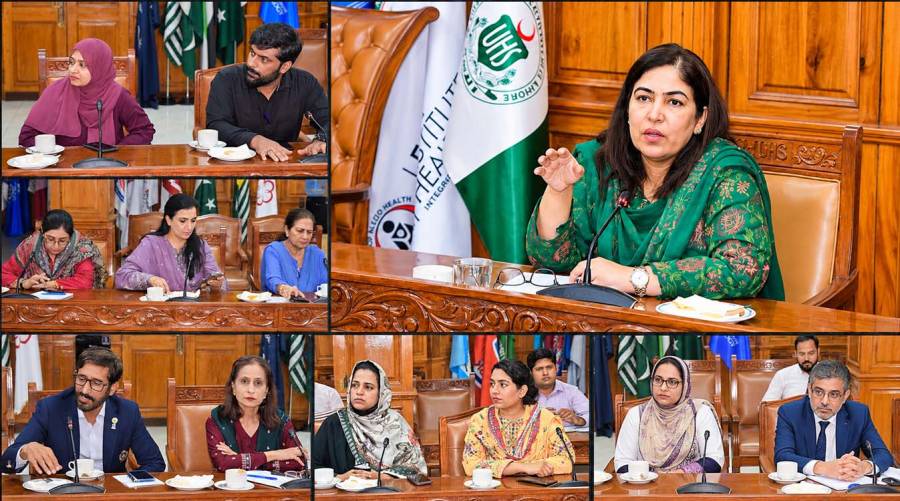
LAHORE: The University of Health Sciences (UHS) Lahore has approved revised curricula and schemes of studies for 16 allied health sciences disciplines, aiming to strengthen undergraduate academic programmes and bring professional training in line with contemporary healthcare requirements.
The approvals were granted during the 44th meeting of the Board of Studies in Allied Health Sciences, held under the chairpersonship of Prof. Dr. Sidrah Saleem, Director of the UHS Institute of Allied Health Sciences.
Principals and heads of UHS-affiliated institutions attended the meeting, which also approved a proposal to introduce mandatory life-saving skills workshops for allied health sciences students.
Together, the decisions reflect the university's focus on updating academic content while giving greater attention to the practical competencies healthcare graduates need in clinical environments.
Revised curricula cover 16 allied health disciplines
The board approved revised curricula and schemes of studies covering different semesters across 16 allied health sciences programmes.
The disciplines include:
- Doctor of Physical Therapy (DPT)
- Medical Imaging Technology
- Dental Technology
- Medical Laboratory Technology
- Surgical Technology
- Occupational Therapy
- Cardiac Perfusion Technology
- Optometry
- Speech Language Pathology
- Audiology
- Anesthesia Technology
- Orthotics and Prosthetics
- Emergency and Critical Care
- Respiratory Therapy
- Human Genetics and Molecular Biology
- Transfusion Medicine and Blood Banking
The wide scope of the revisions reflects the increasingly diverse roles performed by allied health professionals in modern healthcare.
From laboratory diagnostics, medical imaging and dental technology to rehabilitation, surgical support, respiratory care and emergency services, these disciplines contribute to the diagnosis, treatment, monitoring and recovery of patients.
Updating their curricula is therefore an important component of strengthening healthcare education, particularly as clinical practices, technologies and professional responsibilities continue to evolve.
For students, the revised academic frameworks are intended to support learning that is relevant to contemporary professional requirements. For affiliated institutions, they provide an opportunity to align teaching and assessment with the updated schemes of studies.
Academic collaboration behind the revisions
According to UHS, the revised curricula were developed through collaboration between the university's Department of Medical Education and the Institute of Allied Health Sciences.
The respective Specialty Advisory Committees reviewed the curricula, bringing subject-specific academic expertise into the revision process.
Such collaboration is particularly important in allied health education, where academic requirements differ considerably between disciplines.
A student preparing for a career in Medical Laboratory Technology, for example, requires a different combination of theoretical knowledge and practical competencies from someone studying Occupational Therapy, Anesthesia Technology or Human Genetics and Molecular Biology.
The involvement of specialty committees helps ensure that each programme's academic structure is considered in relation to its professional field.
The revised schemes of studies also provide a basis for affiliated institutions to review their academic delivery as the university communicates further implementation requirements.
UHS backs mandatory life-saving skills workshops
In another important decision, the board approved a proposal to introduce mandatory life-saving skills workshops across allied health sciences programmes.
The proposed workshops would provide students with practical training in six essential areas of emergency response:
- Basic Life Support (BLS): Recognising life-threatening emergencies and performing essential initial life-saving interventions.
- Cardiac emergency care: Developing skills relevant to the initial response to serious cardiac emergencies.
- Trauma management: Understanding the immediate assessment and management priorities for patients with traumatic injuries.
- Emergency triage: Learning how patients are assessed and prioritised according to the urgency of their clinical needs.
- Neonatal resuscitation: Developing emergency-response competencies relevant to newborns requiring immediate assistance.
- Emergency obstetric care: Building awareness and practical skills for responding to obstetric emergencies.
The proposed workshops are intended to be delivered at different stages of students' academic programmes, supplementing their discipline-specific education.
The emphasis on life-saving skills is particularly relevant because allied health professionals work in settings where patients may experience sudden deterioration or medical emergencies.
Although their professional responsibilities vary, many may be among the first healthcare personnel to recognise that a patient requires urgent medical attention.
Appropriate emergency-response training can help improve recognition, communication and initial action within the limits of each professional's competence.
The board has approved the proposal for mandatory workshops; the November 23 announcement does not specify when the proposed arrangements will take effect or how they will be assessed.
Why the curriculum approvals matter
Allied health professionals are an essential part of healthcare delivery, supporting physicians, surgeons and other clinicians across hospitals, diagnostic facilities, rehabilitation centres and specialised treatment services.
Their responsibilities increasingly require technical expertise, clinical understanding and the ability to work effectively within multidisciplinary teams.
For this reason, curriculum revisions are more than an administrative exercise. They influence the knowledge, skills and professional expectations that shape a student's education.
The latest approvals cover disciplines that operate at different points of the patient-care pathway.
Medical Imaging Technology and Medical Laboratory Technology contribute to diagnostic investigations, while Cardiac Perfusion Technology and Surgical Technology support specialised clinical procedures.
Occupational Therapy, Orthotics and Prosthetics, Speech Language Pathology and Audiology have important roles in rehabilitation and functional support.
Similarly, Emergency and Critical Care, Respiratory Therapy, Anesthesia Technology and Transfusion Medicine and Blood Banking contribute to areas of healthcare where specialised technical knowledge and patient safety are particularly important.
By reviewing curricula across these fields, UHS is seeking to strengthen the academic foundations of a broad segment of the healthcare workforce.
The practical impact will depend on how the revised curricula are implemented, the teaching resources available to affiliated institutions and the arrangements established for hands-on instruction.
Greater emphasis on clinical preparedness
The proposal for mandatory life-saving skills workshops complements the curriculum approvals by placing additional emphasis on practical preparedness.
Healthcare professionals may encounter emergencies regardless of their primary area of specialisation. A patient can deteriorate in a diagnostic department, rehabilitation setting, outpatient facility or hospital ward.
Recognising early warning signs, communicating promptly with the appropriate clinical team and responding within one's training and professional scope can be vital.
Structured workshops can provide opportunities for supervised practice and help students understand how their professional responsibilities fit into a coordinated emergency response.
UHS has previously developed educational resources covering essential emergency life-saving skills. The latest board decision specifically addresses a proposal for mandatory workshops within allied health sciences programmes.
The university has not yet detailed the workshop schedule, duration, assessment requirements or any changes that affiliated institutions may need to introduce.
These will be important considerations as institutions prepare to implement the board's decisions.
What happens next for students, affiliated institutions?
With the revised curricula and schemes of studies approved by the board, attention now turns to their implementation across the relevant academic programmes.
Affiliated institutions will need to follow further university instructions concerning the applicable semesters, teaching arrangements and academic requirements.
Students, particularly those already enrolled, will also need clarity on whether the revised schemes apply to their current semester or a subsequent academic session.
For the proposed life-saving skills workshops, details of delivery, assessment and implementation remain to be announced.
The university's decisions nevertheless highlight a broader direction in healthcare education: strengthening academic programmes while placing practical professional competencies alongside theoretical learning.
For Pakistan's allied health students, the ultimate value of these reforms will be measured not simply by updated course content but by how effectively their education prepares them for the demands of clinical practice.
By approving revised curricula across 16 disciplines and supporting additional emergency-response training, UHS has placed renewed emphasis on preparing allied health graduates for the responsibilities of modern healthcare.
Stay updated with Medical News Pakistan
From university curriculum changes to clinical training requirements, decisions in medical education can directly affect students, faculty members and healthcare institutions.
CLICK HERE TO FOLLOW Medical News Pakistan on WhatsApp for timely coverage of academic reforms, professional education, healthcare policy and developments shaping the country's medical and allied health sectors.

Advertisement
E-PAPER
Trending
Popular
Can creatine help you age better? What science says about muscle, ...
-
Fruit juice or whole fruit? New ...
05:32 PM, 6 Nov, 2026 -
One in four people with cerebral palsy ...
05:51 PM, 3 Nov, 2026 -
Pakistan pharma sector profits rise 11% ...
02:45 PM, 3 Nov, 2026 -
Tea for a healthier heart? Read this ...
05:52 PM, 2 Nov, 2026
Follow us on Facebook
Follow us on Twitter
Copyright ©2026 Medical News. All Rights Reserved.