
Injections used for bacterial infections, allergies and sedation recalled in Punjab
Punjab authorities have ordered the withdrawal of certain batches of five injectable medicines and preparations after laboratory tests raised concerns over sterility, visible particles and adulteration, prompting warnings to hospitals, pharmacies and patients.
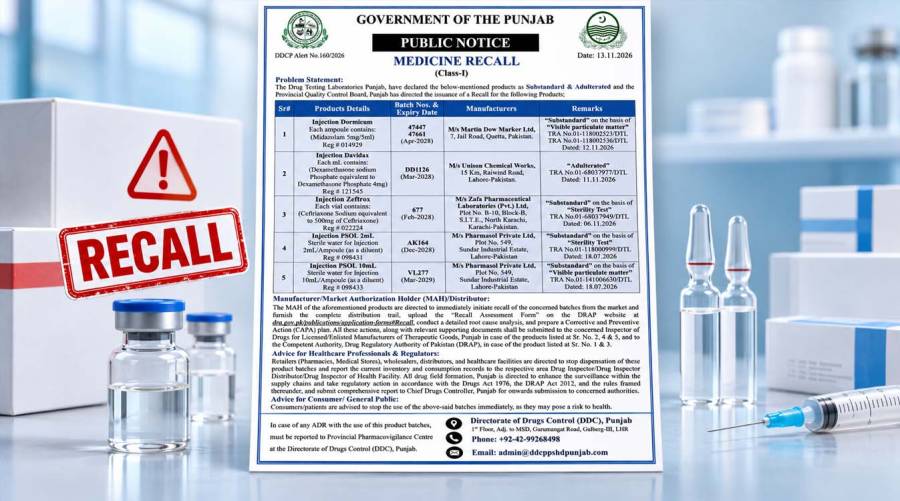
LAHORE: Injections used to treat bacterial infections and severe allergic reactions, along with a sedative given to patients before medical procedures, are among five injectable medicines and preparations ordered to be recalled in Punjab after laboratory tests identified potentially serious safety and quality problems.
The affected medicines include Zeftrox, an antibiotic used against bacterial infections such as pneumonia and urinary tract infections; Davidax, a steroid used to treat severe allergies and inflammation; and Dormicum, a sedative commonly administered before or during medical procedures. Two PSOL sterile-water preparations, used to dissolve or dilute medicines before injection, have also been included in the recall.
The Directorate of Drugs Control (DDC), Punjab, has issued the public notice, after provincial drug testing laboratories declared the identified batches substandard or adulterated. The Provincial Quality Control Board subsequently directed their withdrawal from the market.
The recall covers six batches of five injectable products manufactured by four pharmaceutical companies based in Quetta, Lahore and Karachi.
The laboratory findings include visible particles in some injections, failure to meet sterility testing requirements in others, and one injection declared adulterated.
The action is significant because injectable medicines must meet strict quality standards. Unlike medicines taken by mouth, injections can enter the bloodstream or body tissues directly, making problems involving sterility or unwanted particles particularly concerning.
What are the recalled injections used for?
The medicines identified in the recall serve different medical purposes, ranging from treating infections to managing inflammation and providing sedation.
Zeftrox Injection (ceftriaxone) is an antibiotic used to treat bacterial infections, including certain cases of pneumonia, urinary tract infections, meningitis and other serious infections. It is also used in some circumstances to prevent infections associated with surgery.
Davidax Injection (dexamethasone) contains a corticosteroid used to reduce inflammation and manage conditions such as severe allergic reactions, swelling and certain inflammatory disorders. It may also be prescribed for other medical conditions requiring steroid treatment.
Dormicum Injection (midazolam) is a sedative used to relax patients, reduce anxiety and produce drowsiness before or during medical procedures and surgery. It is also used in certain intensive-care settings.
The remaining two products, PSOL 2mL and PSOL 10mL, contain sterile water for injection. They do not independently treat an illness. Instead, healthcare professionals use them, where appropriate, to prepare certain injectable medicines before administration.
These uses help explain why the recall is relevant to hospitals, emergency departments, operating theatres, pharmacies and other healthcare facilities where injectable treatments are routinely administered.
Which injections and batches have been recalled?
According to the official notice, the following products have been identified for recall:
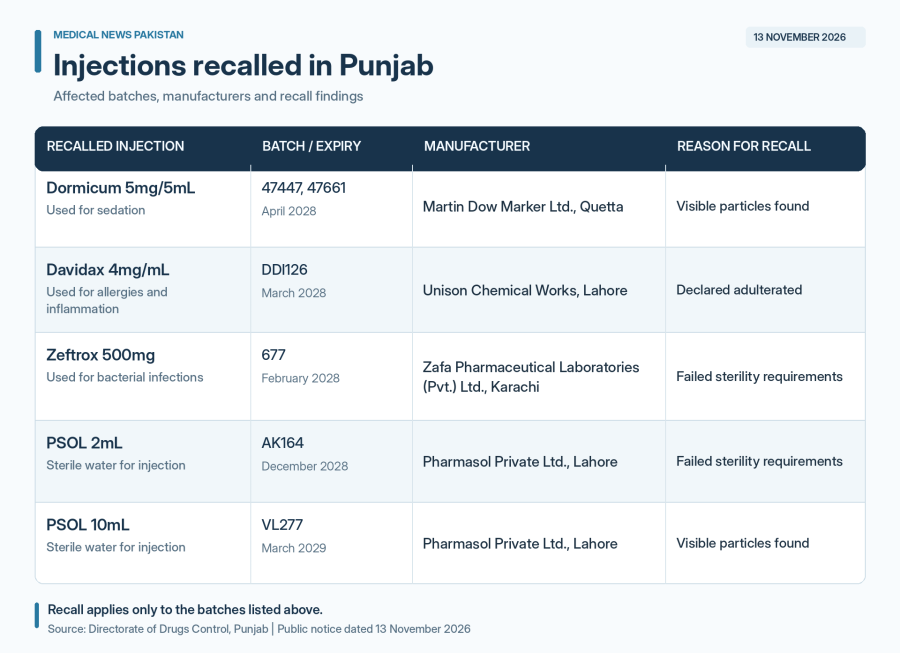
Importantly, the recall applies to the specified batches, not every batch of these medicines. The notice does not establish that all medicines produced by the named manufacturers are affected.
Why were the injections declared unsafe?
The testing results identified different quality problems, each with implications for patient safety.
Laboratories reported visible particles in the affected batches of Dormicum and PSOL 10mL. Injectable preparations are expected to meet standards limiting unwanted particles, which can pose risks when introduced into the body.
Zeftrox and PSOL 2mL were declared substandard because they did not meet sterility testing requirements.
In simpler terms, sterility testing helps establish whether an injectable medicine meets the standards required to protect patients from exposure to microorganisms. A failure in such testing raises concerns about whether the medicine can be safely administered.
However, a sterility-related failure does not, by itself, establish that a particular harmful microorganism was identified unless the laboratory report provides that information.
Davidax was separately declared adulterated, meaning regulators found that the tested sample fell within a prohibited quality category under the applicable drug law. The public notice does not explain the precise defect behind this classification, so the nature of the adulteration remains unspecified.
The Punjab notice describes the action as a Class-I recall, a designation used for particularly serious medicine safety concerns requiring urgent withdrawal.
The Drug Regulatory Authority of Pakistan (DRAP) has warned that the use of the affected substandard or adulterated injections could result in treatment failure, serious infections, allergic reactions or potentially life-threatening complications.
These are potential risks identified by the regulator. The notices do not establish that patients have suffered any of these outcomes from the recalled batches.
DRAP issues separate nationwide safety warning
Following Punjab's November 13 notice, DRAP issued its own medical product alert on November 16, 2026, reinforcing concerns about three of the affected medicines.
The federal alert, numbered I/S/11-26-55, confirmed the laboratory findings involving Dormicum, Davidax and Zeftrox.
According to DRAP, the Drug Testing Laboratory in Faisalabad declared Zeftrox batch 677 substandard following sterility testing. The same laboratory declared Davidax batch DDI126 adulterated under the Drugs Act, 1976.
The Drug Testing Laboratory in Lahore identified visible particles in Dormicum batches 47447 and 47661.
DRAP subsequently directed its regulatory teams and provincial drug control departments to conduct market surveillance and identify and remove the affected batches from circulation.
While the federal alert identified these three medicines, Punjab's earlier public notice additionally covered the two PSOL sterile-water preparations.
The announcements underscore the importance of quality checks on injectable medicines, particularly when they are intended for patients already undergoing treatment for serious medical conditions.
What should hospitals, pharmacies and patients do?
The provincial authorities have directed pharmacies, medical stores, wholesalers, distributors and healthcare facilities to immediately stop supplying or administering the identified batches.
Healthcare facilities have also been instructed to report their existing stocks and consumption records to the relevant drug inspectors.
Hospitals and clinics should check the affected batch numbers against their available supplies, particularly in departments where injections are regularly administered or prepared.
DRAP has advised pharmacies and distributors to separate the recalled stock from other medicines and arrange its return through the appropriate supplier or manufacturer.
For patients and caregivers, the advice is straightforward: do not use an injection if its batch number matches one listed in the recall.
Anyone who has obtained one of the affected medicines should consult a pharmacist or healthcare professional regarding its return or replacement.
Patients who believe they have already received one of the recalled injections should contact their treating doctor, particularly if they experienced an unexpected reaction or developed concerning symptoms after treatment.
The recall does not mean that everyone who received an affected injection has been harmed. It means the identified batches failed regulatory quality requirements and must no longer be used.
Patients receiving ongoing treatment should consult their healthcare provider about a suitable replacement rather than independently interrupting essential medical care.
Where can suspected reactions be reported?
Punjab's Directorate of Drugs Control has instructed healthcare professionals and the public to report suspected adverse drug reactions associated with the recalled batches to the Provincial Pharmacovigilance Centre.
The centre can be contacted through:
Directorate of Drugs Control, Punjab
1st Floor, adjacent to MSD, Gurumangat Road, Gulberg-III, Lahore.
Telephone: +92-42-99268498
Email: admin@ddcppshdpunjab.com
Patients and healthcare professionals can also report suspected medicine-related problems through DRAP's National Pharmacovigilance Centre.
The recall highlights the importance of continuous medicine testing and effective monitoring of pharmaceutical supplies, particularly injections administered in hospitals and other clinical settings.
For healthcare institutions, the immediate responsibility is to identify and remove the affected batches. For patients, awareness of the recalled medicine names and batch numbers can help prevent potentially unsafe injections from being used.
Stay informed about medicine recalls and patient safety
CLICK HERE TO FOLLOW Medical News Pakistan WhatsApp Channel for verified DRAP alerts, medicine recalls, important healthcare developments and public-health warnings.
Share this report with healthcare professionals, pharmacists and anyone who may need to check the affected medicines. Timely information can help keep potentially unsafe injections out of use.

Advertisement
E-PAPER
Trending
Popular
Fruit juice or whole fruit? New research reveals which is better for ...
-
Pakistan pharma sector profits rise 11% ...
02:45 PM, 3 Nov, 2026 -
Tea for a healthier heart? Read this ...
05:52 PM, 2 Nov, 2026 -
37 AKU researchers join world's top 2% ...
06:47 PM, 16 Oct, 2026 -
Could a heart calcium scan reveal your ...
01:36 PM, 13 Oct, 2026
Follow us on Facebook
Follow us on Twitter
Copyright ©2026 Medical News. All Rights Reserved.