Drug resistance linked to over 200,000 deaths a year in Pakistan, WHO warns
As World AMR Awareness Week 2026 raises the alarm over drug-resistant infections, WHO data show that about one in six laboratory-confirmed bacterial infections worldwide resisted antibiotic treatment in 2023. Health experts are urging Pakistan to act before more life-saving medicines lose their effectiveness.
ISLAMABAD: More than 200,000 deaths annually in Pakistan are linked to antimicrobial resistance (AMR), according to estimates highlighted by the World Health Organization (WHO) and Pakistan's National Institute of Health (NIH), underscoring a growing public health threat that is making once-treatable infections increasingly difficult to manage.
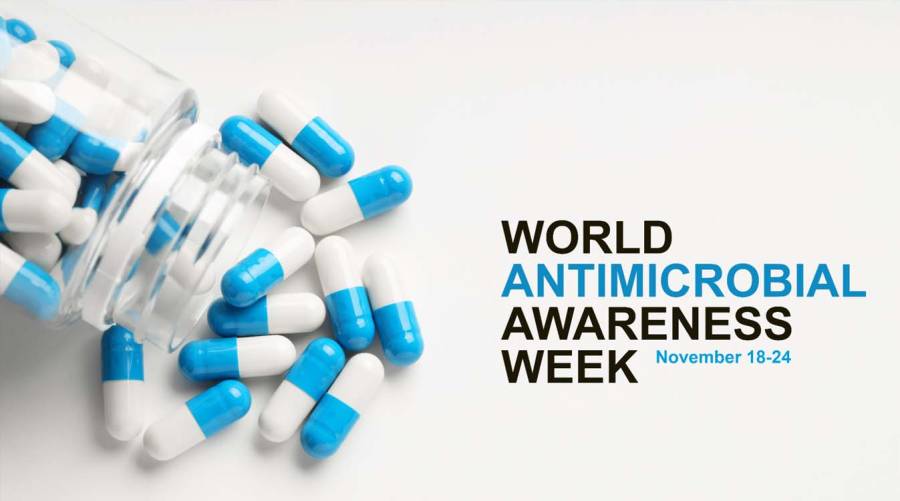
The warning comes as countries observe World Antimicrobial Resistance Awareness Week from November 18 to 24, under the theme "One Health, one action: Prevent AMR now." The campaign calls for coordinated efforts to preserve medicines that millions of people depend on for treating potentially life-threatening infections.
In a statement marking the awareness week, WHO and NIH cited estimates of close to 40,000 annual deaths directly attributable to antimicrobial resistance in Pakistan, alongside more than 160,000 deaths associated with resistance. The distinction is important: deaths attributable to AMR reflect the additional mortality caused by resistance, while associated deaths measure a broader burden involving resistant infections.
Without stronger preventive measures, the agencies warned that Pakistan could face an estimated 63,000 directly attributable and 262,000 associated deaths annually by 2050.
A global problem that is already affecting patients
Antimicrobial resistance develops when bacteria, viruses, fungi and parasites no longer respond effectively to medicines designed to treat them. Infections may become harder to control, requiring alternative treatments, prolonged hospitalization and more expensive medical care. In severe cases, effective treatment options may become limited.
According to WHO's latest antimicrobial resistance surveillance findings, approximately one in six laboratory-confirmed bacterial infections causing common infections worldwide in 2023 were resistant to antibiotic treatment.
This does not mean that one in six people taking antibiotics will experience treatment failure, or that every available antibiotic has become ineffective. Rather, the finding highlights the extent of resistance among bacterial infections documented through laboratory surveillance.
The situation is particularly concerning in Asia and the Middle East. WHO estimates that approximately one in three reported bacterial infections in its South-East Asia and Eastern Mediterranean regions showed antibiotic resistance. Pakistan belongs to the WHO Eastern Mediterranean Region, although the regional figure should not be interpreted as a Pakistan-specific resistance rate.
Globally, bacterial antimicrobial resistance was associated with more than 4.7 million deaths in 2021.
WHO has also reported rising resistance across more than 40% of the pathogen-antibiotic combinations it monitored between 2018 and 2023, with average annual increases ranging from 5% to 15%.
For hospitals, the implications extend beyond difficult infections. Modern medical procedures, including major surgery, childbirth-related interventions, organ transplantation and cancer treatment, depend heavily on effective antimicrobial medicines to prevent and manage infections.
As resistance increases, procedures once considered relatively routine may carry greater risks.
Pakistan's health leaders call for urgent action
On November 18, the NIH and WHO launched World AMR Awareness Week activities in Islamabad through an awareness walk organized with the UK Health Security Agency (UKHSA) and the Food and Agriculture Organization of the United Nations (FAO), alongside students and civil society participants.
Dr. Muhammad Salman, Chief Executive Officer of the National Institute of Health, emphasized the need for a comprehensive One Health strategy linking human, animal and environmental health.
He identified irrational antibiotic prescribing, over-the-counter antibiotic sales, weak infection prevention practices and inappropriate antimicrobial use in agriculture and livestock as contributing factors in Pakistan.
Dr. Luo Dapeng, WHO Representative in Pakistan, warned that antimicrobial resistance is contributing to preventable deaths. He stressed that responsible antibiotic use and coordinated action across health sectors can help protect families and preserve treatment options.
Dr. Zeeshan Iqbal Baig, National Lead at the UK Health Security Agency, described AMR as a major public health threat, warning that antimicrobial misuse across human medicine, animal health and agriculture contributes to treatment failures, mortality and growing healthcare costs.
Meanwhile, Dr. Pawin Padungtod, One Health Team Lead at FAO Pakistan, emphasized the importance of cooperation among government institutions, health professionals and other stakeholders to reduce resistance risks.
Their message reflects a fundamental reality: antimicrobial resistance cannot be controlled by hospitals or healthcare professionals acting alone.
Why antimicrobial resistance is not just an antibiotic problem
Antibiotics are the most familiar antimicrobial medicines, but resistance affects several other treatment categories.
Antiviral medicines are used against certain viral infections, including HIV and influenza. Antifungal medicines treat infections such as candidiasis and aspergillosis, while antiparasitic medicines are essential for diseases including malaria.
Resistance to these treatments can complicate disease management and limit available therapeutic options.
Another widespread misconception is that people become resistant to antibiotics. In fact, it is microorganisms that develop resistance, not the human body.
Microorganisms can acquire or develop characteristics that allow them to survive exposure to medicines. Resistant organisms may then spread between people, animals and the environment.
Misuse and excessive use of antimicrobials accelerate this process, but resistance can also emerge naturally. Poor sanitation, inadequate infection prevention, limited access to reliable diagnostic testing and the spread of resistant organisms further compound the problem.
Nor can the world depend entirely on new medicines to replace those losing effectiveness.
WHO has warned that too few new antimicrobial treatments are being developed, making the protection of existing medicines increasingly important.
One Health: Why animals, agriculture and environment matter
The 2026 campaign places the One Health approach at the centre of antimicrobial resistance prevention.
The principle recognizes that human health is inseparable from the health of animals, plants and the environment.
Antimicrobial medicines are used in healthcare, veterinary medicine and agricultural systems. Resistant microorganisms and antimicrobial residues can move through wastewater, soil, food systems and other environmental pathways.
This interconnectedness means that responsible prescribing in hospitals must be complemented by appropriate antimicrobial use in livestock, stronger food safety practices, improved sanitation and effective management of healthcare and agricultural waste.
The international campaign is supported by four organizations collectively known as the Quadripartite: the World Health Organization (WHO), Food and Agriculture Organization of the United Nations (FAO), United Nations Environment Programme (UNEP) and World Organisation for Animal Health (WOAH).
Their joint message is that preventing resistance requires action across all sectors rather than isolated responses.
What public can do to prevent antibiotic resistance
While antimicrobial resistance presents a complex scientific and policy challenge, individuals can help reduce the emergence and spread of resistant infections through everyday decisions.
One of the most important steps is to take antibiotics only when prescribed by a qualified healthcare professional.
Antibiotics treat bacterial infections. They do not work against viruses responsible for common illnesses such as colds and influenza. Taking antibiotics unnecessarily exposes microorganisms to medicines without providing the intended benefit.
People prescribed antibiotics should follow their clinician's instructions regarding the medicine, dosage and duration of treatment. They should not share antibiotics with others, reuse leftover medicines or independently change a prescribed course.
Preventing infections is equally important. Regular handwashing, safe food handling, clean water, appropriate sanitation and recommended vaccinations can reduce the occurrence and spread of infectious diseases, thereby reducing the need for antimicrobial treatment.
Healthcare professionals also have a critical responsibility. Appropriate prescribing, timely diagnostic testing, infection prevention and control, and antimicrobial stewardship programmes can help ensure that patients receive effective treatment when they need it.
These measures are especially important for vulnerable patients, including newborns, older adults, people with weakened immune systems and those receiving complex medical treatment.
Governments have plans, implementation remains a challenge
The international response to antimicrobial resistance has gained momentum, yet important gaps remain.
In findings released on November 16, WHO reported that 173 countries had developed national plans to address antimicrobial resistance, compared with 79 in 2017.
However, only 22% of countries reported having both the necessary funding and full implementation of their national AMR action plans.
Diagnostic capacity remains another major concern. Just 36% of countries reported having a national reference laboratory equipped to test the selected bacteria and fungi covered by WHO's assessment.
Dr. Tedros Adhanom Ghebreyesus, WHO Director-General, cautioned that the existence of a national strategy alone does not guarantee protection for patients, stating that "an unfulfilled plan helps no one."
Pakistan has its own National Action Plan on Antimicrobial Resistance 2.0 (2024–2028), which prioritizes stronger surveillance, responsible antimicrobial use, public awareness and infection prevention across relevant sectors.
At the international level, WHO's updated Global Action Plan on Antimicrobial Resistance 2026–2036 seeks to strengthen coordinated action, expand access to effective treatment and diagnostics, and reduce the burden of drug-resistant infections.
The challenge for countries, including Pakistan, is to translate these commitments into measurable improvements in prescribing practices, infection prevention, diagnostic services and access to appropriate treatment.
Cost of inaction could be measured in lives
Antimicrobial resistance is often described as a future threat, but its consequences are already being felt in healthcare facilities around the world.
Every unnecessary antibiotic prescription, missed opportunity to prevent infection and failure to identify a resistant organism can contribute to a larger problem.
At the same time, effective antibiotics remain indispensable. The goal is not to discourage their use when medically necessary, but to ensure that the right medicines remain available and effective for patients who genuinely need them.
World AMR Awareness Week 2026 offers an opportunity to bring this message beyond hospitals and laboratories into homes, schools, pharmacies, farms and communities.
The central warning is straightforward: medicines that save lives today cannot be taken for granted tomorrow.
Protecting them requires informed decisions, responsible healthcare practices and sustained cooperation across society.
Stay informed with Medical News Pakistan
Understanding when antibiotics are needed—and when they are not—can help safeguard treatment options for everyone.
CLICK HERE TO FOLLOW Medical News Pakistan WhatsApp channel for reliable updates on antimicrobial resistance, medicine safety and important public health developments.

Advertisement
E-PAPER
Trending
Popular
Fruit juice or whole fruit? New research reveals which is better for ...
-
One in four people with cerebral palsy ...
05:51 PM, 3 Nov, 2026 -
Pakistan pharma sector profits rise 11% ...
02:45 PM, 3 Nov, 2026 -
Tea for a healthier heart? Read this ...
05:52 PM, 2 Nov, 2026 -
37 AKU researchers join world's top 2% ...
06:47 PM, 16 Oct, 2026
Follow us on Facebook
Follow us on Twitter
Copyright ©2026 Medical News. All Rights Reserved.