
Congo Ebola outbreak tops 11,500 cases as deaths exceed 5,600
The Bundibugyo virus outbreak has become the deadliest in the Democratic Republic of Congo's history and the second-largest Ebola outbreak globally, with insecurity, attacks on health workers, unpaid salaries and delayed international funding undermining containment efforts.
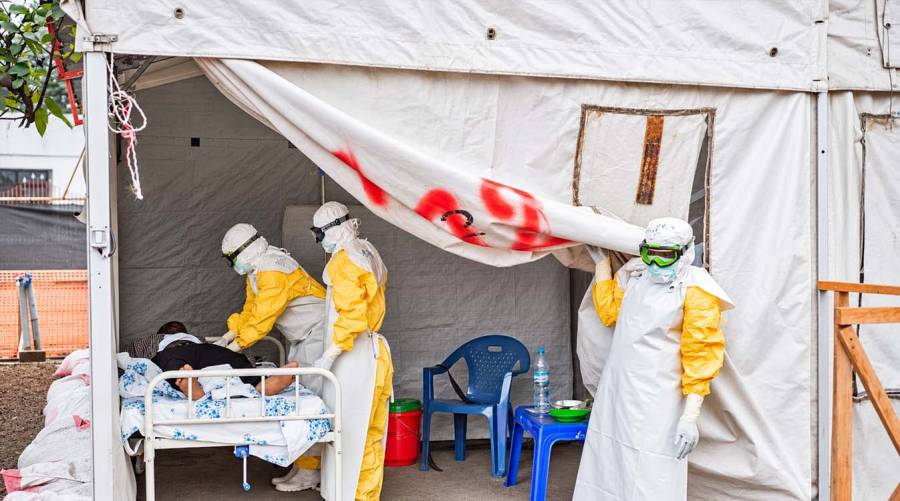
DAKAR: The Ebola outbreak in the Democratic Republic of Congo (DRC) continues to spread at an alarming pace, with more than 11,500 confirmed infections and 5,600 deaths reported as of November 16, six months after the outbreak was officially declared.
The outbreak, caused by the rare Bundibugyo virus, has become the deadliest Ebola outbreak in the Central African nation and ranks as the second-largest recorded globally. Despite substantial international assistance and financial commitments, persistent insecurity, shortages of medical supplies, attacks on health workers and weaknesses in response coordination continue to obstruct efforts to contain the disease.
According to the World Health Organization (WHO), the DRC had recorded 11,504 confirmed cases and 5,630 confirmed deaths by November 16, reflecting a crude case fatality ratio of approximately 49%. The outbreak was declared on May 15, 2026, and has continued to expand geographically and intensify in several affected areas.
Ebola outbreak surpasses previous records
The current outbreak is spreading considerably faster than previous Ebola epidemics, raising serious concerns among international public health authorities.
Government data cited by Reuters show that infections and deaths during the first six months of the current outbreak have risen at approximately twice the rate recorded during the corresponding period of the 2014–2016 West African Ebola epidemic, the largest Ebola outbreak in history.
The West African epidemic, which primarily affected Guinea, Liberia and Sierra Leone, eventually resulted in more than 28,600 infections and over 11,000 deaths, according to WHO figures.
The current outbreak has also far surpassed the DRC's previous national record, established during the 2018–2020 Ebola epidemic, which resulted in 3,481 cases and 2,299 deaths.
This is the country's 17th Ebola outbreak, but the unprecedented scale and speed of transmission have made it one of the most challenging public health emergencies in its history.
Insecurity, attacks on health workers undermine response
Violence and insecurity in affected communities have emerged as major obstacles to containing the outbreak, disrupting surveillance, contact tracing and the delivery of medical assistance.
Health workers, vehicles and disease surveillance teams have come under attack in communities where distrust of outside responders and misinformation about the disease have complicated public health interventions.
WHO Director-General Dr Tedros Adhanom Ghebreyesus identified insecurity as one of the greatest challenges facing the response, warning that attacks on health personnel were undermining efforts to control transmission.
Recent attacks have also disrupted contact-tracing operations in affected areas, leaving health teams struggling to monitor people who may have been exposed to the virus.
The situation has been particularly concerning in Ituri Province, the outbreak's original epicentre, and North Kivu, where violence and limited access have further complicated containment efforts.
Congolese Health Minister Roger Kamba has also highlighted the changing geographical pattern of transmission, with Ituri accounting for nearly 70% of reported cases while North Kivu has emerged as a major source of new infections.
Shortages, unpaid salaries hamper frontline operations
The response is also facing significant operational and logistical difficulties, with essential supplies and resources failing to reach some of the communities most affected by the outbreak.
Médecins Sans Frontières (MSF), also known as Doctors Without Borders, has warned that vital medical supplies and resources are not adequately reaching outbreak hotspots outside the original epicentre in Ituri Province.
Health workers have also gone on strike over working conditions and unpaid salaries, with some reportedly waiting for their wages since August.
The salary delays have affected staff availability and slowed response activities, adding further pressure to an already overstretched healthcare workforce.
Dr Tedros said payment delays were contributing to the slowdown in the response, while the Congolese government has said it is working to address the problem.
The difficulties underscore the importance of maintaining a functioning frontline workforce, particularly when rapid identification of infections, isolation, patient care and contact tracing are essential to interrupting transmission.
$2.9 billion pledged, but less than half disbursed
Funding shortfalls and coordination problems have emerged as another major concern despite substantial international commitments to support the Ebola response.
Approximately $2.9 billion has been pledged for the response, but less than half of the committed funding has been disbursed, according to figures cited by Reuters from Africa's leading public health agency, the Africa Centres for Disease Control and Prevention (Africa CDC).
Africa CDC Director-General Dr Jean Kaseya has urged international donors and response partners to work more closely with the Congolese government to ensure that financial resources are properly coordinated and directed towards priority needs.
The agency has also raised concerns about overlapping interventions and duplication of activities, warning that fragmented funding arrangements could result in wasted resources while critical needs remain unmet.
The challenge is therefore not limited to securing financial commitments but also ensuring that pledged assistance reaches frontline health services, affected communities and response teams without unnecessary delays.
Bundibugyo virus presents additional treatment challenges
The outbreak is particularly concerning because the Bundibugyo virus responsible for the current epidemic has no licensed vaccine or approved specific treatment.
Unlike Ebola disease caused by the Zaire ebolavirus species, for which vaccines and specific therapeutics are available, medical countermeasures specifically targeting Bundibugyo virus disease have not yet been approved.
WHO has been working with the governments of the DRC and Uganda and international research partners to evaluate promising vaccine and treatment candidates.
In the absence of approved virus-specific countermeasures, clinical management relies primarily on supportive care, including fluid and electrolyte replacement, treatment of symptoms and complications, and appropriate infection prevention and control measures.
Early identification, prompt medical care, isolation of suspected cases, contact tracing and safe burial practices remain essential to limiting transmission and improving patient outcomes.
The virus spreads through direct contact with the blood, secretions and other bodily fluids of infected people, as well as contaminated materials. People who die from the disease can also transmit the infection through contact with their bodies.
International response faces a critical test
The continuing rise in infections and deaths has exposed the difficulties of containing a major infectious disease outbreak in an environment affected by insecurity, limited healthcare infrastructure, community distrust and inadequate coordination.
The geographical expansion of the outbreak has also increased the importance of cross-border surveillance and preparedness, particularly as related infections have been reported in other African countries.
For the DRC, the immediate challenge remains restoring access to affected communities, protecting frontline health personnel, ensuring timely payment of healthcare workers and delivering essential medical supplies where they are most urgently needed.
For international partners, the priority is to translate financial commitments into effective action on the ground through coordinated funding, stronger surveillance and sustained support for healthcare services.
With transmission continuing six months after the outbreak was declared, the scale of the crisis highlights the urgent need for a more coordinated and adequately resourced response to prevent further loss of life.
Stay connected with Medical News Pakistan
CLICK HERE TO FOLLOW Medical News Pakistan for verified global health breakthroughs, emerging infectious disease alerts, WHO updates, FDA approvals, healthcare innovations, clinical research and critical medical developments.

Advertisement
E-PAPER
Trending
Popular
Fruit juice or whole fruit? New research reveals which is better for ...
-
One in four people with cerebral palsy ...
05:51 PM, 3 Nov, 2026 -
Pakistan pharma sector profits rise 11% ...
02:45 PM, 3 Nov, 2026 -
Tea for a healthier heart? Read this ...
05:52 PM, 2 Nov, 2026 -
37 AKU researchers join world's top 2% ...
06:47 PM, 16 Oct, 2026
Follow us on Facebook
Follow us on Twitter
Copyright ©2026 Medical News. All Rights Reserved.