Punjab survey raises alarm over widespread antibiotic use in children under five
A Gallup Pakistan analysis reveals extensive antibiotic use among children under five with respiratory infections, many exhibiting symptoms commonly associated with viral illnesses, while reported aspirin administration raises additional concerns over medication safety and the growing threat of antibiotic resistance.

LAHORE: Widespread antibiotic use among children under five suffering from respiratory infections in Punjab has raised serious public health concerns, with survey findings highlighting potentially unnecessary medication, concerns over prescribing practices and the growing threat of antibiotic resistance.
An analysis of the Punjab Health and Population Survey (PHPS) 2024–25 by Gallup Pakistan found that many children experiencing symptoms commonly associated with viral respiratory illnesses were being treated with antibiotics — medicines that are ineffective against viruses.
The survey also revealed that some children under five were given aspirin, a medication generally not recommended for young children because of its association with a rare but potentially life-threatening condition.
The findings raise an important question for parents, healthcare professionals, regulators and policymakers: are children receiving the medicines they actually need, or could some be exposed to unnecessary and avoidable health risks?
The survey found that 6.5 per cent of children under five had experienced symptoms of respiratory infections.
Among the affected children, 66 per cent had high fever, 48 per cent experienced coughing, 40 per cent had a sore throat and 38 per cent suffered from a runny nose.
Symptoms associated with potentially more serious respiratory conditions were also reported. Approximately 26 per cent of affected children experienced rapid breathing, while nearly seven per cent exhibited chest indrawing, a clinical sign in which the lower chest wall moves inward during inhalation.
The findings are particularly significant because symptoms such as fever, cough, sore throat and runny nose frequently occur in viral respiratory infections, although they can also be associated with bacterial illnesses.
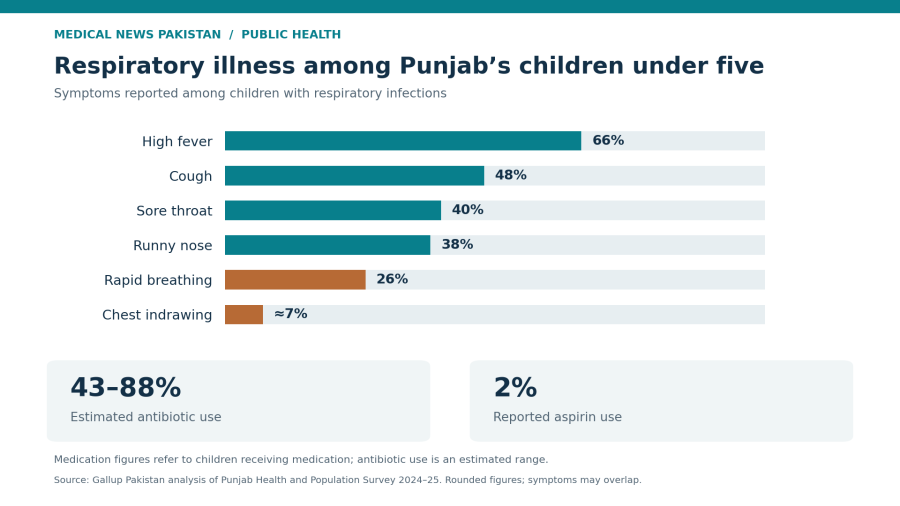
The analysis estimated that between 43 and 88 per cent of children receiving medication for respiratory infections were given antibiotics in various forms, including syrups and injections.
The broad range reflects uncertainty arising from overlapping medication categories rather than a single confirmed antibiotic prescription rate.
Although the survey does not establish how many individual prescriptions were medically unnecessary, the extent of antibiotic use raises important questions about prescribing practices and adherence to evidence-based treatment guidelines.
One of the most common misconceptions surrounding childhood illnesses is that every fever, cough or sore throat requires antibiotics.
Antibiotics treat bacterial infections. They do not work against viruses responsible for common colds, influenza and many other respiratory illnesses.
Administering antibiotics when they are not medically necessary provides no benefit against the underlying viral infection and may expose children to avoidable side effects, including diarrhoea, nausea and allergic reactions.
Guidelines issued by the US Centers for Disease Control and Prevention (CDC) advise against prescribing antibiotics for uncomplicated common colds and non-specific viral upper respiratory infections in children.
For parents, the distinction is particularly important. A child who has not been prescribed antibiotics following an appropriate clinical assessment has not necessarily received inadequate treatment.
Antibiotics remain indispensable, lifesaving medicines when used appropriately. The concern arises when they are administered without a valid clinical indication.
Another concerning finding of the survey was that approximately two per cent of children receiving medication were given aspirin.
Although aspirin has pain-relieving, fever-reducing and antiplatelet properties, its use in children during certain viral illnesses has been associated with Reye’s syndrome, a rare but potentially life-threatening condition that can cause serious damage to the brain and liver.
Britain’s National Health Service (NHS) advises that children under 16 should not be given aspirin unless it has been specifically prescribed by a doctor.
While aspirin may be prescribed for certain medical conditions under specialist supervision, its administration as a routine treatment for childhood fever or respiratory illness is generally inappropriate.
The survey does not establish whether any children experienced complications following aspirin administration. Nevertheless, its reported use among children under five highlights the need for greater awareness of paediatric medication safety among healthcare providers, pharmacists, parents and caregivers.
While many childhood respiratory infections are viral and do not require antibiotics, it is equally important that serious bacterial infections are identified and treated promptly.
The survey's findings that 26 per cent of affected children experienced rapid breathing and nearly seven per cent exhibited chest indrawing are particularly relevant in this regard.
The World Health Organization (WHO) identifies rapid breathing and lower chest wall indrawing as important clinical signs used to assess pneumonia in children under five.
Pneumonia can be caused by different pathogens, and children with clinically diagnosed pneumonia may require antibiotics. Severe cases may require hospitalisation, oxygen therapy and additional medical intervention.
Parents and caregivers should seek urgent medical attention if a child develops rapid, difficult or laboured breathing, visible inward movement of the lower chest during breathing, bluish or grey discolouration of the lips or tongue, an inability to drink or breastfeed, unusual drowsiness, unresponsiveness, convulsions, signs of severe dehydration or rapidly worsening illness.
A temperature of 38°C or above in an infant younger than three months also requires urgent medical assessment.
The objective is not to discourage necessary antibiotic treatment but to ensure that children receive appropriate care based on their clinical condition.
The implications of widespread and potentially unnecessary antibiotic use extend far beyond the immediate treatment of a child's illness.
Inappropriate antibiotic use contributes to antimicrobial resistance (AMR), a phenomenon in which microorganisms develop resistance to medicines previously effective against them.
It is the bacteria, rather than the child, that become resistant to antibiotics. As resistance develops and spreads, bacterial infections become increasingly difficult to treat, potentially requiring more expensive medicines, longer hospital stays and complex medical interventions.
According to the World Health Organization, approximately one in six laboratory-confirmed bacterial infections worldwide was resistant to antibiotics in 2023.
The WHO identifies the misuse and overuse of antimicrobial medicines among the principal factors accelerating the development and spread of drug-resistant infections.
For Pakistan, where access to quality healthcare, diagnostic services and affordable medicines remains uneven, antibiotic resistance presents a particularly serious public health challenge.
The consequences could affect the treatment of common childhood infections, pneumonia, urinary tract infections and other potentially life-threatening illnesses, while also compromising the safety of surgical procedures and intensive care.
Protecting the effectiveness of antibiotics today is therefore essential to ensuring that these medicines remain available and effective for future generations.
Gallup Pakistan’s analysis, covering 9,661 children aged zero to 59 months across 36 districts of Punjab, also provides important insights into healthcare-seeking behaviour among families.
Among children experiencing respiratory infection symptoms, 83.1 per cent were taken for medical advice or treatment. Of those taken for care, 91.1 per cent were seen within three days of the onset of symptoms.
The analysis also reported considerable reliance on private healthcare facilities, with 70.4 per cent seeking care from private facilities, compared with 16.7 per cent from public healthcare facilities.
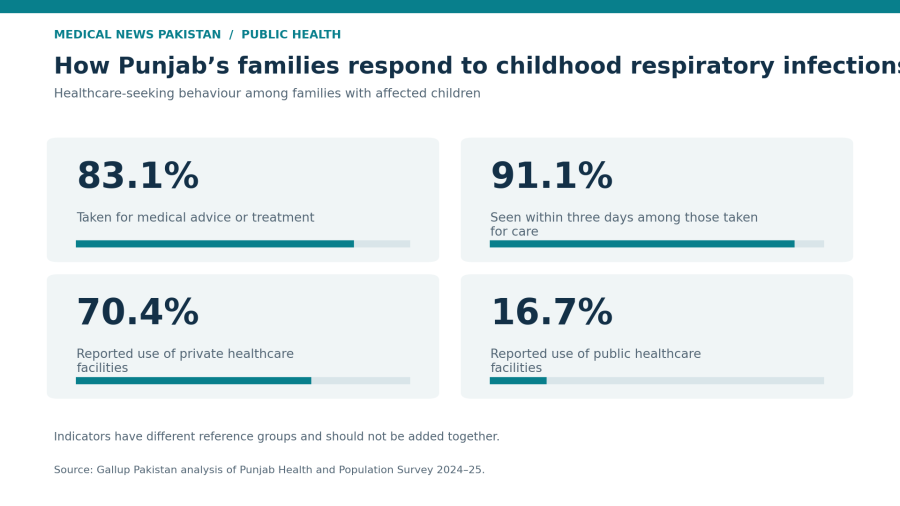
The figures indicate that most affected families are actively seeking medical assistance and doing so relatively quickly.
However, timely access to healthcare and receiving clinically appropriate treatment are two distinct aspects of healthcare quality.
The findings underline the importance of evidence-based prescribing, professional training, clinical oversight and antibiotic stewardship across both public and private healthcare facilities.
They also highlight the need for effective communication between healthcare providers and parents, particularly when an antibiotic is not clinically indicated.
Concerns surrounding inappropriate antibiotic use in Punjab have surfaced repeatedly over the years.
In 2020, Dawn reported that Punjab’s health authorities had initiated scrutiny of antibiotic prescribing practices amid concerns over excessive use, including prescriptions issued to children.
In November 2025, Dawn also reported on the need to strengthen childhood pneumonia management in Pakistan, highlighting the importance of antibiotic stewardship and improved access to diagnostic and treatment services.
The latest Gallup Pakistan findings bring renewed attention to these longstanding public health concerns.
While greater oversight of prescribing practices is necessary, healthcare authorities must also ensure that efforts to reduce unnecessary antibiotic consumption do not restrict timely access to lifesaving treatment for children who genuinely need it.
Parents and caregivers can also play an important role in protecting children from unnecessary medication while preserving the effectiveness of antibiotics.
Parents should not assume that every fever, cough, sore throat or runny nose requires antibiotics, nor should they insist on an antibiotic prescription when a qualified healthcare professional determines that such medication is unnecessary.
Antibiotics should never be purchased or administered without an appropriate medical prescription. Leftover antibiotics or medicines prescribed for another person should not be given to children.
When antibiotics are prescribed, parents should carefully follow the recommended dosage, administration instructions and duration of treatment. Prescribed treatment should not be discontinued or altered without consulting the treating healthcare professional.
Similarly, aspirin should never be administered to children unless specifically prescribed by a doctor.
Parents should feel encouraged to ask healthcare professionals about the purpose of prescribed medicines, their potential side effects and the warning signs that may require further medical attention. They should also remain vigilant for symptoms of serious respiratory illness and avoid delaying medical assessment when a child's condition deteriorates.
The findings from Punjab should serve as a wake-up call for healthcare professionals, healthcare regulators, policymakers, pharmaceutical stakeholders and families alike.
Addressing potentially unnecessary antibiotic use requires a coordinated approach encompassing stronger prescribing oversight, adherence to clinical guidelines, accessible diagnostic services, responsible medicine dispensing and sustained public awareness campaigns.
Healthcare regulators and professional bodies have an important role in promoting rational prescribing, strengthening antibiotic stewardship programmes and ensuring compliance with medication safety standards.
Equally important is educating parents and caregivers about the differences between viral and bacterial infections and the circumstances in which antibiotics are genuinely required.
Antibiotics remain among modern medicine’s most valuable achievements. Their effectiveness, however, cannot be taken for granted.
For parents, perhaps the most important question when receiving a prescription for their child is not how powerful the medicine is, but whether the child actually needs it. An informed decision today could protect your child’s health tomorrow.
Stay informed with Medical News Pakistan
CLICK HERE TO FOLLOW the official Medical News Pakistan WhatsApp Channel for important public health alerts, medication safety updates, medical research and evidence-based healthcare information that matters to you and your family.
Advertisement
E-PAPER
Trending
Popular
Can creatine help you age better? What science says about muscle, ...
-
Fruit juice or whole fruit? New ...
05:32 PM, 6 Nov, 2026 -
One in four people with cerebral palsy ...
05:51 PM, 3 Nov, 2026 -
Pakistan pharma sector profits rise 11% ...
02:45 PM, 3 Nov, 2026 -
Tea for a healthier heart? Read this ...
05:52 PM, 2 Nov, 2026
Follow us on Facebook
Follow us on Twitter
Copyright ©2026 Medical News. All Rights Reserved.