
Doctors warn of nationwide healthcare shutdown from November 1
Pakistan’s leading medical associations have given the government a final deadline to address disputes over FBR taxation, Punjab Healthcare Commission penalties and the treatment of young doctors, warning that private clinics and public hospital outpatient departments could close in phases if their demands remain unresolved.
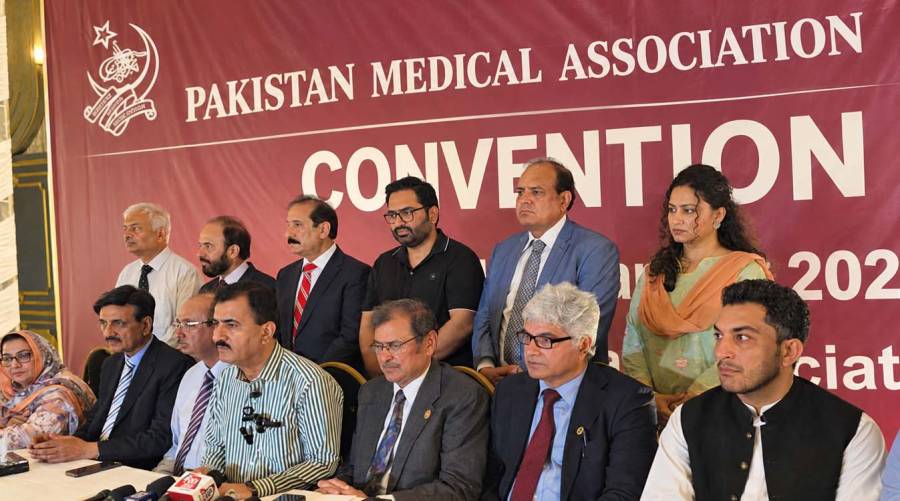
KARACHI: Pakistan’s leading medical associations have threatened a phased nationwide shutdown of healthcare services from November 1, 2026, unless the government resolves their regulatory, taxation and administrative grievances, raising the prospect of disruption across private clinics and public hospital outpatient departments (OPDs).
The warning followed the All Pakistan Medical Association (PMA) Convention in Gujrat, where around 500 senior medical professionals, provincial representatives and healthcare leaders unanimously adopted resolutions calling for action by the federal government, the Federal Board of Revenue (FBR) and provincial healthcare commissions.
The medical bodies have set November 1 as the deadline for concrete policy changes and administrative assurances. If their demands remain unmet, they have warned that private clinics and healthcare facilities, alongside OPDs at public hospitals, could close in phases under a coordinated action plan spanning the public and private sectors.
The alliance comprises PMA Centre and its provincial branches, the Young Doctors Association (YDA), Pakistan Islamic Medical Association (PIMA), Pakistan Academy of Family Physicians (PAFP), Private Hospital Association (PHA) and Pakistan Dental Association (PDA).
The dispute centres on four principal areas: the application of tax rules to medical practitioners, the enforcement of healthcare regulations, the conduct of administrative officials during hospital visits, and the employment, training and professional rights of young doctors.
PMA challenges FBR’s POS tax requirements for doctors
The convention rejected what the PMA described as the FBR’s selective implementation of the Point of Sale (POS) system for medical practitioners, arguing that doctors already fulfil their tax obligations and should not be subjected to inconsistent treatment compared with other professional service sectors.
The association called for uniform taxation across professional services, a review of recent FBR notifications and formal consultations with medical representatives before commercial tax mechanisms are applied to healthcare services.
The PMA maintained that tax policies affecting medical practice should be developed through engagement with the profession, with clear and consistent rules governing their implementation.
The demand places taxation at the centre of the confrontation between organised medical bodies and the government’s tax-collecting authority. The associations have linked their call for policy changes to the November 1 deadline, warning that the failure to reach an agreement could trigger the announced shutdown.
Punjab Healthcare Commission penalties draw criticism
The convention also criticised the Punjab Healthcare Commission (PHC) over what the PMA described as heavy financial penalties imposed during initial licensing inspections of healthcare facilities.
The association demanded that first-time inspections prioritise guidance, professional support and capacity building under the Minimum Service Delivery Standards (MSDS), rather than immediate financial penalties.
It called for clear written policies governing inspections and licensing, alongside structured dialogue between the commission and healthcare providers.
The PMA’s position is that healthcare facilities should be given appropriate guidance to understand and meet the applicable standards, particularly during initial inspections. The association wants the regulatory process to be transparent and consistent, with written procedures that providers can understand and follow.
Doctors object to treatment during hospital visits
Another resolution condemned what the convention described as the harassment of doctors during publicised hospital visits by administrative officials.
The medical leaders specifically objected to the recording of videos during such visits and their subsequent circulation on social media, saying the practice undermines doctors’ dignity and professional standing.
They argued that shortages of hospital beds, medicines and clinical staff stem from inadequate government resource allocation rather than clinical negligence by individual doctors.
The convention urged doctors to defend their dignity while remaining within legal and professional boundaries. Its position placed responsibility for addressing resource shortages on the wider healthcare system, rather than allowing systemic constraints to be attributed automatically to individual practitioners.
PMA backs young doctors over dismissals and registration disputes
The convention reaffirmed solidarity with the Young Doctors Association and condemned what the PMA described as retaliatory dismissals, the cancellation of training and the arbitrary revocation of Pakistan Medical and Dental Council (PMDC) registrations involving young doctors who had raised concerns.
The medical bodies demanded the immediate and unconditional reinstatement of affected doctors, restoration of their contracts and the reinstatement of residency positions.
The resolution brings employment security, postgraduate training and professional registration into the wider dispute, extending the associations’ demands beyond taxation and healthcare regulation.
By formally backing the YDA, the PMA also signalled that the concerns of young doctors would remain part of the collective position being presented to the government ahead of the deadline.
Senior medical leaders attend Gujrat convention
The convention brought together representatives of medical associations from across Pakistan, including senior office-bearers from the PMA, YDA and other participating organisations.
Those addressing the gathering included:
- Dr Izhar Ahmed Chaudhary, President, PMA Centre.
- Dr Abdul Ghafoor Shoro, Secretary General, PMA Centre.
- Dr Kamran, President, PMA Punjab.
- Dr Dayali Gul, President-Elect, PMA Sindh.
- Dr Ismail Memon, President, PMA Karachi.
- Dr Muhammad Shoab Niazi, President, YDA Punjab.
- Dr Mehboob Noonari, Chairman, YDA Sindh.
- Dr Maqsood Zahid, President-Elect, PMA Punjab.
- Dr Zarak Baloch, General Secretary, PMA Balochistan.
- Dr Iftikhar Ahmad Burni, President, PIMA North.
- Prof. Dr Masood Hiraj, President, PMA Multan.
- Dr Salman Haseeb, Patron-in-Chief, YDA Punjab.
- Dr Mian Tariq Mehmood, Pakistan Academy of Family Physicians.
- Dr Col. Ghulam Shabeer.
The resolutions were adopted unanimously, reflecting the collective position presented by the participating medical bodies on the issues discussed at the convention.
PMA seeks prime minister’s intervention before deadline
Following the convention, PMA Centre Secretary General Dr Abdul Ghafoor Shoro formally wrote to the prime minister, seeking high-level intervention and meaningful dialogue to resolve the disputes before November 1.
The letter placed the associations’ concerns before the federal government and sought engagement aimed at preventing a wider confrontation between healthcare professionals and the authorities.
The PMA said the government had been given a final opportunity to address the outstanding issues and avert a major disruption to healthcare services.
The association reiterated that any shutdown would be coordinated across the public and private sectors if the deadline passed without satisfactory action.
With the deadline approaching, the outcome will depend on whether the government, the FBR, the relevant healthcare regulators and the medical associations can reach an understanding on taxation, licensing enforcement, doctors’ professional dignity and the rights of young practitioners.
For patients, the central concern is the possibility that a failure to resolve the dispute could affect access to routine consultations at private clinics and public hospital OPDs. The PMA has warned of phased closures, but the convention’s announcement does not establish that a shutdown has already begun or that every healthcare facility will close.
Stay connected with Medical News Pakistan
CLICK HERE TO FOLLOW Medical News Pakistan WhatsApp channel for verified medical news, healthcare policy developments, regulatory updates and the latest decisions affecting doctors, hospitals and patients across Pakistan. Join our WhatsApp channel for important healthcare updates as they unfold.

Advertisement
E-PAPER
Trending
Popular
Could a heart calcium scan reveal your risk of a heart attack before ...
-
One blood test, 50+ cancers: What the ...
05:27 PM, 12 Oct, 2026 -
WHO rules out weight-loss drugs for ...
04:38 PM, 9 Oct, 2026 -
Global life expectancy rebounds, but ...
03:17 PM, 5 Oct, 2026 -
Scientists discover new human blood ...
04:49 PM, 2 Oct, 2026
Follow us on Facebook
Follow us on Twitter
Copyright ©2026 Medical News. All Rights Reserved.