
New York Governor seeks federal help as measles outbreak spreads across rural communities
Governor Kathy Hochul is preparing a targeted request to the US Department of Health and Human Services and the CDC after declaring a statewide disaster emergency, as health officials intensify efforts to expand vaccination, testing and outbreak control.
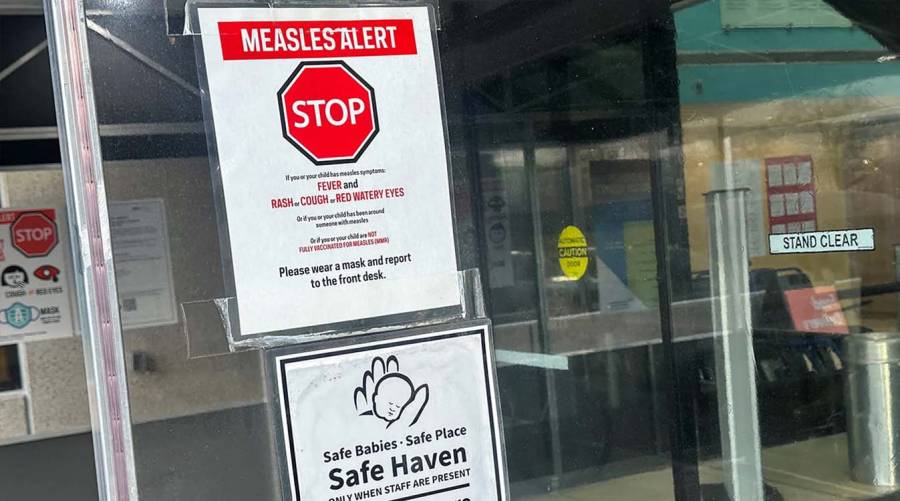
NEW YORK: New York Governor Kathy Hochul is preparing to seek federal assistance to contain a growing measles outbreak, with state officials looking to strengthen vaccination and disease-control efforts as cases spread across rural communities.
The move follows a statewide disaster-emergency declaration on October 5, which gives health authorities greater flexibility to expand access to measles vaccination and testing. Hochul’s spokesperson, Nicolette Simmonds, told Reuters that the governor would make a detailed request for assistance from the federal government, including support from the US Department of Health and Human Services (HHS) and the Centers for Disease Control and Prevention (CDC).
The federal response is already taking shape. HHS Secretary Robert F. Kennedy Jr. spoke with Hochul on Tuesday and offered federal support, according to the department. He also connected the governor with CDC Director Erica Schwartz to facilitate coordination between state and federal health officials.
New York reports 108 measles cases
According to figures released by the governor’s office, New York recorded 108 measles cases through October 3, including 92 cases reported since July 15 in under-immunised rural communities across 18 counties. The outbreak has prompted renewed concern about vaccination coverage and the capacity of local health systems to identify cases, trace contacts and prevent further transmission.
The state has already stepped up its response. The October 5 emergency order expands the network of professionals authorised to administer vaccines, including paramedics, advanced emergency medical services providers, midwives and pharmacists. It also gives registered nurses greater flexibility to order measles testing and supports efforts to strengthen laboratory testing and contact tracing. The measures are intended to make vaccination and diagnostic services more accessible in affected communities.
More than 1,000 doses of the measles, mumps and rubella (MMR) vaccine had been administered in affected rural communities since mid-August, according to reporting on the state’s response. The emergency measures are scheduled to remain in effect through November 4.
Federal assistance amid a wider US measles resurgence
New York’s outbreak is unfolding against a broader national resurgence of measles. The CDC reported 3,887 confirmed cases across the United States as of October 1, 2026, in figures published on October 2. The total reflects reports from multiple jurisdictions and remains subject to revision as investigations continue.
Neighbouring Pennsylvania has experienced a substantially larger outbreak, with more than 1,000 cases reported this year, according to recent Associated Press reporting. The situation has intensified debate over federal involvement in outbreak control, particularly after disagreements between Kennedy and Pennsylvania officials over measles-related deaths and the role of federal public-health agencies.
Against this backdrop, the planned request from New York could provide a clearer picture of the technical and operational support the state considers necessary. Federal assistance may help coordinate outbreak investigations, laboratory services, vaccination efforts and public-health expertise, although the specific support requested by Hochul had not been detailed in the reports reviewed.
Why measles vaccination matters
Measles is a highly contagious viral disease that can cause serious complications, particularly in young children and people who are not adequately protected. Complications can include pneumonia, encephalitis, hospitalisation and death. The MMR vaccine is an established means of preventing measles, and maintaining high vaccination coverage is central to limiting community transmission.
Public-health authorities generally identify vaccination coverage above 95% as an important threshold for community protection against measles. When vaccination coverage falls, the virus can spread rapidly among susceptible people, putting infants who are too young to be fully vaccinated and people with certain medical conditions at greater risk.
New York health officials have urged residents to check their vaccination records and ensure that they and their families are up to date with recommended immunisations. People who develop fever and a rash, particularly after potential exposure or travel, should contact a healthcare provider or local health department for advice before visiting a medical facility, helping reduce the risk of exposing others.
As New York prepares its formal request for federal help, the immediate public-health priority remains clear: identify infections promptly, protect people who are vulnerable, improve access to vaccination and prevent further spread. The effectiveness of the response will depend on coordination among state and federal agencies, local health departments, healthcare providers and the communities most affected by the outbreak.
Stay connected, stay ahead
CLICK HERE TO JOIN Medical News Pakistan official WhatsApp channel for verified global medical breakthroughs, FDA approvals, healthcare innovations, clinical research updates, public-health developments and the latest developments shaping healthcare in Pakistan and around the world.

Advertisement
E-PAPER
Trending
Popular
Global life expectancy rebounds, but healthy years lag behind
-
Scientists discover new human blood ...
04:49 PM, 2 Oct, 2026 -
Obesity linked to 229 diseases, may ...
05:28 PM, 21 Sep, 2026 -
Pakistan’s Dr. Misha Tanveer takes ...
04:03 PM, 16 Sep, 2026 -
Calorie deficit for weight loss: How to ...
06:00 PM, 24 Aug, 2026
Follow us on Facebook
Follow us on Twitter
Copyright ©2026 Medical News. All Rights Reserved.