
Why over 50% of kidney patients die of heart disease?
For decades, doctors blamed blood pressure, diabetes, and aging. But a new discovery suggests something far more direct may be happening inside the body.
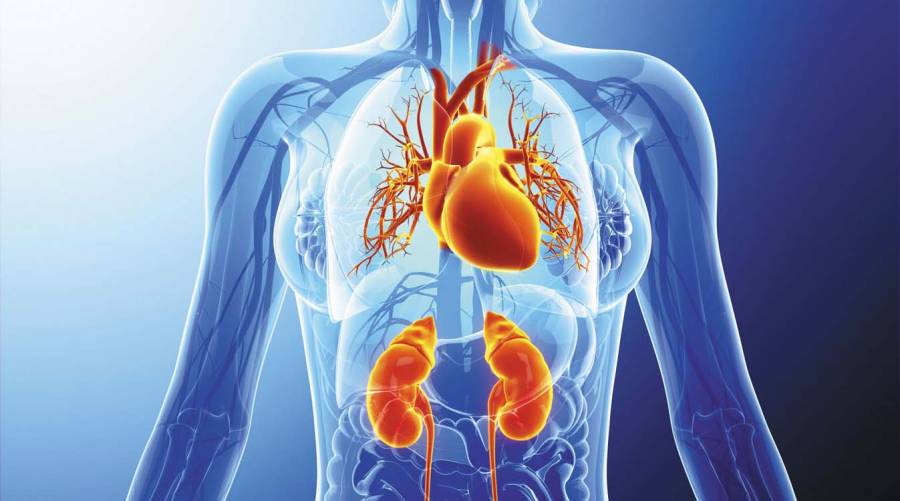
Why over 50% of kidney patients die of heart disease?
For years, doctors have noticed a disturbing pattern: people with chronic kidney disease are far more likely to die from heart failure than from kidney failure itself. In fact, heart complications claim the lives of nearly half of these patients.
The connection has always been obvious — but the reason behind it has remained frustratingly unclear.
Most explanations pointed to side effects: high blood pressure, fluid buildup, diabetes, inflammation, or simply old age. The heart, it was believed, collapsed under the strain of a sick body.
But a new line of research is challenging that assumption — suggesting the heart may not just be a victim of kidney disease, but a direct target of it.
A message from the kidneys that the heart cannot survive
A joint research team from the Icahn School of Medicine at Mount Sinai and the University of Virginia School of Medicine set out to investigate what actually travels through the blood of patients with kidney disease. Their findings, published in the medical journal Circulation, suggest that damaged kidneys may be sending harmful signals straight to the heart.
The team focused on microscopic carriers known as extracellular vesicles — tiny packages released by cells to communicate with other organs. Under healthy conditions, these vesicles transport useful biological information. But when kidneys are diseased, these same messengers appear to turn into something else entirely.
Instead of carrying healthy instructions, they carry damage.
Related story: Key mechanism linking C-reactive protein to kidney inflammation in diabetic patients uncovered
What scientists found inside the blood
Researchers analyzed blood samples from 50 healthy volunteers and 50 patients with kidney disease. What they found was striking:
only the blood of kidney disease patients contained abnormal microparticles capable of harming heart muscle.
These particles carried a form of genetic material called non-coding RNA. Normally, this RNA helps regulate cell behavior. In kidney disease, however, it behaves differently. It shuts down protective processes inside heart cells and activates pathways that cause fibrosis — the thickening and stiffening of heart tissue.
Over time, this stiffness weakens the heart’s ability to pump blood properly. The result is heart failure — even in patients who had no prior heart disease.
In simple terms:
the kidneys are not just failing quietly — they may be actively injuring the heart.
A direct attack, not a side effect
Until now, heart disease in kidney patients was thought to be an indirect consequence of illness. Doctors blamed fluid overload, poor circulation, diabetes, or high blood pressure. The heart was considered an innocent victim caught in the crossfire of a sick body.
This research suggests something far more alarming:
the heart may be receiving toxic biological signals directly from the kidneys.
If confirmed in larger human studies, this would represent the first clear evidence that kidney disease itself can trigger heart damage through a molecular pathway — not just through lifestyle or secondary complications.
Can the damage be stopped?
To test whether these toxic microparticles could be neutralized, researchers conducted animal experiments. When drugs were used to reduce these particles in the bloodstream, heart function improved — even though kidney function remained poor.
Animals treated in this way showed fewer signs of heart failure and better heart muscle performance compared to untreated ones.
This suggests that future treatments might not need to fully cure kidney disease to protect the heart. Instead, doctors could target the harmful messengers traveling in the blood.
A drop of blood that could predict heart failure
The researchers believe that measuring these microparticles in blood could one day help identify kidney patients at highest risk of heart disease — long before symptoms appear.
Such a test could allow doctors to intervene early, adjust medications, and closely monitor heart health before irreversible damage occurs.
More importantly, it opens the door to drugs designed specifically to block or remove these toxic particles, potentially preventing heart failure in millions of patients worldwide.
Why this discovery matters
Chronic kidney disease affects hundreds of millions of people globally. Heart disease remains the leading cause of death among them. For families, it often feels sudden and cruel: a kidney diagnosis turns into a heart emergency without warning.
This new research offers something rare in medicine — a possible explanation for a long-standing mystery.
It also changes how we think about organ failure. The body’s organs are not isolated systems. When one fails, it may not just weaken others — it may actively damage them.
What comes next
Scientists caution that further studies in humans are needed before new treatments can be approved. But the discovery already reshapes how doctors view the kidney–heart connection.
Instead of asking only how kidney disease stresses the heart, medicine may now ask a deeper question:
what messages are sick organs sending — and how can we silence the dangerous ones?
If future research confirms these findings, a simple blood test and a targeted drug could one day prevent heart failure in kidney patients — saving lives long before symptoms begin.
For millions living with kidney disease, that possibility could change everything.
Stay connected with Medical News Pakistan
CLICK HERE TO JOIN our WhatsApp Community for the latest health updates, research insights, and expert tips straight to your phone.

Advertisement
E-PAPER
Trending
Popular
Pakistan’s Dr. Misha Tanveer takes air pollution research to Europe ...
-
Calorie deficit for weight loss: How to ...
06:00 PM, 24 Aug, 2026 -
Vaccine maker warns of wider TBE, ...
05:00 PM, 21 Aug, 2026 -
FDA authorizes first robot to draw ...
06:11 PM, 20 Aug, 2026 -
One blood test for multiple cancers ...
04:52 PM, 11 Aug, 2026
Follow us on Facebook
Follow us on Twitter
Copyright ©2026 Medical News. All Rights Reserved.