
Cancer vaccine breakthrough: Moderna, Merck’s mRNA shot cuts melanoma return and spread
The first successful late-stage trial of a personalized mRNA cancer vaccine has delivered a major melanoma breakthrough — and the bigger story may be what happens next in lung, bladder, kidney, pancreatic and other cancers.
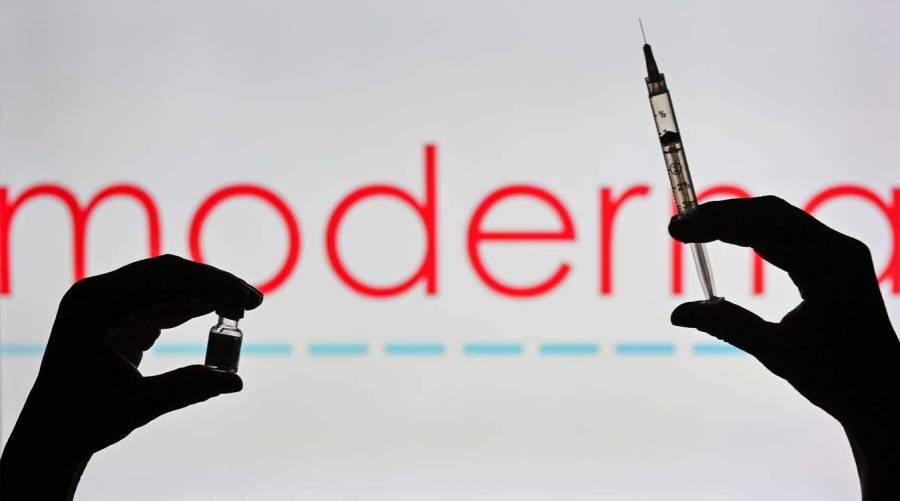
A personalized cancer vaccine from Moderna and Merck has delivered one of the most important clinical results yet for mRNA technology outside infectious diseases, reducing the risk of high-risk melanoma returning and spreading when added to Merck's immunotherapy Keytruda.
The result comes from a large late-stage trial involving more than 1,100 patients whose melanoma had already been surgically removed but who remained at significant risk of the cancer coming back.
What makes the announcement potentially bigger than melanoma, however, is what is already happening behind it.
Moderna and Merck are testing the same personalized vaccine strategy in several other cancers, while BioNTech and Roche are advancing a rival mRNA program of their own. Several of those studies are expected to report results over the coming years.
That means melanoma may prove to be the first major test of a treatment concept that researchers hope could eventually reshape how some cancers are treated after surgery.
A landmark Phase 3 result
Moderna and Merck said their personalized mRNA cancer vaccine, intismeran autogene, met the main goals of an ongoing Phase 3 study when used with Keytruda.
The trial enrolled 1,137 patients with high-risk stage IIB to IV melanoma whose tumors had been surgically removed.
Patients received either:
- Keytruda alone, or
- Keytruda plus the personalized mRNA cancer vaccine.
According to the companies' interim analysis, the combination significantly reduced the risk of the cancer returning and also reduced the likelihood of melanoma spreading to other parts of the body compared with Keytruda alone.
The result is particularly significant because it represents the first positive late-stage trial for an individualized mRNA cancer vaccine.
Moderna President Stephen Hoge described the outcome as a landmark development, while cancer specialists said it could provide validation for an entire new generation of cancer-vaccine research.
But an important question remains unanswered.
The companies have not yet reported whether the combination improves overall survival, meaning it is not yet known whether patients receiving the vaccine ultimately live longer.
Full Phase 3 data have also not yet been publicly presented.
That will be one of the next major pieces of evidence oncologists and regulators will be watching.
What makes this cancer vaccine different?
This is not a preventive vaccine designed to stop cancer before it develops.
It is a therapeutic vaccine created individually for a patient after cancer has already been diagnosed.
Once a tumor is surgically removed, scientists analyze its genetic mutations. Moderna then uses that information to manufacture a customized mRNA vaccine designed around mutations found specifically in that patient's cancer.
The vaccine instructs the immune system to recognize those abnormal tumor signals.
Keytruda, meanwhile, helps remove the biological brakes that can prevent immune cells from attacking cancer.
The theory behind combining the two is straightforward:
Keytruda activates the immune response, while the personalized vaccine helps tell that response exactly what cancer cells to look for.
Patients in the study could receive up to nine doses of the personalized vaccine together with up to nine doses of Keytruda over approximately one year.
Why melanoma became the first major target
Melanoma was not chosen by accident.
The disease often contains a large number of mutations, making its cancer cells more visible to the immune system than tumors with fewer genetic abnormalities.
That creates more possible targets for an individualized cancer vaccine.
Melanoma is also the deadliest form of skin cancer once it spreads to distant parts of the body.
For patients whose tumors have been removed, doctors currently face a difficult balance: whether to use additional immunotherapy to reduce recurrence risk while exposing patients to possible immune-related side effects.
The addition of a personalized vaccine could change that calculation if the benefit seen in the Phase 3 trial holds up when the complete data are released.
Earlier results had already raised expectations
The late-stage success follows years of increasingly encouraging data.
Earlier mid-stage results from the same Moderna-Merck approach suggested that the combination produced a durable advantage over Keytruda alone.
Five-year follow-up showed the treatment reduced the risk of cancer recurrence or death by around half, while the risk of the disease spreading to distant sites was also substantially lower.
Those results were promising.
The unanswered question was whether the benefit would survive the much tougher test of a large Phase 3 trial.
It now appears that it has.
That is why the latest result is being viewed as more than another encouraging early cancer study.
Could the vaccine reach patients next year?
Merck and Moderna have already begun discussions with regulators.
Because the treatment has received breakthrough therapy designation, Moderna believes a regulatory pathway could potentially allow the vaccine to become available to eligible melanoma patients as early as next year if the evidence supports approval.
That is not guaranteed.
Regulators will still need to examine:
- the complete Phase 3 efficacy results,
- detailed safety findings,
- manufacturing consistency,
- the duration of benefit, and
- eventually, overall survival.
Even so, a possible commercial launch has moved from a distant research ambition to a realistic regulatory question.
Moderna estimates that thousands of melanoma patients could potentially receive the vaccine during the first years following approval.
Safety could be just as important as efficacy
Keytruda is already widely used against melanoma and many other cancers, but immune checkpoint drugs can produce serious side effects.
Because they activate the immune system, they can sometimes trigger inflammation in healthy tissues and organs.
Possible effects include fatigue, diarrhea, skin reactions, joint and muscle inflammation and, in some patients, immune-related injury to organs.
So far, Moderna and Merck say no new safety signals have emerged from adding the personalized vaccine to Keytruda.
Earlier studies similarly found no major increase in serious adverse events linked to the vaccine.
Some vaccine-related reactions were described as resembling symptoms people may experience after routine vaccinations, such as flu-like effects or injection reactions.
The complete Phase 3 safety dataset will nevertheless be critical when regulators assess whether the added clinical benefit justifies using the personalized vaccine alongside existing treatment.
Melanoma may only be the beginning
Moderna and Merck are already testing personalized mRNA cancer vaccines beyond melanoma.
Large studies are underway in non-small cell lung cancer, particularly in patients whose tumors have been surgically removed.
Additional research programs include:
- bladder cancer,
- kidney cancer,
- pancreatic cancer, and
- stomach cancer.
Moderna has indicated that results from several studies could emerge over the next one to two years.
That creates a potentially decisive period for the entire field.
If the melanoma result turns out to be unique to highly mutated tumors, personalized mRNA vaccines could remain useful but relatively narrow.
If similar benefits start appearing across several cancer types, however, the technology could become a new treatment platform used alongside surgery, immunotherapy and other established cancer treatments.
That possibility is precisely why oncologists are paying such close attention to what comes next.
BioNTech and Roche are also racing ahead
Moderna and Merck are not alone in pursuing individualized cancer vaccines.
BioNTech and Roche are developing a competing personalized mRNA treatment known as autogene cevumeran.
The program is being studied in patients with cancers including colon and pancreatic cancer following surgery.
A colon cancer trial is expected to produce results in 2027, while pancreatic cancer studies are following on a longer timetable.
The involvement of several major companies matters.
If multiple independently developed personalized cancer vaccines succeed in randomized trials, it would provide much stronger evidence that the concept itself works — rather than suggesting that Moderna and Merck simply discovered a melanoma-specific combination.
That is one reason researchers now see the latest result as a potential inflection point.
Experts call it validation of mRNA cancer treatment
Cancer specialists reacted strongly to the findings.
Dr. Ryan Sullivan of Mass General Brigham Cancer Institute said the positive study could encourage both scientific confidence and investment across the cancer-vaccine field.
Dr. Julie Gralow, chief medical officer of the American Society of Clinical Oncology, described the result as an important validation of mRNA technology in cancer treatment.
Other oncology researchers have similarly argued that the successful trial could accelerate work on individualized immunotherapies across solid tumors.
But they also caution against assuming that every cancer will respond the same way.
Cancer is not one disease.
Different tumors vary enormously in their mutation burden, immune environment and ability to evade immune attack.
That means success in melanoma remains proof of principle — not proof that mRNA cancer vaccines will work universally.
A major hurdle remains: every vaccine is made to order
Personalization is the treatment's biggest scientific advantage and potentially one of its greatest practical challenges.
Unlike conventional drugs produced identically for thousands of patients, each vaccine must be manufactured specifically for one person.
The process requires tumor tissue to be collected and genetically analyzed before the patient's vaccine can be designed and produced.
In simplified terms, the treatment pathway involves:
- removing and sequencing the tumor,
- identifying cancer-specific mutations,
- selecting appropriate immune targets,
- designing the individualized mRNA vaccine,
- manufacturing the patient's doses, and
- delivering them within a clinically useful timeframe.
The approach therefore demands a sophisticated manufacturing and logistics system.
Moderna says it believes it can scale production to meet demand, but how quickly and affordably personalized vaccines can be made will help determine whether the technology becomes widely accessible.
Pricing could become the next major controversy
Neither Moderna nor Merck has announced what intismeran autogene would cost.
Moderna CEO Stéphane Bancel has said pricing has not yet been decided.
Given the complexity of sequencing a patient's tumor and manufacturing a made-to-order vaccine, cost could become an important issue if the treatment reaches the market.
Analysts at Barclays have estimated that the therapy could eventually generate roughly $3 billion in annual melanoma sales by 2035.
The commercial importance extends beyond melanoma.
For Moderna, a successful cancer vaccine could provide the clearest evidence yet that its mRNA platform has major commercial potential outside COVID-19.
For Merck, the vaccine could also strengthen its oncology business as Keytruda approaches patent challenges later this decade.
Investor reaction reflected those expectations, with Moderna's shares surging dramatically following the trial announcement and Merck also recording major gains.
What patients should know before calling it a cure
Despite the breakthrough language surrounding the study, this vaccine is not a cure for melanoma, nor is it currently an approved cancer treatment.
The result shows that the combination reduced the risk of recurrence and spread in a specific group of high-risk melanoma patients whose tumors had already been surgically removed.
It does not yet establish:
- an overall-survival benefit,
- effectiveness in every melanoma patient,
- effectiveness against every cancer type, or
- long-term safety beyond the available follow-up.
Those questions remain under investigation.
The full Phase 3 dataset will therefore matter just as much as the headline result.
Next two years may determine whether cancer vaccines truly arrive
The melanoma trial has answered one critical question: can a personalized mRNA cancer vaccine succeed in a large late-stage randomized study?
For Moderna and Merck, the answer is now yes.
The next question is far bigger.
Can the same strategy work repeatedly across different cancers?
With lung, bladder, kidney, pancreatic, stomach and colorectal cancer programs moving forward across several companies, oncology may not have to wait long for an answer.
If multiple trials succeed, the treatment of cancer after surgery could begin to change from a largely standardized approach into something much more individualized — with vaccines manufactured around the mutations of each patient's own tumor.
That possibility remains unproven.
But after this melanoma breakthrough, it can no longer be dismissed as distant science.
The coming trial results may determine whether personalized mRNA vaccines become a niche melanoma advance — or the beginning of an entirely new chapter in cancer treatment.
Stay connected with Medical News Pakistan
CLICK HERE TO JOIN the official Medical News Pakistan WhatsApp Channel for verified global medical breakthroughs, FDA approvals, healthcare innovations, clinical research updates and the latest developments shaping medicine around the world.

Advertisement
E-PAPER
Trending
Popular
Pakistan pharma sector profits rise 11% in 1QFY27 as margins reach ...
-
Tea for a healthier heart? Read this ...
05:52 PM, 2 Nov, 2026 -
37 AKU researchers join world's top 2% ...
06:47 PM, 16 Oct, 2026 -
Could a heart calcium scan reveal your ...
01:36 PM, 13 Oct, 2026 -
One blood test, 50+ cancers: What the ...
05:27 PM, 12 Oct, 2026
Follow us on Facebook
Follow us on Twitter
Copyright ©2026 Medical News. All Rights Reserved.