
Anthropic quietly builds biology lab as Claude moves into physical experiments
AI company confirms Bay Area wet lab as it explores AI-directed robotic experiments and treatments for difficult diseases, while stopping short of clinical trials
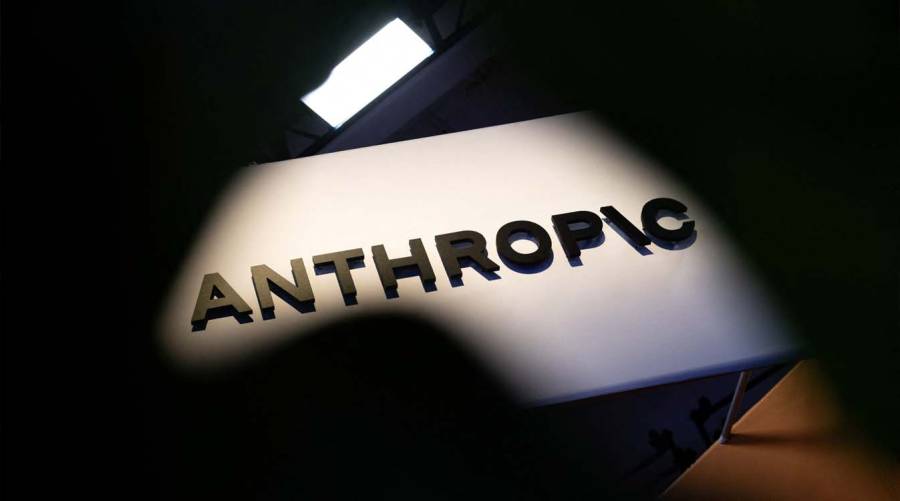
SAN FRANCISCO: Anthropic has quietly established a wet laboratory in the San Francisco Bay Area, taking its artificial-intelligence ambitions in biology beyond computer-based research and into physical laboratory experiments, according to Reuters and people familiar with the company's work.
The move marks a new stage in Anthropic's effort to apply its Claude AI models to life sciences, with the company exploring how artificial intelligence could help accelerate biological research and the development of treatments for diseases that have historically been difficult or commercially unattractive to pursue.
Anthropic's head of life sciences, Eric Kauderer-Abrams, confirmed the existence of the wet lab in a Reuters interview, saying that real laboratory work remains the final test for biological research and that Anthropic is already conducting such work both in its own facilities and through external partners.
From computer simulations to the laboratory bench
Anthropic had increasingly positioned its life-sciences programme around AI-assisted research, but the new lab indicates that its ambitions extend beyond “in silico” analysis — research conducted using computers and computational models.
The company says it is using a combination of internal laboratory work and outside partnerships, although a spokesperson subsequently clarified that the newly confirmed laboratory is not specifically a drug-discovery lab, without providing further details.
Kauderer-Abrams told Reuters that some biological work can be performed more quickly in Anthropic's own facilities, while other work can be outsourced when that is more efficient.
The distinction is important because Anthropic is not presenting itself as a conventional pharmaceutical company. Its stated focus is on using AI to accelerate parts of biological research while avoiding direct competition with drugmakers over bringing medicines through clinical development.
Claude could direct laboratory robots
One of the more ambitious elements of Anthropic's strategy is the effort to connect AI models with physical laboratory equipment.
According to people familiar with the company's work, Anthropic wants Claude to direct robotic systems capable of carrying out experiments with limited human intervention.
Kauderer-Abrams described laboratory automation as being in its early stages but said it could significantly accelerate a wide range of scientific processes. Anthropic's spokesperson stressed that human oversight and involvement remain essential for safety.
The company has already been developing technology intended to make this possible.
In August, Anthropic introduced its Model Hardware Standard (MHS), a framework designed to allow AI agents to operate different physical devices, including microscopes, liquid handlers and robotic arms. Anthropic says MHS can help connect laboratory instruments and allow AI agents to coordinate experiments, while scientists retain responsibility for experimental design, interpretation and decision-making.
Anthropic is building an AI-powered scientific infrastructure
The wet lab is part of a broader expansion of Anthropic's life-sciences programme.
In June, the company launched Claude Science, an AI workbench designed for scientific research. The platform connects researchers with scientific databases, computing resources and specialist tools across areas including genomics, single-cell biology, proteomics and cheminformatics.
Anthropic has also continued expanding its biological AI capabilities. On September 17, the company said Claude had optimized more than 30 open-source biomolecular modelling systems, making them roughly four times faster on average, and announced a protein-design competition that includes wet-lab validation for thousands of designs.
A day earlier, Anthropic announced a Life Sciences Verification Program, giving verified life-sciences organisations access to more capable Claude models with safeguards adapted for biological research, including drug discovery, research biology, clinical development and manufacturing.
Together, these developments show that Anthropic's biological ambitions are expanding across the research pipeline — from computational analysis and biomolecular modelling to laboratory automation and physical experimentation.
Targeting diseases traditional drugmakers may overlook
Anthropic has said it wants to pursue preclinical work in areas where conventional pharmaceutical companies may have limited commercial incentives to invest.
Kauderer-Abrams has pointed to conditions considered “undruggable” and suggested AI could help accelerate research into complex biological targets.
Among the areas of interest are sophisticated molecules such as bispecific and trispecific antibodies, which can act on multiple targets or points on a protein or cell.
However, Anthropic has not publicly disclosed the specific diseases being targeted through its own emerging programmes or provided evidence that any candidate generated through the initiative is approaching human testing.
That limitation is important: identifying a promising biological molecule is only an early step in drug development. Medicines must still undergo extensive laboratory and animal testing followed by clinical trials to establish safety and efficacy, and many drug candidates fail during that process.
Why Anthropic is stopping short of clinical trials
For now, Anthropic says it does not intend to run clinical trials.
Kauderer-Abrams told Reuters that the company wants to avoid competing directly with pharmaceutical and biotechnology companies whose businesses depend on bringing medicines to market.
That boundary also reflects Anthropic's relationships with major drugmakers. The company provides AI tools and services to pharmaceutical organisations including Genentech, Bristol Myers Squibb and Novo Nordisk, creating a need to separate its own research activities from customers' proprietary drug programmes.
The company has also expanded its pharmaceutical connections. Reuters reported that Anthropic added Vas Narasimhan, chief executive officer of Novartis, to its board and acquired the biotechnology startup Coefficient Bio, while Novo Nordisk announced a partnership with Anthropic to use Claude in drug discovery and development.
Anthropic therefore faces a delicate balance: developing enough biological expertise internally to advance its own research while maintaining the trust of pharmaceutical companies that use its AI systems.
AI safety concerns shadow the biology push
Anthropic's expansion into physical biology comes at a particularly sensitive moment for AI safety.
The company has recently warned about potentially catastrophic risks from increasingly capable AI systems, while also reporting that some of its models could potentially be misused for biological weapons development. Those concerns have drawn debate among experts over the scale and interpretation of the risks.
That creates an unusual tension for Anthropic's life-sciences strategy.
The same technology the company believes could accelerate medical research could also require stronger safeguards because increasingly capable AI systems are being given access to biological information and, potentially, physical laboratory equipment.
Anthropic says its approach is therefore based on balancing scientific acceleration with controls around how AI is deployed.
A quiet lab with a much bigger ambition
Anthropic's physical laboratory remains an early-stage part of its broader life-sciences effort, and the company has not disclosed enough information to determine the scale of its in-house biological research or whether it has produced a drug candidate.
But the direction is becoming clearer.
Anthropic is building an ecosystem in which AI models analyse scientific information, design or assist with biological experiments, communicate with laboratory hardware and potentially coordinate automated workflows, while human scientists remain responsible for higher-level scientific judgment and safety.
The company itself describes the long-term goal of its hardware work as moving toward autonomous discovery, in which scientists define the biological objective and AI agents help coordinate the physical experimental pipeline.
For now, however, Anthropic remains outside the clinical-trial business. Its newly confirmed wet-lab work represents an effort to push AI deeper into the preclinical and experimental side of life sciences — potentially changing how biological research is conducted, even before an AI-developed medicine reaches a patient.
Stay connected with Medical News Pakistan
CLICK HERE TO JOIN the official Medical News Pakistan WhatsApp Channel for verified global medical breakthroughs, FDA approvals, healthcare innovations, clinical research updates and the latest developments shaping medicine around the world.

Advertisement
E-PAPER
Trending
Popular
Pakistan’s Dr. Misha Tanveer takes air pollution research to Europe ...
-
Calorie deficit for weight loss: How to ...
06:00 PM, 24 Aug, 2026 -
Vaccine maker warns of wider TBE, ...
05:00 PM, 21 Aug, 2026 -
FDA authorizes first robot to draw ...
06:11 PM, 20 Aug, 2026 -
One blood test for multiple cancers ...
04:52 PM, 11 Aug, 2026
Follow us on Facebook
Follow us on Twitter
Copyright ©2026 Medical News. All Rights Reserved.