
LHC suspends PMDC orders requiring Afghan medical students to return to Afghanistan
Lahore High Court allows 13 petitioners to continue medical education, sit examinations and return to hostels; PMDC, Health Ministry and universities directed to respond by September 18
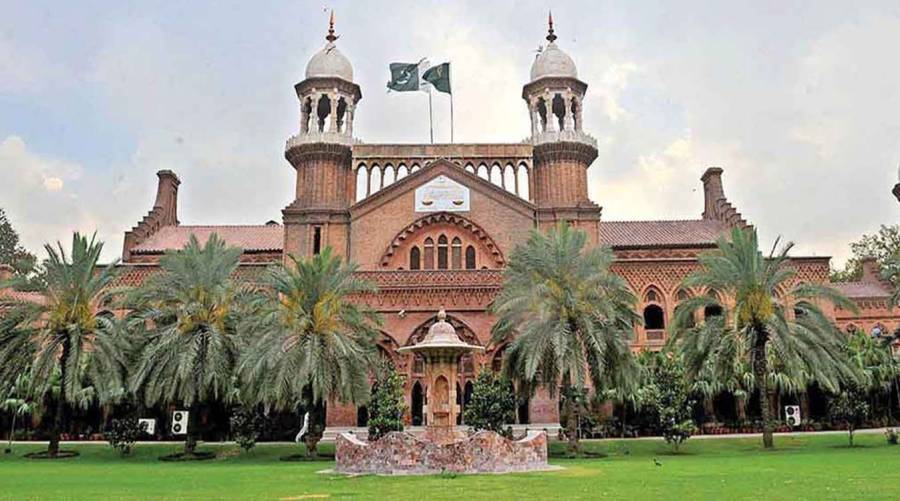
LAHORE: The Lahore High Court (LHC) has suspended the operation of Pakistan Medical and Dental Council (PMDC) directives requiring Afghan medical students enrolled in Pakistani institutions to return to Afghanistan, temporarily allowing affected students to continue their medical education in Pakistan.
Justice Khalid Ishaq issued the order on Friday while hearing petitions filed by 13 Afghan medical students studying at medical institutions in Lahore, including King Edward Medical University, Shaikh Khalifa Bin Zayed Al Nahyan Medical and Dental College and the Services Institute of Medical Sciences.
The court's intervention follows a dispute over two PMDC directives, issued on July 31 and September 1, concerning Afghan students enrolled in medical and dental programmes in Pakistan.
The September 1 directive instructed Afghan students already enrolled in Pakistani medical and dental colleges to return to Afghanistan and barred institutions from granting admission or placement to Afghan students during the current academic session. It reiterated an earlier PMDC instruction issued on July 31.
The 13 petitioners — seven women and six men — approached the LHC after, according to their petitions, they were removed from their colleges on the instructions of the medical regulator.
They asked the court to declare the two PMDC directives illegal and unconstitutional, arguing that the council and the medical colleges lacked lawful authority to expel students who had already spent years pursuing their medical education in Pakistan.
Court allows students to resume education
During Friday's hearing, Advocate Asad Jamal, representing the petitioners, argued that the students had been condemned unheard and that their rights to education, life and dignity had been affected.
He further contended that the PMDC had exceeded its jurisdiction under the Pakistan Medical and Dental Council Act 2023 and that the students' fundamental rights should be protected in accordance with the law.
The PMDC's counsel, Haris Azmat, opposed suspension of the directives and argued that the matter involved national security.
Justice Khalid Ishaq, however, suspended the operation of both the July 31 and September 1 PMDC directives.
The order means the petitioning students are to be allowed to continue their education, appear in examinations and return to their hostels while the court considers the legal challenge.
The LHC has sought replies from the PMDC, the Ministry of National Health Services, Regulations and Coordination, and vice chancellors of the medical universities and colleges concerned. The matter has been fixed for the next hearing on September 18.
Students challenge PMDC authority to order their return
The petitioners maintain that the PMDC's powers as the country's medical education regulator must be exercised within the limits of the Constitution and applicable law.
They argued that neither the Pakistan Medical and Dental Council Act 2023 nor constitutional and international legal principles authorised the council to act arbitrarily against Afghan students who had already been admitted and had spent years studying in Pakistan.
The petitions also describe the impact of the directives on the students' education and living arrangements.
According to the petitioners, some students were removed from college hostels following the PMDC instructions, leaving them without accommodation while their academic futures remained uncertain.
One of the petitioners, Nilofar Nikzad, said she had completed two years of medical studies in Afghanistan before abandoning her education because of Taliban restrictions on women's access to education.
Several of the students who approached the LHC are also beneficiaries of scholarships under the Higher Education Commission-sponsored Allama Iqbal Scholarship Programme.
The Higher Education Commission held a reception in July 2025 to welcome around 350 Afghan students who had arrived in Pakistan to pursue higher education.
Foreign Office says there is no blanket decision to return all Afghan students
The court case has also brought into focus the distinction between the PMDC's directives concerning medical education and the government's broader position on Afghan students' stay in Pakistan.
Foreign Office spokesperson Sajjad Haider Khan said at a weekly briefing on Thursday that the government had not taken a decision to return all Afghan students from Pakistan.
He said Afghan students could remain in Pakistan if they were enrolled in a valid degree programme and held valid visas.
“There is no blanket ban on Afghan students,” Khan said, while referring specific questions about the students affected by the PMDC directives to the medical regulator.
The Foreign Office spokesperson did not confirm whether the students affected by the PMDC orders held valid registrations and visas, saying that the PMDC should be approached on those matters.
The position leaves the legal status of the specific students affected by the PMDC directives to be considered alongside the separate questions of medical-student registration and immigration status.
PMDC directives affect admissions as well as existing students
The dispute is not limited to the students already enrolled in Pakistani medical colleges.
The September 1 PMDC directive also barred medical and dental colleges from granting admission or placement to Afghan nationals during the current academic session.
The council's instructions, as reported earlier, also covered placement, transfer and migration of Afghan nationals within medical and dental institutions.
The PMDC is the statutory regulator responsible for medical and dental education and registration in Pakistan, and its official regulatory framework includes undergraduate medical and dental education and student registration requirements.
The September 1 directive, however, has now become the subject of judicial scrutiny following the petitions by the 13 students.
Medical education caught in wider policy dispute
The case has emerged amid wider developments affecting Afghan nationals in Pakistan, but the LHC proceedings specifically concern the effect and legality of the PMDC directives on Afghan medical students.
A Health Ministry official previously told Dawn that an “in principle” decision had been made to send Afghan students enrolled in Pakistani medical universities back to Afghanistan, citing ongoing tensions between Islamabad and Kabul.
The Human Rights Commission of Pakistan has also criticised the PMDC decision, warning that its implementation could create a humanitarian problem for affected medical and dental students. The commission said around 100 Afghan medical and dental students in Lahore alone could be affected, including an estimated 20 to 40 women.
The students' petitions argue that the abrupt disruption of their education has caused serious academic and personal difficulties, particularly for those who have already spent several years completing their medical degrees.
What happens next
For the 13 petitioners, the immediate effect of Friday's order is that they can resume their medical education, take examinations and return to their hostels while the legal challenge proceeds.
The LHC has not finally ruled on whether the PMDC directives are lawful or unconstitutional. Instead, it has suspended their operation pending further proceedings and sought responses from the relevant authorities.
The next hearing on September 18 is therefore expected to be important in determining how the court proceeds with the students' challenge and how the PMDC's directives concerning Afghan medical students will be examined.
The case places the continuation of medical education for the petitioners at the centre of a wider regulatory dispute, with the court now set to examine the authority under which the PMDC ordered enrolled Afghan students to return to Afghanistan.
For now, the Lahore High Court's interim order prevents the two challenged PMDC directives from being implemented against the petitioning students while the matter remains before the court.
Stay connected with Medical News Pakistan
CLICK HERE TO JOIN the official Medical News Pakistan WhatsApp Channel for verified global medical breakthroughs, FDA approvals, healthcare innovations, clinical research updates and the latest developments shaping medicine around the world.

Advertisement
E-PAPER
Trending
Popular
Pakistan’s Dr. Misha Tanveer takes air pollution research to Europe ...
-
Calorie deficit for weight loss: How to ...
06:00 PM, 24 Aug, 2026 -
Vaccine maker warns of wider TBE, ...
05:00 PM, 21 Aug, 2026 -
FDA authorizes first robot to draw ...
06:11 PM, 20 Aug, 2026 -
One blood test for multiple cancers ...
04:52 PM, 11 Aug, 2026
Follow us on Facebook
Follow us on Twitter
Copyright ©2026 Medical News. All Rights Reserved.