
COVID-19 may reactivate dormant viruses, study finds
New Nature study of more than 1,150 hospitalized patients links reactivation of Epstein-Barr virus, herpesviruses and Anelloviridae with severe COVID-19 and persistent physical problems associated with long COVID.
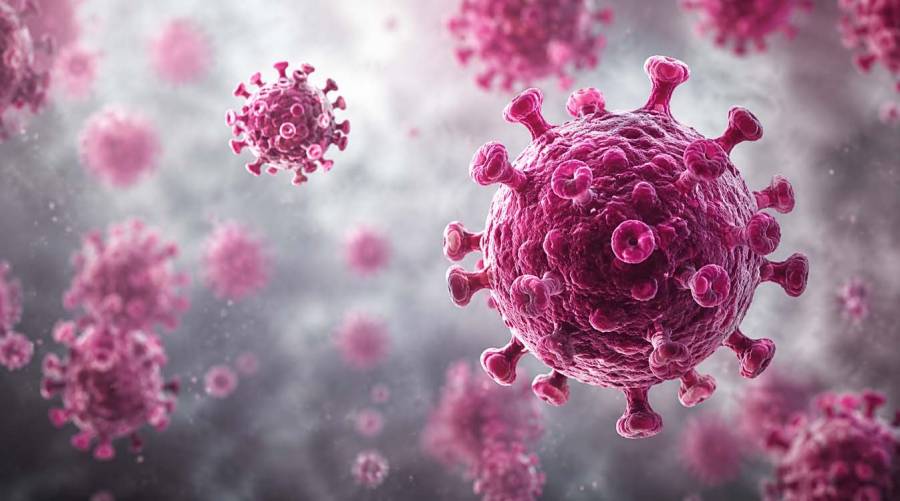
WASHINGTON: COVID-19 may do more than trigger an infection with SARS-CoV-2. A new study has found that the illness can be accompanied by the reactivation of dormant viruses already present in the body, raising new questions about how these viruses may contribute to severe disease and long COVID.
The study, published in Nature, analysed longitudinal data from 1,154 adults hospitalized with COVID-19 across 20 US hospitals and found substantial reactivation of chronic viruses, particularly members of the Herpesviridae and Anelloviridae families. The researchers also found associations between viral reactivation, disease severity, inflammatory responses and certain longer-term outcomes.
The findings do not prove that reactivated viruses cause severe COVID-19 or long COVID. But they add to growing evidence that SARS-CoV-2 infection can disrupt the body's broader viral ecosystem in ways that may matter beyond the initial infection.
Nearly half of hospitalized patients showed viral reactivation
Researchers used data from the Immunophenotyping Assessment in a COVID-19 Cohort (IMPACC) study, following participants from hospitalization through as long as one year.
RNA sequencing of blood, nasal swabs and, in mechanically ventilated patients, endotracheal aspirates allowed researchers to look for evidence of transcriptionally active viruses rather than relying only on antibody levels.
Among 1,148 participants with sufficient data for the analysis, 47.9% had at least one chronic virus detected during the acute period. About two-thirds of those with reactivation had only one virus detected.
The viruses included Epstein-Barr virus (EBV), cytomegalovirus (CMV), herpes simplex virus 1 (HSV-1), HSV-2, human herpesvirus 6 and several Anelloviridae viruses, among others.
This is significant because many of these viruses can remain in the body after an initial infection and normally remain under immune control.
EBV appeared early, while other viruses followed different patterns
The study found that viral reactivation did not happen at the same time for every virus.
EBV was detected early: viral transcripts were present around the time of hospital admission in about 24% of participants with available samples. Anelloviridae activity remained relatively persistent through the first several weeks, while HSV-1 and CMV showed later peaks, around three weeks after hospitalization.
The researchers also found similar patterns in an external COVID-19 cohort, strengthening confidence that the observed timing was not simply an artefact of the original study population.
The differing patterns suggest that SARS-CoV-2-associated changes in the immune system may create different opportunities for previously controlled viruses to become transcriptionally active.
Viral reactivation was associated with more severe COVID-19
One of the study's most important findings was the relationship between chronic viral activity and COVID-19 severity.
Reactivation of Anelloviridae, CMV, EBV and HSV-1 was significantly associated with more severe COVID-19 trajectories after researchers accounted for relevant factors.
Among critically ill patients, those with detectable CMV, EBV or HSV-1 in respiratory samples were more likely to die within one year, although the researchers stress that these are associations, not proof that the reactivated viruses caused the deaths.
Anelloviridae detected in immune cells was also associated with complications including shock and intensive care admission.
The findings raise an important possibility: viral reactivation could be a marker of severe illness, a contributor to disease progression, or potentially both.
The immune system may be part of the connection
The researchers did not stop at detecting viral RNA.
They also examined immune cells, inflammatory proteins, metabolites and gene-expression patterns to investigate what was happening biologically when these viruses became active.
Viral reactivation was associated with changes in inflammatory cytokines and chemokines, including IL-6, IL-10, CXCL10 and CXCL11, as well as changes in immune-cell activity. EBV reactivation, for example, was associated with several inflammatory signals linked to COVID-19 severity.
The findings support the possibility that reactivated viruses could add to an already activated immune response during severe COVID-19.
But the researchers also acknowledge another possibility: severe COVID-19 itself could create the conditions that allow dormant viruses to reactivate.
That cause-and-effect question remains unresolved.
The long COVID finding may be even more intriguing
The study also followed participants after their hospitalisation to examine whether viral activity persisted during recovery.
Here, Anelloviridae emerged as a particularly interesting signal.
Participants who had detectable Anelloviridae transcripts during the convalescent period were more likely to fall into a group characterized by physical disability or fatigue, even after accounting for age, sex, medication-related immunosuppression and acute COVID-19 severity.
The researchers described this as a potentially important signature of persistent physical problems among people with long COVID.
However, the study did not find that acute-stage EBV reactivation was more common among those who later developed long COVID. The researchers noted that the long-COVID analyses were affected by participant dropout and by the fact that the patient-reported outcome categories were developed early in the pandemic, before long COVID had been fully defined.
So while Anelloviridae is an intriguing lead, it is not yet established as a cause or diagnostic marker of long COVID.
Why dormant viruses can reactivate
Many people carry viruses that remain in the body after an earlier infection.
Herpesviruses are a well-known example. After the initial infection, the virus can enter a latent state and later become active again under conditions such as physiological stress or severe illness.
The new study suggests that this phenomenon may occur in COVID-19 more frequently than previously appreciated, including among people who are not chronically immunosuppressed.
That challenges the assumption that viral reactivation is primarily a problem of severely weakened immune systems.
In the IMPACC cohort, the researchers found that Herpesviridae reactivation was not explained simply by medication-associated immunosuppression, suggesting that severe illness and the immune response to COVID-19 may themselves play an important role.
Could this eventually change COVID-19 treatment?
That remains one of the biggest unanswered questions.
The study raises the possibility that identifying viral reactivation could eventually help doctors determine which patients are at greater risk of complications or persistent symptoms.
There are already established laboratory methods for detecting viruses such as herpesviruses, and antiviral treatments exist for several members of the Herpesviridae family. The researchers suggest that future studies could investigate whether monitoring and treating viral reactivation improves outcomes.
But that is a research possibility, not a current treatment recommendation.
There is currently not enough evidence to recommend routine testing for dormant-virus reactivation in people with COVID-19 or to treat such reactivation simply because it is detected.
What the study does — and does not — prove
The study's size and longitudinal design make it an important contribution, but several limitations need to be kept in view.
The participants were hospitalized and unvaccinated at enrolment, and they were primarily infected during the early pandemic with ancestral SARS-CoV-2 strains. The results therefore may not apply directly to people infected with more recent variants, vaccinated populations or people experiencing mild COVID-19 outside hospital settings.
Researchers also analysed only certain body compartments, meaning some tissue-specific reactivation could have been missed. Participant dropout during long-term follow-up also reduced the strength of some long-COVID analyses.
Most importantly, the observational nature of the research means correlation cannot establish causation.
In other words, the study shows that viral reactivation occurs alongside severe COVID-19 and certain long-term outcomes. It does not establish that reactivation itself is what makes COVID-19 severe or causes long COVID.
A new piece of the long COVID puzzle
The findings nevertheless open another avenue for understanding why COVID-19 can affect some people long after the initial infection has ended.
Long COVID is thought to involve multiple biological processes, and researchers have been investigating persistent viral material, immune dysregulation, inflammation, vascular changes and other mechanisms.
The new findings add reactivation of previously controlled viruses to that research landscape.
The particularly strong association between persistent Anelloviridae detection and physical disability or fatigue makes this virus family an especially interesting target for future studies.
For EBV, CMV and HSV-1, the findings likewise suggest that viral activity may interact with the immune and inflammatory environment created by severe COVID-19.
What comes next?
The researchers say future studies need to determine whether the same patterns occur with newer SARS-CoV-2 variants, vaccinated or hybrid-immunity populations and people with less severe COVID-19. They also need to determine whether viral reactivation is a driver of disease, a consequence of severe illness or a combination of both.
That distinction could ultimately determine whether viral reactivation becomes merely a biomarker of severe disease or a target for treatment.
For now, the message is more nuanced than “COVID-19 awakens dormant viruses.”
The new evidence shows that severe, hospitalized COVID-19 can coincide with surprisingly widespread reactivation of viruses that had remained under control, and some of those viral signals track with inflammation, disease severity and persistent physical problems after infection.
Whether those viruses are passengers, contributors or potential treatment targets is the question researchers now need to answer.
Stay connected with Medical News Pakistan
CLICK HERE TO JOIN the official Medical News Pakistan WhatsApp Channel for verified global medical breakthroughs, FDA approvals, healthcare innovations, clinical research updates and the latest developments shaping medicine around the world.

Advertisement
E-PAPER
Trending
Popular
Pakistan’s Dr. Misha Tanveer takes air pollution research to Europe ...
-
Calorie deficit for weight loss: How to ...
06:00 PM, 24 Aug, 2026 -
Vaccine maker warns of wider TBE, ...
05:00 PM, 21 Aug, 2026 -
FDA authorizes first robot to draw ...
06:11 PM, 20 Aug, 2026 -
One blood test for multiple cancers ...
04:52 PM, 11 Aug, 2026
Follow us on Facebook
Follow us on Twitter
Copyright ©2026 Medical News. All Rights Reserved.