
Sindh declares six syringe brands substandard after reuse safety failure raises HIV, hepatitis concerns
Sindh Drug Testing Laboratory finds six disposable syringe brands failed critical auto-disable and reuse-prevention tests, prompting regulatory action and renewed concerns over unsafe injections, infection control, and the potential spread of HIV and hepatitis in Pakistan.
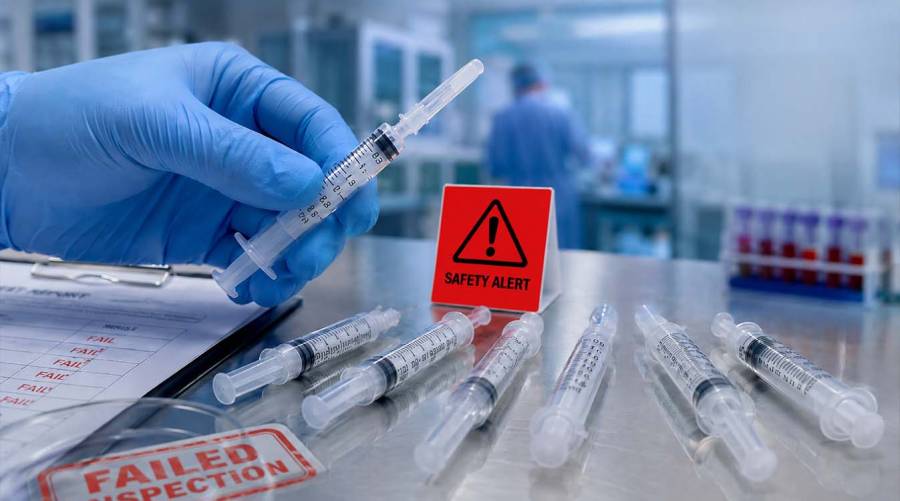
KARACHI: Sindh health authorities have declared six brands of disposable syringes substandard after laboratory testing found failures in their auto-disable and reuse-prevention mechanisms, raising fresh public health concerns over unsafe injection practices and the potential spread of bloodborne diseases including HIV, hepatitis B, and hepatitis C.
According to official laboratory reports issued by the Drug Testing Laboratory Sindh on May 20, 2026, the affected syringe samples failed critical “self-destructive performance,” “auto disability,” and “reuse prevention feature” testing designed to ensure disposable syringes cannot be reused after a single injection.
According to laboratory findings, the six substandard syringe brands identified during the testing process include Medi Aqua 5mL Auto Disable Syringe, Shifa Auto Destruct Syringe (3mL and 5mL variants), Zindagi Auto Disable Syringe 3mL, and Unilock Auto Disable Syringe 3mL.
The laboratory findings were confirmed by Syed Adnan Rizvi, Director of the Drug Testing Laboratory Sindh, Karachi, after syringe samples collected from different districts of Sindh were subjected to technical quality evaluation.
Officials said the tested samples included 3 mL and 5 mL auto-disable syringes collected by provincial drug inspectors from Khairpur, Hyderabad, Karachi Korangi, and Sukkur between May 4 and May 5 as part of ongoing medical device surveillance operations.
According to the test reports, the syringe samples complied with several technical and physical quality parameters, including appearance, graduated capacity, scale printing, barrel dimensions, piston fit, leakage, lubricant application, and dead space standards.
However, all six brands failed the most critical safety requirement: the automatic reuse-prevention mechanism.
The reports stated that during testing, standard force was applied on the syringe plunger toward the nozzle, after which the plunger was pulled back to assess whether the self-locking mechanism activated properly. Under approved safety standards, the plunger should not retract without breaking once fully depressed. Laboratory findings showed the syringes failed to comply with this requirement, indicating possible vulnerability to reuse.
Healthcare experts warn that failure of auto-disable technology in disposable syringes poses a serious infection-control risk because these devices are specifically designed to prevent reuse and reduce transmission of dangerous bloodborne infections.
Public health specialists say syringe reuse remains one of the major contributors to the spread of communicable diseases such as HIV, hepatitis B, and hepatitis C in healthcare settings where injection safety protocols are weak or poorly enforced.
Pakistan has long faced international concern regarding unsafe medical injection practices, counterfeit healthcare products, and infection-control failures. Public health researchers have repeatedly linked unsafe syringe reuse to several infectious disease outbreaks in the country, including the widely reported HIV outbreak in Ratodero, Sindh. Recently, a BBC Eye investigation revealed that unsafe injection practices at the Tehsil Headquarters (THQ) Hospital in Taunsa, Punjab, were linked to an HIV outbreak that infected at least 331 children.
Healthcare analysts say the latest findings highlight continuing vulnerabilities in Pakistan’s disposable medical device supply chain, particularly regarding manufacturing quality assurance, post-market surveillance, and regulatory enforcement.
Officials confirmed that the laboratory reports have been forwarded to the relevant provincial drug inspectors, the Secretary of the Quality Control Board Sindh, and the Drug Regulatory Authority of Pakistan (DRAP) for further regulatory action and market verification.
Sources familiar with the matter said provincial drug inspectors had collected samples from more than 30 syringe brands during broader inspection and surveillance operations targeting medical supply markets and healthcare distributors.
Regulatory experts say the findings may now trigger intensified inspections at pharmacies, medical stores, healthcare facilities, and distribution chains across Sindh to identify potentially unsafe medical devices and verify compliance with approved safety standards.
Under international infection-prevention guidelines, auto-disable syringes are considered among the most effective tools for reducing transmission risks associated with reused injection equipment. Their use has been widely promoted by global public health organizations during vaccination campaigns, hospital procedures, and primary healthcare services.
Healthcare professionals warn that compromised syringe safety mechanisms can significantly undermine public confidence in healthcare systems, particularly in countries already burdened by high rates of hepatitis infections and healthcare-associated disease transmission.
Medical safety advocates are now calling for stricter regulatory enforcement, stronger post-market quality surveillance, enhanced traceability systems for medical devices, and tougher action against substandard healthcare products circulating in Pakistan’s medical supply chain.
The development comes amid broader national debate over healthcare quality standards, counterfeit medical products, infection prevention, and patient safety oversight within Pakistan’s public and private healthcare sectors.
Stay informed, stay alert
CLICK HERE TO JOIN Medical News Pakistan on WhatsApp for real-time health alerts, expert insights, and breakthrough medical discoveries.

Advertisement
E-PAPER
Trending
Popular
Pakistan’s Dr. Misha Tanveer takes air pollution research to Europe ...
-
Calorie deficit for weight loss: How to ...
06:00 PM, 24 Aug, 2026 -
Vaccine maker warns of wider TBE, ...
05:00 PM, 21 Aug, 2026 -
FDA authorizes first robot to draw ...
06:11 PM, 20 Aug, 2026 -
One blood test for multiple cancers ...
04:52 PM, 11 Aug, 2026
Follow us on Facebook
Follow us on Twitter
Copyright ©2026 Medical News. All Rights Reserved.