
FDA clears first OTC glucose monitor for children as young as 2
Dexcom’s Stelo becomes the first prescription-free continuous glucose monitor approved for pediatric use, offering families real-time glucose insights while expanding access to AI-enabled metabolic tracking tools and raising important questions about safety, eligibility, and clinical limits
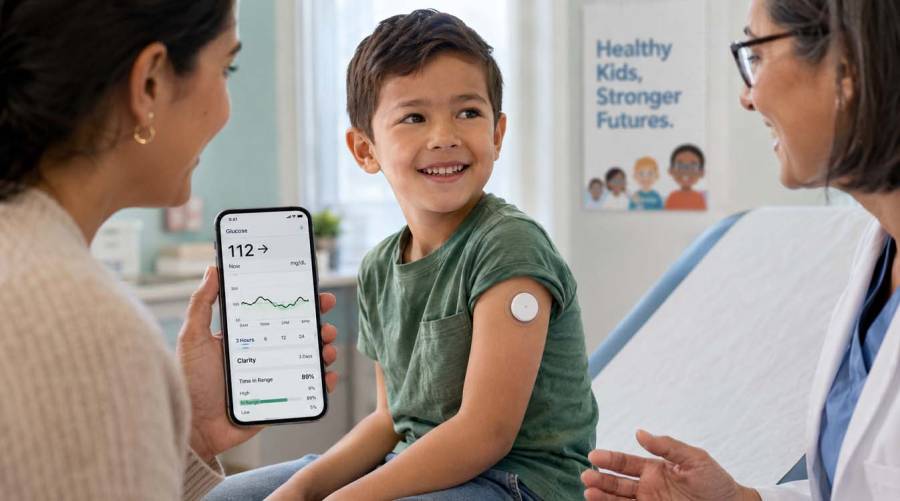
The U.S. Food and Drug Administration (FDA) has cleared the first over-the-counter (OTC) continuous glucose monitor (CGM) for children, marking a significant shift in how families can access glucose-monitoring technology without a prescription.
The agency has expanded authorization for the Dexcom Stelo Glucose Biosensor System to children aged two years and older who do not use insulin, making it the first integrated continuous glucose monitoring (iCGM) system available directly to pediatric users and their caregivers without requiring a physician's prescription. Previously, the device had only been authorized for adults aged 18 years and older (cleared in March 2024).
FDA frames decision as pediatric innovation milestone
“Children deserve access to the best tools available to manage their health,” said Center for Devices and Radiological Health Director Michelle Tarver, M.D., Ph.D. “Today's clearance reflects the FDA's commitment to fostering innovation for pediatric patients and supporting the safe and effective use of medical devices where children live, learn, and play.”
The decision reflects growing regulatory and clinical interest in expanding access to preventive health technologies as childhood diabetes, obesity, and prediabetes continue to rise globally.
Why this FDA decision matters
Most reports about the approval focus on the regulatory milestone. However, the bigger story is what it could mean for families trying to understand and manage blood sugar trends in children.
Until now, continuous glucose monitoring technology has largely been associated with patients using insulin, particularly those with Type 1 diabetes.
The new FDA clearance introduces a different model: allowing certain children and families to access real-time glucose information without navigating prescription requirements, specialist appointments, or insurance authorization processes.
According to the FDA, prediabetes is increasingly impacting children in the United States, placing millions at heightened risk of developing Type 2 diabetes later in life. Continuous glucose monitoring could help families better understand how food choices, physical activity, sleep patterns, and lifestyle habits influence glucose levels over time.
The approval is also aligned with the FDA’s Home as a Health Care Hub Initiative, which promotes development of patient-centered medical technologies that integrate more seamlessly into everyday life.
What exactly is Stelo?
Stelo is a wearable continuous glucose monitoring system developed by Dexcom.
The system consists of:
• A wearable sensor applied to the body
• A smartphone application or caregiver device
• Continuous glucose tracking technology
• Automatic glucose updates every 15 minutes
• Recording, analyzing, and displaying glucose trends in real time
Each sensor can function for up to 15 days before replacement, although wear time may be shorter in pediatric users due to physiological and behavioral differences.
Unlike traditional finger-prick testing, the device provides continuous monitoring, offering a detailed picture of glucose fluctuations throughout the day and night.
Which children can use it?
One of the most important details often overlooked in headlines is that the device is not intended for all children with diabetes.
The FDA clearance specifically covers:
• Children aged 2 years and older
• Children who do not use insulin
• Children with diabetes managed through oral medications
• Children and families interested in understanding glucose responses to lifestyle factors
It may also be relevant for children with prediabetes or elevated metabolic risk, but medical supervision is recommended before making any health decisions based on its readings.
Who should NOT use the device?
This remains a critical safety consideration.
The FDA specifically warns that Stelo is not designed for people with problematic hypoglycemia because it does not provide alerts for dangerously low blood sugar.
The device is also not intended for:
• Individuals on dialysis
• People with a history of disordered eating or eating disorders
• Patients with problematic recurrent hypoglycemia
• Children using insulin requiring specialized CGM systems
• Users making medication changes without medical supervision
For children, the system should be used under the supervision of an adult caregiver.
How does the technology work?
The FDA’s evaluation relied on a combination of prior clinical studies and real-world evidence (RWE) from both adult and pediatric users.
The system:
• Continuously measures glucose levels
• Updates readings every 15 minutes
• Displays trends via a smartphone application
• Generates ongoing glucose pattern data for users and caregivers
Reported adverse events were generally mild and included:
• Skin irritation
• Mild local infections
• Pain or discomfort at the sensor site
No major new safety concerns were identified.
What does this mean for the future of diabetes care?
The FDA’s decision represents more than approval of a device — it signals a broader shift in healthcare toward home-based monitoring, preventive medicine, digital health integration, and personalized metabolic tracking.
By making continuous glucose monitoring available over the counter for eligible children, regulators are reducing barriers to access and enabling families to better understand how daily behaviors influence metabolic health.
A new chapter for pediatric glucose monitoring
While Stelo is not a replacement for professional medical care and is not appropriate for every child with diabetes, its approval introduces a new category of consumer-accessible pediatric health technology.
As diabetes prevention and metabolic health become increasingly important global health priorities, innovations like OTC CGMs are expected to play a growing role in early awareness and lifestyle-based intervention strategies.
Stay informed, stay alert
CLICK HERE TO JOIN Medical News Pakistan on WhatsApp for real-time health alerts, expert insights, and breakthrough medical discoveries.

Advertisement
E-PAPER
Trending
Popular
Pakistan’s Dr. Misha Tanveer takes air pollution research to Europe ...
-
Calorie deficit for weight loss: How to ...
06:00 PM, 24 Aug, 2026 -
Vaccine maker warns of wider TBE, ...
05:00 PM, 21 Aug, 2026 -
FDA authorizes first robot to draw ...
06:11 PM, 20 Aug, 2026 -
One blood test for multiple cancers ...
04:52 PM, 11 Aug, 2026
Follow us on Facebook
Follow us on Twitter
Copyright ©2026 Medical News. All Rights Reserved.