
Congo's Ebola outbreak is second-largest on record, WHO says actual cases may be four times higher
The Democratic Republic of the Congo has recorded more than 3,500 Ebola cases and over 1,500 deaths, while the World Health Organization warns the true number of infections may be significantly higher as insecurity, funding gaps and community mistrust hamper response efforts.
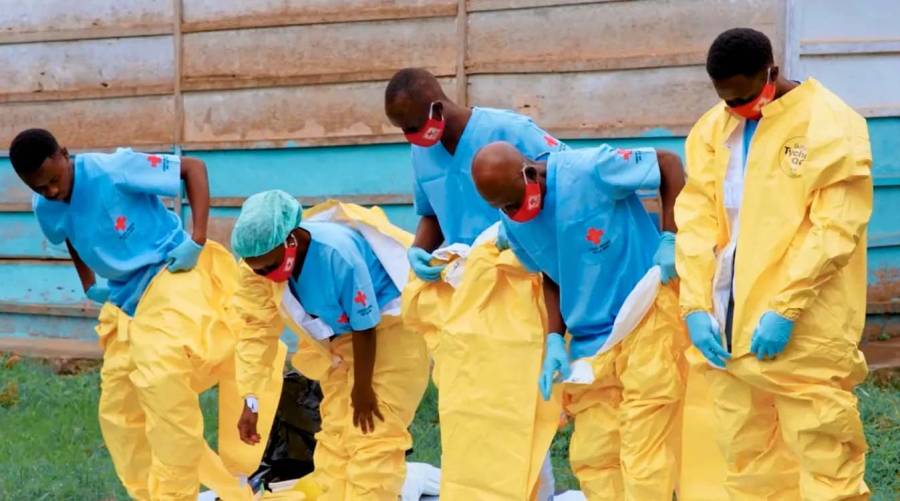
KINSHASA: The Democratic Republic of the Congo's Ebola outbreak has become the world's second-largest on record, with the World Health Organization (WHO) warning that the actual number of infections could be up to four times higher than officially reported as the epidemic continues to spread rapidly.
According to the latest figures released by the Congolese government, the outbreak has reached 3,532 confirmed and probable cases, with 1,556 deaths, making it the second-largest Ebola epidemic ever recorded after the 2014–2016 West African outbreak.
Health officials say the outbreak is spreading faster than previous Ebola epidemics, while aid agencies warn that limited resources, insecurity and community mistrust are undermining efforts to bring transmission under control.
International health officials say the current epidemic is advancing faster than any previous Ebola outbreak.
Carl Skau, Acting Executive Director of the United Nations World Food Programme (WFP), described the situation as the fastest-spreading Ebola epidemic ever recorded.
"It's the fastest-spreading Ebola epidemic that we have ever seen. The world needs to pay much more attention," Skau told Reuters.
According to Africa Centres for Disease Control and Prevention (Africa CDC), less than three months after the outbreak began, Ebola has already claimed five times as many lives as previous outbreaks had during the same stage.
The rapid increase in infections has intensified concerns that the outbreak could continue expanding unless surveillance, treatment capacity and community engagement are significantly strengthened.
The WHO has cautioned that the official figures may not reflect the true scale of the outbreak.
Earlier this month, the agency estimated that the actual number of Ebola cases could be up to four times higher than the reported total because of gaps in surveillance, delayed detection of infections and difficulties tracing contacts.
Reuters also reported that surveillance operations have been hampered by shortages of vehicles, understaffing and persistent mistrust among some affected communities.
Public health experts say these challenges make it more difficult to identify infected individuals quickly and interrupt chains of transmission.
The outbreak is being caused by the Bundibugyo strain of the Ebola virus, a relatively rare strain for which there is currently no approved vaccine or specific treatment.
As a result, health authorities continue to rely heavily on early diagnosis, isolation of patients, contact tracing, infection prevention measures and community awareness campaigns to contain the disease.
Frontline responders say the outbreak has become firmly established within communities.
Angele Gapio, Head of Emergencies for the humanitarian organization Caritas in the northeastern city of Bunia, said awareness campaigns are struggling to change public behaviour, with many people continuing to seek care from traditional healers instead of healthcare facilities.
She also said frontline healthcare workers have become increasingly exhausted and traumatized after months of responding to the growing crisis.
Health officials warn that delayed treatment and continued community transmission remain among the biggest obstacles to controlling the epidemic.
The Ebola response is also being affected by ongoing insecurity across eastern Democratic Republic of the Congo, where numerous armed groups continue to operate.
Violence and instability have limited access to several affected communities, making surveillance, contact tracing and treatment operations more difficult.
At the same time, funding remains below the level requested by health authorities.
Africa CDC previously estimated that approximately $1.4 billion would be required to contain the outbreak, three times higher than its earlier estimate.
Figures presented this week by Africa CDC and WHO showed that Congo's May-August Ebola response plan has secured $213.9 million in declared funding against planned spending of $242.4 million, leaving a funding shortfall.
International humanitarian organizations have also raised concerns over the availability of experienced responders.
Reuters reported that Samaritan's Purse, which operates Ebola treatment centres in Congo and relies on US personnel, expects to scale back some operations because recent US travel restrictions and quarantine requirements could limit deployment of aid workers.
Health experts warn that any reduction in trained personnel could place additional pressure on already overstretched response teams.
The only Ebola outbreak larger than the current epidemic remains the 2014–2016 West African outbreak, during which WHO recorded 28,616 cases and 11,310 deaths across Guinea, Liberia and Sierra Leone.
Although Congo's outbreak remains considerably smaller, health agencies warn that its exceptionally rapid spread highlights the urgent need for stronger surveillance, sustained international funding and closer community engagement to prevent further escalation.
Stay connected with Medical News Pakistan
CLICK HERE TO JOIN the official Medical News Pakistan WhatsApp Channel for verified global medical breakthroughs, FDA approvals, healthcare innovations, clinical research updates and the latest developments shaping medicine around the world.

Advertisement
E-PAPER
Trending
Popular
Scientists discover new human blood group after solving 50-year ...
-
Dow launches ‘Bug & Drug’ app to ...
03:48 PM, 30 Sep, 2026 -
Obesity linked to 229 diseases, may ...
05:28 PM, 21 Sep, 2026 -
Pakistan’s Dr. Misha Tanveer takes ...
04:03 PM, 16 Sep, 2026 -
Calorie deficit for weight loss: How to ...
06:00 PM, 24 Aug, 2026
Follow us on Facebook
Follow us on Twitter
Copyright ©2026 Medical News. All Rights Reserved.