
World Malaria Day 2026: humanity stands at the edge of ending malaria—but time is running out
With 2.3 billion cases prevented and 14 million lives saved since 2000, WHO says the world has the tools to defeat malaria—yet rising resistance, funding gaps, and climate threats could reverse decades of progress
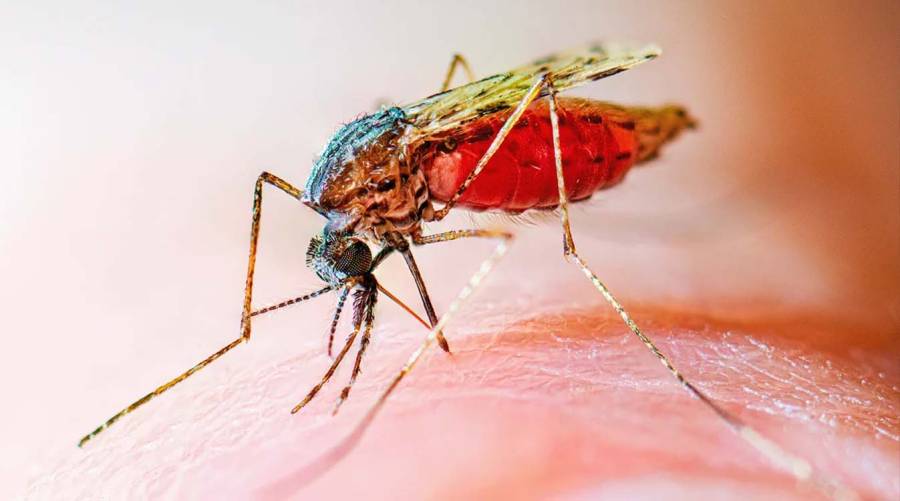
April 25 — a global turning point in the fight against malaria
On World Malaria Day 2026, the message from the World Health Organization is both urgent and hopeful: the world now has the power to end malaria—but failing to act could undo decades of progress.
The 2026 campaign theme, “Driven to End Malaria: Now We Can. Now We Must.”, is not just a slogan. It is a warning—and a window of opportunity.
Because for the first time in modern history, a malaria-free future is scientifically possible.
Yet the numbers tell a more complicated story.
A historic fight: billions of cases prevented, millions of lives saved
Since 2000, global malaria efforts have delivered extraordinary results:
• 2.3 billion malaria cases prevented
• 14 million lives saved
• 47 countries certified malaria-free
• Malaria-endemic countries reduced from 108 to 80
In 2024 alone, 37 countries reported fewer than 1,000 cases, showing that elimination is not just theoretical—it is happening.
Breakthroughs in science have accelerated progress:
• 10 million children protected annually through malaria vaccines
• 84% of mosquito nets now use next-generation, more effective technology
• 25 countries actively rolling out vaccination programs
These are not small wins—they are the foundation of a global health transformation.
But the crisis is far from over
Despite this progress, malaria remains one of the world’s deadliest infectious diseases.
In 2024:
• 282 million cases were recorded globally
• 610,000 deaths occurred—a slight increase from 2023
This stagnation signals a dangerous turning point.
Experts warn that without urgent intervention, progress could stall—or reverse.
Related story: Funding cuts, climate change threaten gains against malaria, WHO warns
The hidden threats: resistance, climate, and fragile systems
The fight against malaria is becoming more complex due to a convergence of biological, environmental, and systemic challenges.
Drug resistance is rising:
Partial resistance to artemisinin—the backbone of malaria treatment—has now been confirmed in multiple African countries, threatening treatment effectiveness.
Insecticide resistance is widespread:
Resistance to pyrethroids, the primary chemical used in mosquito nets, has been detected in 48 out of 53 reporting countries.
Diagnostics are failing:
Genetic mutations in the parasite are making some rapid diagnostic tests unreliable across 46 endemic countries.
New mosquito threats are emerging:
The spread of Anopheles stephensi, an urban, insecticide-resistant mosquito, is raising alarm—especially for densely populated cities.
Climate change: the silent accelerator
Climate change is amplifying malaria transmission in unpredictable ways.
Rising temperatures, flooding, and shifting rainfall patterns are expanding mosquito habitats, disrupting control programs, and increasing outbreaks in vulnerable regions.
At the same time, conflict zones and humanitarian crises are weakening already fragile health systems—creating ideal conditions for malaria resurgence.
Related story: Inaugural Indus grant targets growing drug-resistant malaria threat in Pakistan
A massive funding gap threatens everything
Perhaps the most urgent barrier is financial.
- Global malaria funding in 2024: $3.9 billion
- Required funding for 2025: $9.3 billion
- Funding gap: $5.4 billion
This shortfall is not just a number—it directly affects:
- Vaccine distribution
- Access to treatment
- Community prevention programs
- Research into next-generation tools
Without sustained investment, even the most promising innovations cannot reach the people who need them most.
Innovation offers hope—but only if scaled
Despite the challenges, scientific progress is accelerating:
• Next-generation mosquito nets are becoming the global standard
• Seasonal malaria chemoprevention is reaching 54 million children
• New tools, including genetically modified mosquitoes and long-acting injectables, are in development
These innovations could redefine malaria control—but only if deployed at scale.
What must happen now
Global health leaders are clear: the path forward requires coordinated, urgent action.
Key priorities include:
• Scaling and sustaining funding with data-driven efficiency
• Strengthening country-led malaria programs
• Ensuring consistent global partnerships
• Accelerating research and innovation
• Empowering communities to lead prevention efforts
Because malaria is not just a medical issue—it is a systems challenge.
What individuals can do
While global strategies evolve, simple actions still save lives:
• Sleep under mosquito nets
• Seek early treatment for fever
• Support community prevention initiatives
These small steps remain powerful tools in reducing transmission.
The bottom line: a defining moment for global health
The world stands at a rare crossroads.
On one side: a future where malaria is eliminated within our lifetime.
On the other: a resurgence driven by inaction, resistance, and underfunding.
The science is ready.
The tools exist.
The progress is proven.
What remains is the will to act.
Because as the message of World Malaria Day 2026 makes clear:
Now we can. Now we must.
Stay informed, stay alert
CLICK HERE TO JOIN Medical News Pakistan on WhatsApp for real-time health alerts, expert insights, and breakthrough medical discoveries.

Advertisement
E-PAPER
Trending
Popular
Pakistan’s Dr. Misha Tanveer takes air pollution research to Europe ...
-
Calorie deficit for weight loss: How to ...
06:00 PM, 24 Aug, 2026 -
Vaccine maker warns of wider TBE, ...
05:00 PM, 21 Aug, 2026 -
FDA authorizes first robot to draw ...
06:11 PM, 20 Aug, 2026 -
One blood test for multiple cancers ...
04:52 PM, 11 Aug, 2026
Follow us on Facebook
Follow us on Twitter
Copyright ©2026 Medical News. All Rights Reserved.