
Inaugural Indus grant targets growing drug-resistant malaria threat in Pakistan
IHHN awards first Indus Seed Fund Grant 2026 to tackle antimicrobial resistance and drive locally relevant medical research in Pakistan

KARACHI: For decades, a critical flaw has quietly shaped healthcare outcomes across countries like Pakistan—most medical decisions rely on research conducted elsewhere, on populations that do not reflect local realities.
That gap may finally be starting to close.
In a landmark move for Pakistan’s research ecosystem, Indus Hospital & Health Network (IHHN) has awarded its first-ever Indus Seed Fund Grant (ISFG) 2026, signaling a decisive shift toward locally driven, evidence-based healthcare.
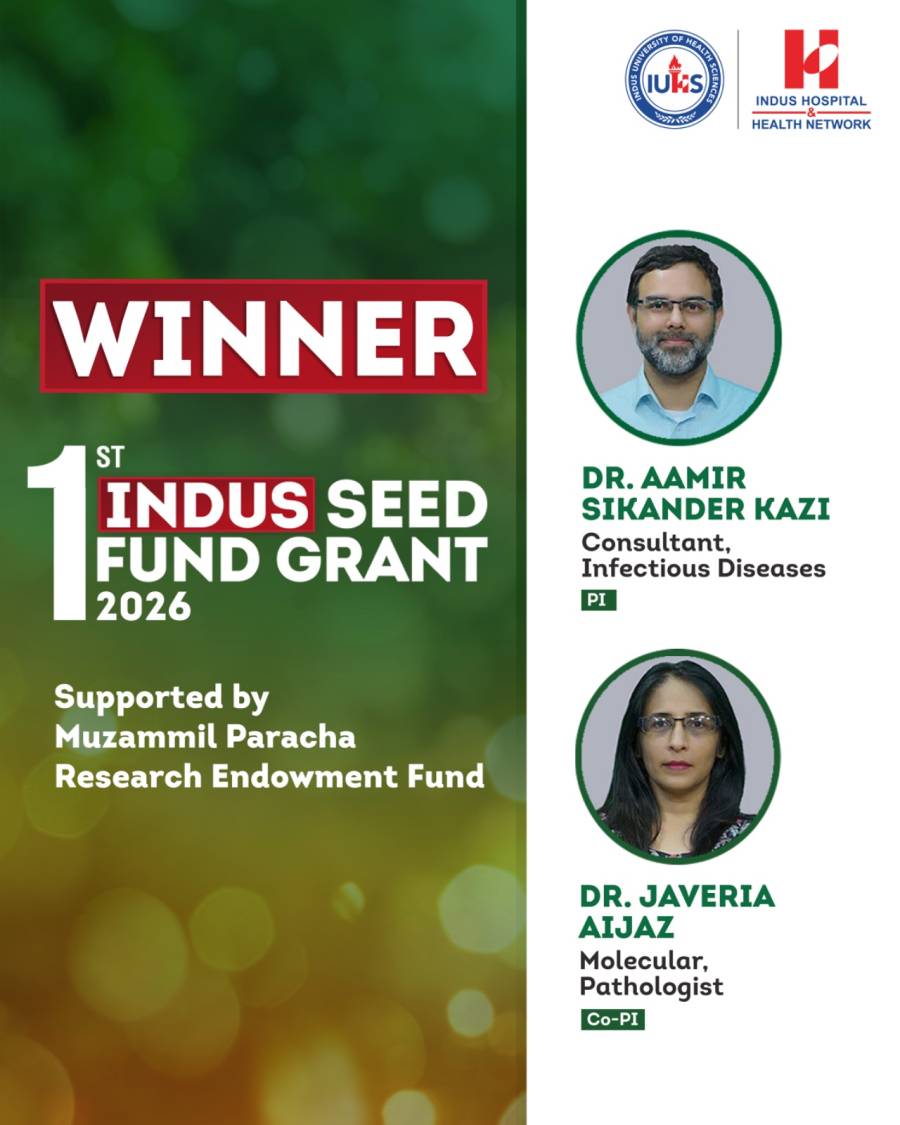
The announcement marks more than just a funding milestone—it represents a strategic push to redefine how medical knowledge is generated and applied in Pakistan.
A grant designed to fix a global blind spot
The Indus Seed Fund Grant is not just another research award.
It was created to address a deeply entrenched issue in global medicine: The underrepresentation of South Asian populations in clinical research
Much of the world’s medical evidence is based on Western cohorts, often overlooking differences in genetics, disease patterns, and environmental exposures. For countries like Pakistan, this means treatments and protocols may not always deliver optimal outcomes.
By investing in local research, IHHN aims to ensure that clinical decisions are guided by data that truly reflects the patients being treated.
The winning study: tackling a silent global threat
The inaugural grant has been awarded to a research team led by:
- Dr. Aamir Sikander Kazi, Consultant Infectious Diseases
- Dr. Javeria Aijaz, Molecular Pathologist and Section Head of Molecular Biology (Co-Principal Investigator)
Their study focuses on a growing and potentially devastating challenge of Artemisinin resistance in malaria. The study is titled “Artemisinin Resistance Surveillance of Plasmodium falciparum by Next Generation Sequencing of the Kelch 13 Gene – A Single Centre Experience from Karachi, Pakistan”.
The research will use advanced genomic tools, including next generation sequencing (NGS), to detect mutations in the Kelch 13 gene—a key marker linked to resistance against frontline malaria treatments.
Antimicrobial resistance (AMR) is already being described globally as one of the biggest threats to modern medicine.
And malaria treatment is now entering a critical phase.
If resistance to artemisinin-based therapies spreads unchecked:
- Treatment failures could rise
- Disease control efforts could reverse
- Public health systems could come under severe strain
Karachi, as a high-density urban hub and international port city, is uniquely positioned for early detection of such resistance patterns—making this research not just relevant, but strategically critical.
A rigorous, high-stakes selection process
The ISFG 2026 attracted strong interest from across the IHHN network.
• 16 independent reviewers from top institutions evaluated submissions
• Institutions included leading names such as Aga Khan University, NUST, Ziauddin University, Khyber Medical University, and Rawalpindi Medical University
• 8 projects were shortlisted across diverse fields, including:
- Infectious diseases
- Digital health
- Paediatric nutrition
- Metabolic disorders
- Liver disease
- Clinical toxicology
Finalists presented before a senior panel, ensuring that the selected project met the highest standards of scientific rigor and real-world impact.
Leadership driving the initiative
The grant process was chaired by Dr. Saima Saeed, Consultant Pulmonology and Chair of the Grants and Funds Committee, with operational oversight from the Office of Research, Innovation & Commercialization (ORIC) led by Dr. Ammad Fahim.
Spanning nearly six months—from October 2025 to April 2026—the process reflects a structured, transparent, and institutionally driven approach to research funding.
Beyond one grant: a long-term vision
This is not a one-off initiative.
IHHN has confirmed that the next cycle of the Indus Seed Fund Grant will open within 3 to 6 months, encouraging researchers to prepare proposals.
But the real impact goes beyond funding cycles.
This initiative signals:
• A shift toward self-reliant research ecosystems
• A move to reduce dependence on external data
• A commitment to context-specific clinical solutions
A turning point for healthcare in Pakistan
At its core, this development raises a bigger question:
What happens when Pakistan starts generating its own high-quality clinical evidence at scale?
The answer could reshape:
• Treatment protocols
• Disease surveillance systems
• National health policy
• And ultimately, patient outcomes across the country.
For now, the launch of the Indus Seed Fund Grant marks a decisive first step—one that may quietly redefine how medicine is practiced in Pakistan in the years to come.
Stay informed, stay alert
CLICK HERE TO JOIN Medical News Pakistan on WhatsApp for real-time health alerts, expert insights, and breakthrough medical discoveries.

Advertisement
E-PAPER
Trending
Popular
Pakistan’s Dr. Misha Tanveer takes air pollution research to Europe ...
-
Calorie deficit for weight loss: How to ...
06:00 PM, 24 Aug, 2026 -
Vaccine maker warns of wider TBE, ...
05:00 PM, 21 Aug, 2026 -
FDA authorizes first robot to draw ...
06:11 PM, 20 Aug, 2026 -
One blood test for multiple cancers ...
04:52 PM, 11 Aug, 2026
Follow us on Facebook
Follow us on Twitter
Copyright ©2026 Medical News. All Rights Reserved.