
Funding cuts, climate change threaten gains against malaria, WHO warns
New WHO report shows major progress driven by vaccines and innovative tools, but drug resistance, climate risks and shrinking funding jeopardize global malaria goals.
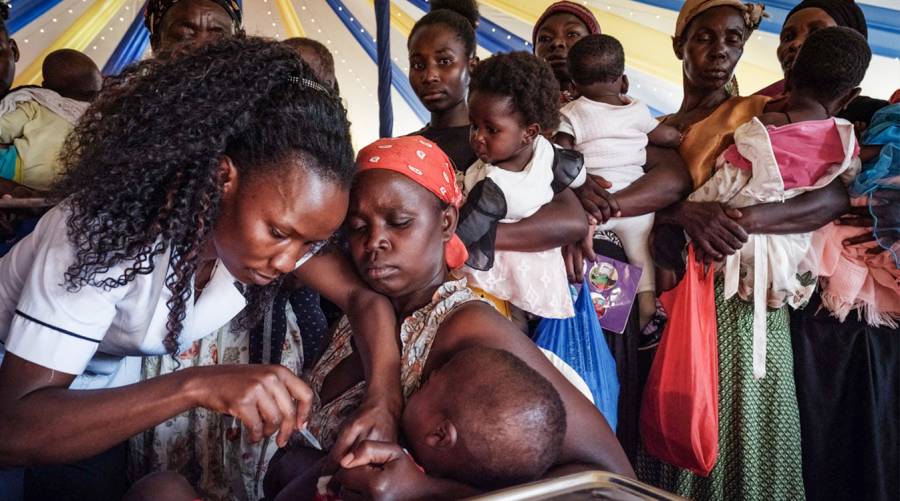
Global progress against malaria at risk despite new life-saving tools
GENEVA: The latest World Malaria Report from the World Health Organization (WHO) warns that despite significant gains driven by malaria vaccines and innovative prevention tools, global progress is now under threat due to funding cuts, climate change, rising drug resistance, and expanding mosquito habitats.
Malaria remains a major global health challenge, with 282 million cases and 610,000 deaths reported in 2024, the majority among young children in Africa.
New malaria tools saved one million lives in 2024
WHO reports that wider use of dual-ingredient mosquito nets and the scale-up of WHO-recommended malaria vaccines prevented 170 million cases and one million deaths last year.
Since WHO’s approval of the world’s first malaria vaccine in 2021, 24 countries have integrated malaria vaccines into routine immunization, marking a milestone in child health protection.
Prevention scale-up accelerates
- 54 million children received seasonal malaria chemoprevention in 2024 — up from just 200,000 in 2012.
- 47 countries and 1 territory are now malaria-free, with Cabo Verde and Egypt certified in 2024, and Georgia, Suriname, and Timor-Leste in 2025.
Growing threats: Drug resistance, climate impacts, and shrinking funding
Despite breakthroughs, the WHO warns that the malaria burden is increasing due to several converging risks.
Drug resistance rising across Africa
Evidence of partial resistance to artemisinin-based therapies — the cornerstone of global malaria treatment — has now been confirmed or suspected in at least 8 African countries.
Mosquito behaviour and vector resistance worsening
- Anopheles stephensi, an invasive, insecticide-resistant mosquito species, has now spread to 9
- African countries, intensifying the threat of urban malaria.
- Pyrethroid resistance is confirmed in 48 countries, reducing the effectiveness of standard mosquito nets.
- Parasites with pfhrp2 gene deletions are compromising rapid diagnostic tests.
Climate change driving new outbreaks
Extreme weather events, shifting rainfall patterns and rising temperatures are expanding mosquito habitats, triggering outbreaks in regions previously at low risk.
Funding cuts slowing interventions
Global malaria funding in 2024 reached USD 3.9 billion, far below the USD 9.3 billion annual target.
Cuts in Official Development Assistance (ODA) have led to:
- Delayed preventive campaigns
- Weakened surveillance systems
- Cancellation or postponement of malaria surveys
- Risk of medicine stock-outs
WHO warns these setbacks could reverse two decades of progress.
WHO calls for stronger political commitment, investment
Dr Tedros Adhanom Ghebreyesus, WHO Director-General, emphasized that while new prevention tools offer hope, the world must urgently address funding gaps, treatment resistance, and climate-driven risks.
WHO urges endemic countries to reinforce commitments under the Yaoundé Declaration and accelerate action through the Big Push initiative, emphasizing that elimination remains achievable with focused leadership, innovation, and adequate resources.
Stay informed and protect your health!
CLICK HERE TO JOIN Medical News Pakistan on WhatsApp for expert tips, health updates, and the latest medical research straight to your phone.

Advertisement
E-PAPER

Trending
Popular
Pakistan’s Dr. Misha Tanveer takes air pollution research to Europe ...
-
Calorie deficit for weight loss: How to ...
06:00 PM, 24 Aug, 2026 -
Vaccine maker warns of wider TBE, ...
05:00 PM, 21 Aug, 2026 -
FDA authorizes first robot to draw ...
06:11 PM, 20 Aug, 2026 -
One blood test for multiple cancers ...
04:52 PM, 11 Aug, 2026
Follow us on Facebook
Follow us on Twitter
Copyright ©2026 Medical News. All Rights Reserved.

