
Dow University, EduCast launch eDoctor 2.0 to bring 30,000 Pakistani women doctors back to practice
With support from the Islamic Development Bank, Dow University and EduCast's digital health initiative aims to re-integrate inactive Pakistani female doctors worldwide through AI-powered certification, training, and telemedicine.
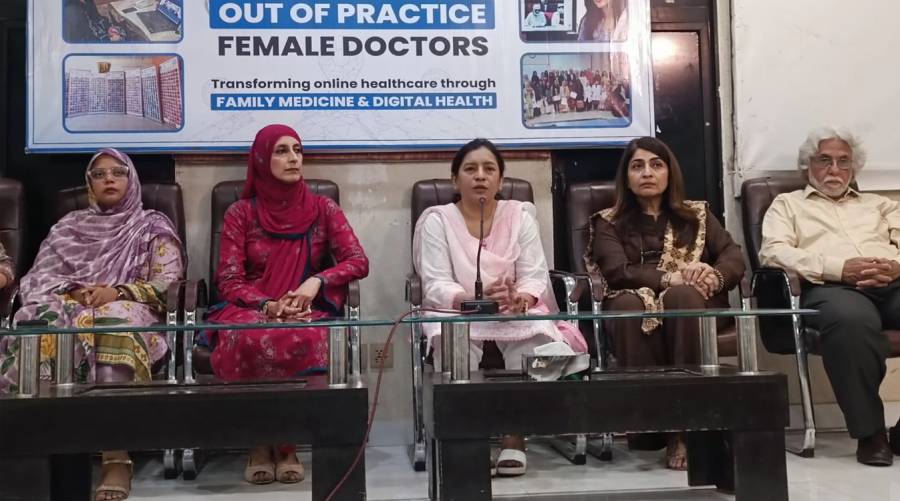
KARACHI: Dow University of Health Sciences (DUHS), in collaboration with EduCast Global Online Health Platform and with financial support from the Islamic Development Bank, officially launched the second phase of the eDoctor program, marking a milestone in the digital transformation of Pakistan’s healthcare system.
Originally launched in 2018, the eDoctor initiative was designed to re-engage Pakistani female doctors who left clinical practice due to family responsibilities or social constraints. The program now enters its second phase — eDoctor 2.0 — with enhanced digital tools, international partnerships, and a broader global impact strategy.

Speaking at the launch event held at the Karachi Press Club, Acting Vice Chancellor of Dow University, Professor Dr. Jehan Ara Hasan, stated,
“eDoctor is not just a program — it’s a movement to re-activate over 30,000 qualified Pakistani female doctors worldwide. These women left medical practice, costing the national exchequer nearly PKR 35 billion in wasted educational investment. We are bringing them back with technology, dignity, and purpose.”
Prof. Dr. Jehan Ara Hasan was accompanied by the project's academic team, including Prof. Dr. Asma Faisal, Prof. Dr. Sumbul Shamim, Dr. Anum Arshad Baig, Dr. Maryam Fatima, and Dr. Ayesha Butt.
You may also like: Three candidates shortlisted for Dow University VC post
Each female doctor’s medical education costs the state an estimated PKR 5 million. With 30,000 inactive female doctors, the resulting loss is immense. eDoctor 2.0 aims to reverse this brain drain by offering:
- AI-supported, smartphone-accessible virtual clinics
- International online certifications
- Observational training at partner clinics
- Impact and International Outreach
In Phase 1, the eDoctor program successfully reactivated over 1,500 Pakistani female doctors across 27 countries. This was made possible through strategic partnerships with:
- Lecturio – a Germany-based global medical education platform
- DigitalMedic – an initiative from Stanford University
These partnerships enabled self-paced, AI-powered training that helped doctors return to practice efficiently.
Abdullah Butt, CEO and founder of EduCast, stated:
“This program reflects the future of healthcare — smart, inclusive, and scalable. We are proud to be its digital backbone.”
Proven results in global crises
During the COVID-19 pandemic, under the CM Sindh COVID Cell, eDoctor-trained doctors provided over 500,000 remote consultations, reducing hospital burden and enabling safe treatment access.
In conflict zones and disaster-stricken regions, eDoctor’s global model has already shown impressive impact:
- Afghanistan: Healthcare support in 20 provinces for cancer, maternal health, and general care. Training of 1,500 Afghan doctors also began under Islamic Development Bank support.
- Yemen: With INSEAN, services reached remote, war-affected areas lacking ground medical infrastructure.
- Palestine & Gaza: Online mental health services offered to refugees, improving psychological well-being.
- Pakistan floods: eDoctor provided emergency tele-triage and digital assistance in flood-hit zones.
- Elderly care: Under the BRIDGE platform, doctors offered quality home-based consultations for senior citizens.
eDoctor 2.0 is being positioned as a replicable global model for digital, women-led healthcare delivery — especially in regions facing conflict, resource scarcity, or systemic gender barriers.
Stay connected, stay informed!
Join the Medical News Pakistan Official WhatsApp Channel and be the first to know about public health stories and critical health alerts delivered directly to your phone.
FOLLOW US NOW: Medical News Pakistan WhatsApp Channel

Advertisement
E-PAPER
Trending
Popular
Pakistan’s Dr. Misha Tanveer takes air pollution research to Europe ...
-
Calorie deficit for weight loss: How to ...
06:00 PM, 24 Aug, 2026 -
Vaccine maker warns of wider TBE, ...
05:00 PM, 21 Aug, 2026 -
FDA authorizes first robot to draw ...
06:11 PM, 20 Aug, 2026 -
One blood test for multiple cancers ...
04:52 PM, 11 Aug, 2026
Follow us on Facebook
Follow us on Twitter
Copyright ©2026 Medical News. All Rights Reserved.