
How much sleep is healthy? UBC research provides critical insights
UBC research reveals that sleep needs vary across cultures—and aligning with your country’s sleep norm may be the key to better health.

VANCOUVER: A groundbreaking global study from the University of British Columbia (UBC) has revealed that the healthy amount of sleep a person needs may depend largely on where they live, challenging the long-standing “eight hours” rule commonly promoted in public health advice.
Published in the Proceedings of the National Academy of Sciences (PNAS), the study analyzed sleep data and health outcomes from nearly 5,000 adults in 20 countries, including Canada, Japan, France, and others across North America, Europe, Asia, Africa, and South America.
“There is no one-size-fits-all amount of sleep that works for everyone,” said Dr. Steven Heine, professor of social and cultural psychology at UBC and the study’s senior author. “Our findings suggest sleep recommendations should consider cultural norms.”
Sleep duration differs widely across cultures
Contrary to popular belief, the study found wide variations in average sleep times between countries:
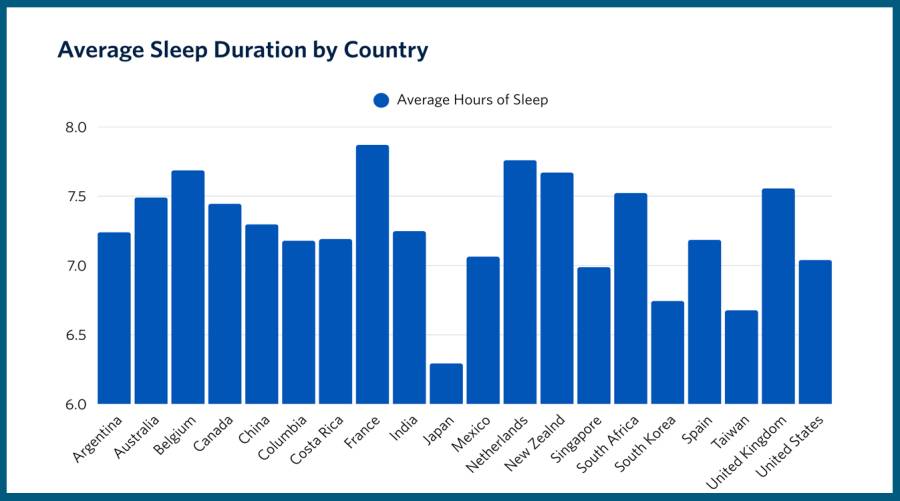
While previous research has linked shorter sleep durations to adverse health effects, this new cross-cultural investigation found no evidence that people in countries with less sleep are less healthy than those who sleep more.
Instead, the research revealed a more nuanced picture.
Health depends on matching cultural sleep norms
According to lead author Dr. Christine Ou, assistant professor at the University of Victoria’s school of nursing:
“People who slept closer to their own culture’s norms for sleep duration tended to have better overall health. This suggests that the ideal amount of sleep is the amount that matches what is considered appropriate in one’s cultural context.”
This insight points to a culturally dependent benchmark for optimal sleep, rather than a universal rule.
Most people sleep less than their cultural ideal
Interestingly, in every country studied, people reported sleeping at least one hour less than what was considered optimal within their cultural context—suggesting a global pattern of sleep deprivation, albeit measured against local standards.
The researchers urge public health authorities and sleep experts to tailor sleep guidelines to fit the cultural norms and lived realities of different populations. By doing so, they say, societies can promote more realistic and effective health outcomes.

Advertisement
E-PAPER

Trending
Popular
Pakistan’s Dr. Misha Tanveer takes air pollution research to Europe ...
-
Calorie deficit for weight loss: How to ...
06:00 PM, 24 Aug, 2026 -
Vaccine maker warns of wider TBE, ...
05:00 PM, 21 Aug, 2026 -
FDA authorizes first robot to draw ...
06:11 PM, 20 Aug, 2026 -
One blood test for multiple cancers ...
04:52 PM, 11 Aug, 2026
Follow us on Facebook
Follow us on Twitter
Copyright ©2026 Medical News. All Rights Reserved.