
U.S. investment in Lenacapavir HIV drug hailed as a "game changer" by medical community
U.S. Announces Support for Lenacapavir, a Breakthrough HIV Prevention Drug, Aiming to Save Hundreds of Thousands of Lives by 2028
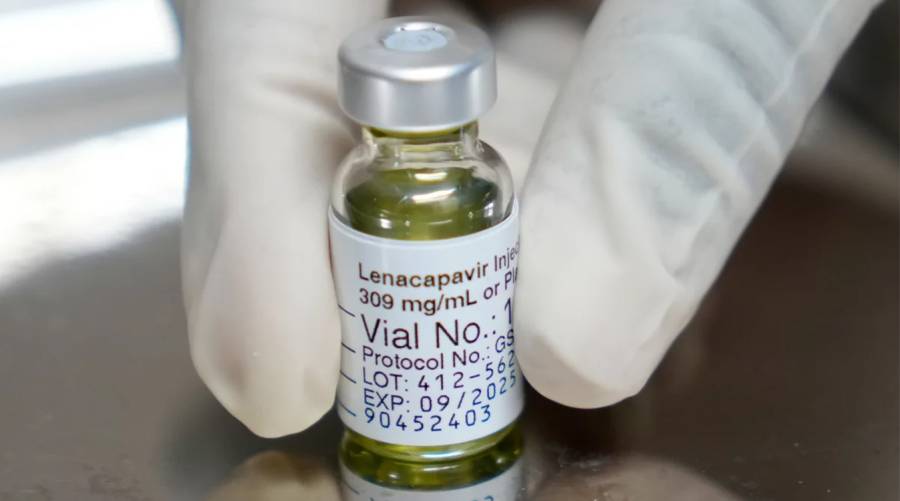
U.S. makes major investment in Lenacapavir, a revolutionary HIV drug with global impact
In a major announcement on Thursday, the U.S. government declared its commitment to invest in Lenacapavir, a groundbreaking HIV prevention drug that has been hailed by the medical community as a "game changer." This investment, announced by the U.S. Department of State, is set to reach up to 2 million people by 2028, with the aim of reducing HIV transmission and saving hundreds of thousands of lives globally.
Lenacapavir, an antiretroviral medication, has already shown promising results in clinical trials. The drug, which is administered via twice-yearly injections, offers nearly complete protection against HIV for individuals at high risk. It has also been proven effective in preventing mother-to-child transmission of HIV, offering a significant step forward in the fight against the virus.
For HIV/AIDS researchers and specialists, this development is a ray of hope, particularly in light of the severe impact that foreign aid cuts had on HIV prevention programs in low-resource countries under the previous administration. Lenacapavir’s potential to prevent new infections could play a crucial role in ending the HIV epidemic.
Dr. Linda-Gail Bekker, director of the Desmond Tutu HIV Centre, emphasized that addressing the prevention of HIV is key to controlling the epidemic. "We have 31 million people on treatment around the world, but if we don’t address protecting people who are susceptible to acquire HIV, we aren’t going to bring the epidemic under control," she said.
The U.S. commitment to lenacapavir is part of a broader partnership with the Global Fund, a major donor to combating HIV, tuberculosis, and malaria, and Gilead Sciences, the biopharma company that manufactures the drug. While the U.S. government has not disclosed the exact financial figures for this initiative, it is expected that the funding will ensure the drug reaches low- and middle-income countries, where the HIV epidemic continues to claim a heavy toll.
Lenacapavir was first developed with funding from the U.S. National Institutes of Health (NIH), and its approval by regulatory bodies such as the U.S. FDA, the European Medicines Agency, and the World Health Organization has paved the way for its widespread distribution. HIV/AIDS experts are already working on strategies to roll out the drug in Africa and other high-risk regions, with plans to make it available by the end of this year or early next year.
The investment in lenacapavir marks the U.S. government's renewed commitment to global HIV/AIDS efforts, a cause it has championed for decades. The President’s Emergency Plan for AIDS Relief (PEPFAR) has already played a vital role in providing access to HIV prevention drugs globally. Lenacapavir's inclusion in this effort signals a step forward from previous setbacks caused by the foreign aid cuts in the Trump administration.
Jeremy Lewin, a senior official at the U.S. Department of State, stressed that this initiative reflects a shift in the U.S.'s approach to global health, focusing on strategic partnerships and scaling up the distribution of life-saving commodities like lenacapavir.
Experts agree that the rollout of lenacapavir is essential in preventing the spread of HIV. Mitchell Warren, executive director of the AIDS Vaccine Advocacy Coalition, described this announcement as a "really important statement" that signals the return of U.S. leadership in HIV prevention.
As part of the broader strategy, the U.S. government is working with national health systems to ensure that lenacapavir is distributed effectively, avoiding the pitfalls of previous international aid models that relied heavily on non-governmental organizations (NGOs). The goal is to empower national governments to take ownership of their HIV responses, thus creating a more sustainable and self-reliant approach.
The introduction of lenacapavir is expected to dramatically reduce the number of new HIV infections, which currently stands at 1.3 million annually. The availability of this drug will not only save lives but also reduce the long-term health system costs associated with treating HIV, which can span decades for individuals diagnosed at a young age.
However, lenacapavir is currently priced at around $100 per person per year, a cost that may be prohibitive for some low-income countries. Gilead Sciences, in partnership with the Global Fund and PEPFAR, is offering the drug at cost, without profit, to help ensure its accessibility in the most affected regions. A generic version of the drug is expected to be available by 2027, further reducing the cost barrier.
Stay updated with Medical News Pakistan
CLICK HERE TO JOIN Medical News WhatsApp community to get the latest updates on global health guidelines, medical research, and expert insights directly on your phone.

Advertisement
E-PAPER

Trending
Popular
Pakistan’s Dr. Misha Tanveer takes air pollution research to Europe ...
-
Calorie deficit for weight loss: How to ...
06:00 PM, 24 Aug, 2026 -
Vaccine maker warns of wider TBE, ...
05:00 PM, 21 Aug, 2026 -
FDA authorizes first robot to draw ...
06:11 PM, 20 Aug, 2026 -
One blood test for multiple cancers ...
04:52 PM, 11 Aug, 2026
Follow us on Facebook
Follow us on Twitter
Copyright ©2026 Medical News. All Rights Reserved.

