‘We have lost a giant’: Karachi elephants’ TB team remembers Dr. Naseem Salahuddin
Tributes continue to pour in for Pakistan’s pioneering infectious disease specialist, whose legacy spans HIV care, drug-resistant tuberculosis, rabies control, medical education, and the groundbreaking treatment of Karachi’s elephants Malika and Madhubala.
KARACHI: Pakistan's medical community is mourning the loss of one of its most respected physicians as tributes continue to highlight the extraordinary life and legacy of Dr. Naseem Salahuddin, a pioneering infectious disease specialist whose work transformed patient care, public health, and disease management across the country.
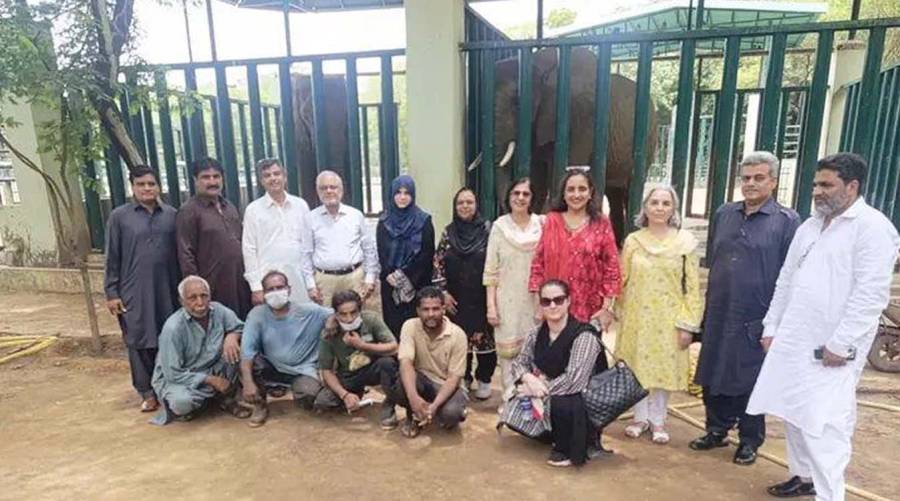
In a heartfelt tribute, the Karachi Metropolitan Corporation's Technical Committee on Tuberculosis for Karachi Safari Park's elephants Malika and Madhubala described Dr. Salahuddin as "an institution in her own right," remembering her as a compassionate physician, visionary public health advocate, educator, and champion of both human and animal health.
Dr. Salahuddin tragically lost her life in a road accident in Tangier, Morocco, prompting an outpouring of grief from healthcare professionals, colleagues, patients, and public health experts across Pakistan and beyond.
Related story: Pakistan mourns Dr. Naseem Salahuddin, iconic infectious diseases specialist
A pioneer of infectious diseases in Pakistan
Among her most significant contributions was helping establish infectious diseases as a recognized medical specialty in Pakistan. At a time when infectious disease medicine was still emerging in the country, Dr. Salahuddin played a pivotal role in creating a professional platform dedicated to improving the diagnosis, treatment, and management of infectious illnesses.
She was a founding member of the Infectious Diseases Society of Pakistan, which later evolved into the Medical Microbiology and Infectious Diseases Society of Pakistan. The society was established to keep frontline physicians informed about advances in managing common and complex infections, helping strengthen healthcare delivery in a country that continues to face a high burden of infectious diseases.
Colleagues say this contribution alone has had a lasting impact on generations of physicians and patients, making it one of the cornerstones of her professional legacy.
A lifelong advocate for vulnerable patients
Throughout her career, Dr. Salahuddin became known for her unwavering dedication to patients often overlooked by mainstream healthcare systems. She treated countless individuals suffering from HIV, severe infectious diseases, and multidrug-resistant tuberculosis, earning widespread respect for her clinical expertise and commitment to equitable healthcare access.
She also remained deeply invested in medical education, mentoring young physicians and helping build capacity in infectious disease medicine at a time when specialized expertise was urgently needed in Pakistan.
Leading the fight against rabies
While widely recognized for her work in infectious diseases, Dr. Salahuddin was equally passionate about eliminating rabies, a preventable yet deadly disease that continues to claim lives in many parts of the developing world.
Colleagues recalled how she frequently spoke about the suffering caused by rabies and advocated tirelessly for evidence-based prevention strategies.
Her commitment helped inspire and support the landmark Rabies Free Pakistan initiative at Indus Hospital, a large-scale program focused on mass dog vaccination, responsible animal population management, and public awareness aimed at reducing rabies transmission nationwide.
A champion of One Health
One of the lesser-known chapters of Dr. Salahuddin's career reflected her belief that human, animal, and environmental health are closely interconnected.
She served as a member of the 18-person Technical Committee on Tuberculosis established to oversee the treatment and recovery of Malika and Madhubala, the two African elephants housed at Karachi Safari Park. The initiative became one of Pakistan's most notable examples of the One Health approach, which promotes collaboration between human and veterinary medicine.
Although she had never previously treated tuberculosis in an elephant, committee members said she embraced the challenge with characteristic determination and curiosity.
According to the tribute, Dr. Salahuddin devoted significant time to understanding every aspect of the elephants' care, from treatment protocols and medication requirements to nutrition and overall well-being. Her involvement helped support one of the most unique and complex tuberculosis treatment efforts undertaken in Pakistan.
Committee members recalled her affectionately referring to the elephants as "M&M" and described her as one of their strongest advocates throughout the treatment process.
An enduring legacy
The Technical Committee described Dr. Salahuddin as a gentle yet extraordinarily driven individual who dedicated her life to serving Pakistan, its people, and its animals.
From pioneering infectious disease medicine and improving HIV and tuberculosis care to advancing rabies prevention and supporting innovative One Health initiatives, her work touched countless lives across multiple disciplines.
As Pakistan reflects on her contributions, colleagues say her legacy will continue to inspire healthcare professionals, public health advocates, researchers, and future generations of physicians committed to improving health outcomes for all.
For many, Dr. Naseem Salahuddin's greatest achievement was not simply the institutions she helped build or the programs she helped launch, but the compassion, integrity, and sense of purpose she brought to every patient, every cause, and every challenge she embraced.
Stay informed, stay alert
CLICK HERE TO JOIN Medical News Pakistan on WhatsApp for real-time health alerts, expert insights, and breakthrough medical discoveries.

Advertisement
E-PAPER
Trending
Popular
Pakistan’s Dr. Misha Tanveer takes air pollution research to Europe ...
-
Calorie deficit for weight loss: How to ...
06:00 PM, 24 Aug, 2026 -
Vaccine maker warns of wider TBE, ...
05:00 PM, 21 Aug, 2026 -
FDA authorizes first robot to draw ...
06:11 PM, 20 Aug, 2026 -
One blood test for multiple cancers ...
04:52 PM, 11 Aug, 2026
Follow us on Facebook
Follow us on Twitter
Copyright ©2026 Medical News. All Rights Reserved.