
4,470 doctors, one test: JCAT sets Punjab on edge
From Lahore’s Punjab University halls to Multan’s synchronized centre, King Edward Medical University’s 25th JCAT powered a high-stakes, transparent race into MS, MD, and MDS training—setting the tone for how Pakistan’s next specialists will be chosen
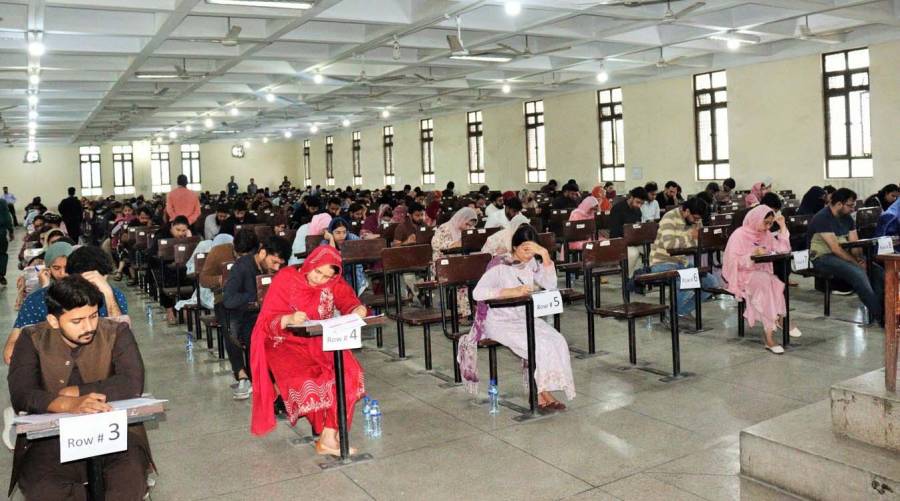
LAHORE/MULTAN: Pakistan’s next generation of specialists did not just sit an exam today—they stepped into one of the most decisive career gateways in the country’s medical education system.
In a synchronized, high-transparency operation across Lahore and Multan, King Edward Medical University (KEMU) successfully conducted the 25th Joint Centralized Admission Test (JCAT), a critical merit-based screening examination for admissions into MS, MD, and MDS programmes across Punjab.
A total of 4,470 candidates appeared in the 25th JCAT, including 3,133 candidates at the Lahore centre and 1,337 candidates at the Multan centre, while the participation of 62 international candidates added a strong global credibility dimension to the examination’s reach and trust value.
You may also like to read: KEMU’s 150 U.S. residency matches spark global spotlight on Pakistan’s medical talent
The test serves as one of Punjab’s most important academic filters for postgraduate specialist induction, where merit, standardization, and transparency directly influence the future clinical workforce. The broader JCAT framework for March 2026 admissions has been positioned as the province’s unified gateway for MD, MS, and MDS programmes.
At the Lahore centre, held at the University of the Punjab, Vice Chancellor, King Edward Medical University and Chairman, Joint Admission Commission, Professor Dr. Mahmood Ayaz, personally visited the examination halls and reviewed arrangements.
Expressing satisfaction over the process, he described JCAT as a well-integrated and reliable system that not only safeguards merit but also strengthens the standards of medical education in Pakistan.
People also read: UHS launches new MBBS, BDS curricula after historic academic overhaul
That statement reflects why JCAT now carries weight far beyond a single test day.
For thousands of doctors, it is the province’s most trusted academic gateway into specialist careers.
The Multan centre was not a secondary extension—it was a strategic pillar of accessibility and fairness.
Vice Chancellor, Nishtar Medical University, Professor Dr. Mehnaz Khakwani, remained present at the Multan examination centre and personally supervised the process, praising the transparent and highly organized arrangements.
She highlighted inter-institutional collaboration as the real engine behind the exam’s success, reinforcing the growing model of shared academic governance between leading public medical institutions.
Professor Dr Mahmood Ayaz also extended special appreciation to Professor Dr Mehnaz Khakwani and the Nishtar Medical University team, acknowledging that strong coordination between institutions was central to the smooth simultaneous conduct in both cities.
This Lahore–Multan model is increasingly becoming a blueprint for how high-volume provincial medical testing can remain both accessible and merit-driven.
What candidates were tested on
The 25th JCAT was conducted specifically for admissions into MS, MD, and MDS programmes, with the larger objective of promoting a uniform, fair, and province-wide transparent selection system.
The test included:
• General papers
• Specialty-based papers
This structure was designed to comprehensively assess both core foundational knowledge and discipline-specific readiness, ensuring that induction decisions reflect both breadth and specialization.
The 2026 admission notice framework further reinforces that the exam consists of two papers of 100 MCQs each, aligned with specialty pathways and minimum qualifying benchmarks.
Why this story matters nationally
This is not just about 4,470 candidates.
It is about how Pakistan chooses the doctors who will become its future surgeons, physicians, anesthetists, radiologists, and dental specialists.
In an era where merit systems often face public scrutiny, KEMU’s 25th JCAT stands out as a large-scale demonstration that standardization, transparency, and inter-university coordination can still anchor trust in public medical education.
The inclusion of 62 international candidates also sends a broader signal:
Punjab’s postgraduate medical selection ecosystem is not just expanding in size—it is growing in regional credibility and global visibility.
The bottom line
KEMU’s successful simultaneous conduct of the 25th JCAT in Lahore and Multan has done more than process admissions.
It has reinforced a province-wide belief that merit still remains the strongest currency in medical education.
And for 4,470 doctors chasing specialist futures, today’s exam may well become the single most important turning point between ambition and induction.
Stay informed, stay protected
CLICK HERE TO JOIN Medical News Pakistan on WhatsApp for real-time health alerts, expert insights, and breakthrough medical discoveries

Advertisement
E-PAPER
Trending
Popular
Pakistan’s Dr. Misha Tanveer takes air pollution research to Europe ...
-
Calorie deficit for weight loss: How to ...
06:00 PM, 24 Aug, 2026 -
Vaccine maker warns of wider TBE, ...
05:00 PM, 21 Aug, 2026 -
FDA authorizes first robot to draw ...
06:11 PM, 20 Aug, 2026 -
One blood test for multiple cancers ...
04:52 PM, 11 Aug, 2026
Follow us on Facebook
Follow us on Twitter
Copyright ©2026 Medical News. All Rights Reserved.