Punjab approves AI scanner to detect cancer and 10 diseases in 2 minutes
Punjab Chief Minister Maryam Nawaz Sharif has given in-principle approval for an AI-powered multi-disease scanner that could help detect up to 10 diseases — including several deadly cancers — within two minutes, with a pilot project now being planned in the province.
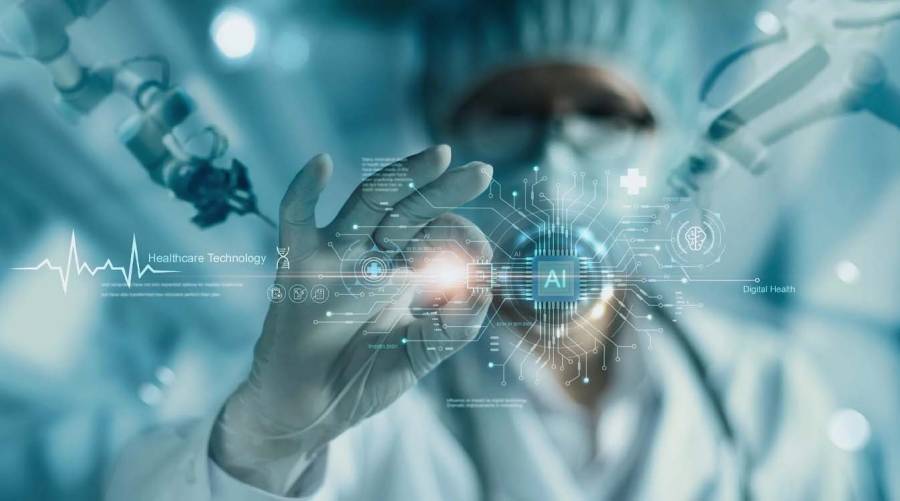
LAHORE: Punjab Chief Minister Maryam Nawaz Sharif has given in-principle approval for the introduction of an AI-powered multi-disease scanner in the province, opening the door to one of the most ambitious health-tech screening initiatives yet discussed in Pakistan.
The proposed system, presented to the chief minister during a meeting with senior executives of Chinese technology company Alibaba, is designed to support faster disease screening, earlier diagnosis and better treatment planning — all areas where delays can cost lives.
What makes the proposal especially striking is the claim made during the briefing: the system, based on non-contrast CT technology, could potentially help identify up to 10 diseases within around two minutes.
That single detail is likely to grab attention across Punjab’s healthcare sector — because if the technology performs as described, it could significantly change how doctors approach early screening for some of the province’s most serious health threats.
Scanner is aimed at early detection of deadly diseases
According to the briefing, the AI-powered multi-disease screening solution is being designed not merely as another medical gadget, but as a tool that could assist clinicians across the care pathway — from screening and detection to diagnosis, treatment planning and disease management.
Its most high-impact use case may be in the early detection of cancer.
Officials were informed that the technology can assist in identifying or screening for several serious diseases, including pancreatic cancer, liver cancer, gastric cancer, esophageal cancer and colorectal cancer.
That list alone explains why the proposal could become one of the most closely watched healthcare developments in Punjab in the coming months.
Some of these cancers are particularly dangerous because they are often diagnosed late, when symptoms become obvious only after the disease has already progressed. A screening tool that helps flag possible disease earlier could therefore become highly valuable — especially if it helps doctors intervene sooner.
The technology goes beyond cancer
The briefing also indicated that the proposed AI system is not limited to oncology.
In addition to screening for multiple cancers, the tool could also assist in the detection or risk assessment of:
- Acute Aortic Syndrome
- Cardiovascular disease risk
- Fat and muscle health
- Osteoporosis and bone weakness
- Fatty liver disease
That makes the system notable not just as an AI cancer scanner, but as a broader multi-disease diagnostic support solution.
And that broader capability is important.
In public healthcare systems, the greatest value often comes from tools that can screen across multiple conditions in a single patient encounter. If a single non-contrast CT-based workflow can help flag cancer risks, cardiovascular concerns and metabolic or bone-health issues at the same time, the eventual public-health impact could be far wider than a cancer-only program.
Maryam Nawaz orders a pilot project — but key rollout details are still missing
Chief Minister Maryam Nawaz Sharif reportedly took keen interest in the proposed system and directed health authorities to prepare a pilot project for its introduction in Punjab.
That instruction is significant because it moves the proposal beyond a conceptual presentation and into the first stage of possible implementation planning.
However, there is still an important unanswered question: where will the pilot begin, and when?
For now, there is no official timeline, no named hospital, and no confirmed district or city where the technology will be deployed first.
If the pilot is launched in a major teaching hospital or a high-volume public sector diagnostic center, it could quickly become a closely watched test case for how AI can be integrated into Pakistan’s healthcare system. If it proves effective, pressure could grow for expansion across other districts and tertiary care institutions.
This is not meant to replace doctors — and that detail matters
One of the most important points in the official briefing is also one of the most reassuring: the technology is intended to complement conventional diagnostic methods, not replace them.
That distinction matters for both patients and healthcare professionals.
AI-powered systems are increasingly being discussed around the world, but many clinicians remain cautious about exaggerated claims. In this case, the briefing framed the scanner as an additional clinical support tool — something that could help doctors work faster and more comprehensively, rather than remove the physician from the decision-making process.
In practical terms, that means the system would likely function as a screening and decision-support aid, helping clinicians identify possible red flags that still require medical interpretation, follow-up investigations and treatment judgment.
That makes the technology potentially useful — while also setting a more realistic expectation for what it can and cannot do.
A high-stakes test for AI in Punjab healthcare
Maryam Nawaz Sharif’s decision signals a broader policy direction: Punjab appears increasingly interested in using modern technology and artificial intelligence to strengthen healthcare delivery.
That ambition is easy to understand. In a province with a large population, heavy patient loads and persistent pressure on diagnostic systems, tools that help detect disease earlier and more efficiently can appear highly attractive.
But the real test will come after the announcement.
The success of this initiative will depend not just on the technology itself, but on the quality of its pilot design, clinical oversight, institutional adoption and measured real-world performance.
For now, one thing is clear: Punjab has taken the first visible step toward AI-assisted disease screening, and if the upcoming pilot moves forward, this could become one of the most closely followed health-tech stories in Pakistan.
Stay connected with Medical News Pakistan
CLICK HERE TO JOIN the official Medical News Pakistan WhatsApp Channel for verified global medical breakthroughs, FDA approvals, healthcare innovations, clinical research updates and the latest developments shaping medicine around the world.

Advertisement
E-PAPER
Trending
Popular
Pakistan’s Dr. Misha Tanveer takes air pollution research to Europe ...
-
Calorie deficit for weight loss: How to ...
06:00 PM, 24 Aug, 2026 -
Vaccine maker warns of wider TBE, ...
05:00 PM, 21 Aug, 2026 -
FDA authorizes first robot to draw ...
06:11 PM, 20 Aug, 2026 -
One blood test for multiple cancers ...
04:52 PM, 11 Aug, 2026
Follow us on Facebook
Follow us on Twitter
Copyright ©2026 Medical News. All Rights Reserved.