CM Sindh inaugurates SICVD Baldia cardiac hospital, announces cath lab, surgical expansion
Sindh CM opens 100-bed cardiac hospital in Baldia Town, unveils plans for a second cath lab and operation theatres to boost free heart care services in Karachi.

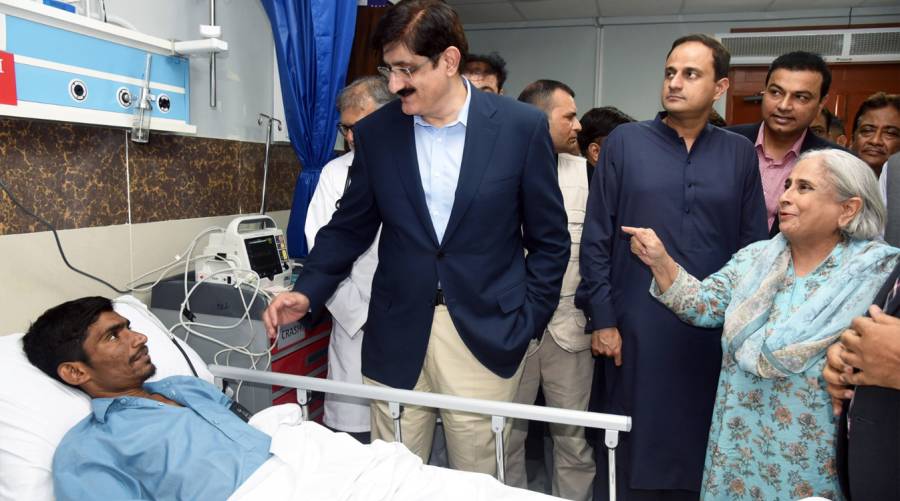
Murad inaugurates SICVD Baldia Town cardiac hospital, unveils major cardiac care expansion plans
KARACHI: Sindh Chief Minister Syed Murad Ali Shah inaugurated the 100-bed Sindh Institute of Cardiovascular Diseases (SICVD) Baldia Town Hospital, reaffirming the provincial government’s commitment to free, high-quality cardiac care in underserved areas of Karachi. The state-of-the-art facility is set to serve thousands of patients annually, with plans underway to establish a second catheterisation lab and fully equipped operation theatres by next year.

Speaking at the inauguration ceremony, the CM emphasized that this milestone strengthens Sindh’s position as home to the world’s largest free cardiac healthcare network. The SICVD network now comprises 10 full-scale cardiac hospitals and 29 strategically located Chest Pain Units (CPUs) across the province.
“This is more than a hospital—it’s a life-saving initiative, fulfilling a promise to the people of Baldia Town,” said Murad Shah.
Karachi strengthens position as cardiac care hub
Karachi alone now hosts 19 Chest Pain Units located in high-density and high-traffic areas like Nagan Chowrangi, Landhi, Gizri, KIHD, and JPMC, allowing rapid emergency response and early intervention.
Beyond Karachi, CPUs have expanded to remote areas like Thatta, Jacobabad, Kashmore, and Umerkot, extending free, accessible heart care across Sindh.
Background and progress
The CM revealed that the Baldia hospital was initially constructed under the Karachi Metropolitan Corporation (KMC) using Sindh government funds but remained incomplete for years. The project was revived and completed within eight months after being handed over to SICVD, showcasing efficient inter-agency collaboration.
Murad Ali Shah lauded SICVD’s evolution into a healthcare pioneer, delivering services such as:
- Open-heart surgeries
- Stroke interventions
- Paediatric cardiac care
- Emergency angioplasties
All services are offered completely free of cost, with more than two million patients treated annually.
Future expansion and ongoing development
In his address, the CM announced that Sindh is actively working with SICVD to establish the Zulfikar Ali Bhutto Institute of Cardiovascular Diseases (ZABICVD) in Karachi, set to become the largest cardiac hospital in the world. Additional cardiac facilities are also planned in Dadu, Kamber Shahdadkot, Matiari, and Sanghar.
Sharing development figures, Murad noted that 579 projects are currently underway in public service and infrastructure sectors, backed by 22,621 personnel, including healthcare and administrative staff.
Federal versus provincial healthcare governance
Highlighting historical challenges, Murad Shah reminded attendees that NICVD and other health institutions were federally run until 2011, after which funding ceased post-18th Amendment. Sindh stepped in to fund and operate these hospitals independently, later creating SICVD as an autonomous entity to protect investments and services from federal overreach.
“We resisted attempts to retake control because we had already invested too much to back down,” the CM said.
He acknowledged political criticism but embraced it, stating that patient relief through SICVD, NICVD, and SIUT remains his government’s ultimate achievement.
CLICK HERE TO FOLLOW the official Medical News Pakistan WhatsApp Channel for real-time updates, expert insights, and exclusive stories that matter to every person.

Advertisement
E-PAPER
Trending
Popular
Pakistan’s Dr. Misha Tanveer takes air pollution research to Europe ...
-
Calorie deficit for weight loss: How to ...
06:00 PM, 24 Aug, 2026 -
Vaccine maker warns of wider TBE, ...
05:00 PM, 21 Aug, 2026 -
FDA authorizes first robot to draw ...
06:11 PM, 20 Aug, 2026 -
One blood test for multiple cancers ...
04:52 PM, 11 Aug, 2026
Follow us on Facebook
Follow us on Twitter
Copyright ©2026 Medical News. All Rights Reserved.