
Karachi’s first mpox case of 2026 triggers a public health warning Pakistan can’t ignore
A travel-linked patient tests positive in Karachi after returning from abroad, as infectious disease experts warn the country’s surveillance systems may be entering a more sensitive phase
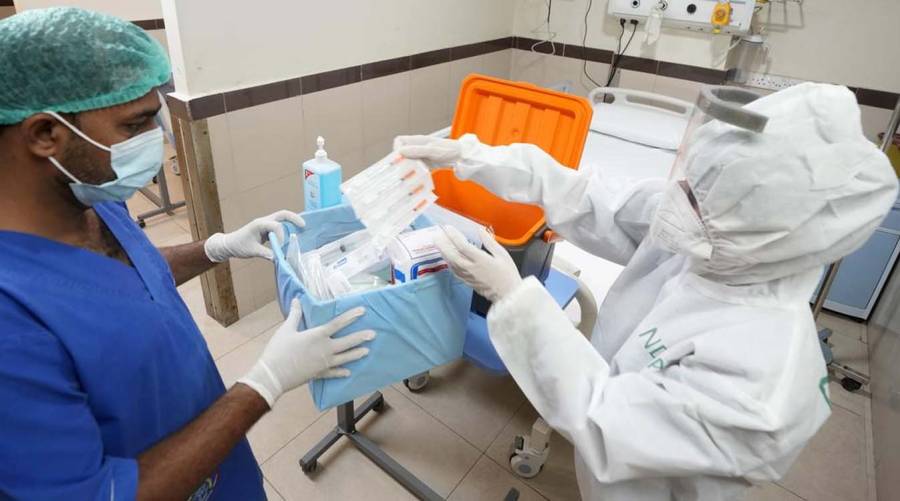
KARACHI: A single confirmed mpox case may sound like an isolated event.
But in a city as globally connected as Karachi, even one positive report can quickly become a larger public health story.
Karachi has reported its first mpox case of 2026, according to officials at the Sindh Infectious Diseases Hospital & Research Centre (SIDH&RC), putting infectious disease surveillance back in sharp focus at a time when Pakistan is already seeing concerning patterns elsewhere.
The patient was initially brought to the hospital earlier this month after developing symptoms consistent with mpox. Laboratory testing later confirmed the infection.
Speaking on the development, Dr. Abdul Wahid Rajput, Medical Superintendent, Sindh Infectious Diseases Hospital & Research Centre, confirmed that the patient’s report returned positive, establishing this as Karachi’s first documented mpox case of the year.
According to Dr. Rajput, the patient had returned to Karachi from abroad in January 2026, strengthening the likelihood of a travel-linked infection route.
In a significant detail, the patient was shifted to the Sindh Infectious Diseases Hospital after first presenting in early March, but later left for a private hospital on personal choice, according to the official account.
So far, this remains the only mpox case reported in Karachi and Sindh in 2026, officials said.
Why one case matters more than it seems
On the surface, one case may not appear alarming.
But public health experts know that infections like mpox are rarely judged by numbers alone.
The bigger concern lies in:
• travel history
• contact tracing
• speed of diagnosis
• possible exposure chains
• whether isolation was maintained after transfer
That is where this case becomes more important than a simple one-patient update.
Karachi remains Pakistan’s busiest international gateway, and any imported infectious disease case raises immediate questions around airport screening, household exposure, private hospital isolation protocols, and contact surveillance.
Pakistan’s wider mpox picture is already changing
The Karachi update comes as Khyber Pakhtunkhwa recently confirmed 26 mpox cases over the past year, prompting hospitals across the province to move to high alert. Officials there have also pointed to possible local transmission in some cases with no travel history, a development that changes the national risk conversation.
That makes Karachi’s imported case more than a city-level incident.
It becomes part of a broader national infectious disease pattern that health authorities will be watching closely.
What the public should know
Mpox typically spreads through close physical contact, contaminated materials, skin lesions, respiratory secretions during prolonged exposure, or contact with infected individuals.
Common symptoms include:
• fever
• body aches
• swollen lymph nodes
• rash or skin lesions
• fatigue
The fact that the patient later moved to a private hospital makes clinical continuity and public health reporting even more important, especially in a city where healthcare delivery is spread across public and private sectors.
The bigger picture
This is not yet a large outbreak story.
But it is a surveillance story, a travel health story, and a preparedness story.
And in infectious disease control, those are often the stories that matter most before numbers start rising.
For Karachi — and for Pakistan’s wider disease monitoring system — the first mpox case of 2026 is less about panic and more about a simple question:
Are detection, isolation, and contact systems fast enough before the next case arrives?
Stay informed, stay protected
CLICK HERE TO JOIN Medical News Pakistan on WhatsApp for real-time health alerts, expert insights, and breakthrough medical discoveries

Advertisement
E-PAPER
Trending
Popular
Pakistan’s Dr. Misha Tanveer takes air pollution research to Europe ...
-
Calorie deficit for weight loss: How to ...
06:00 PM, 24 Aug, 2026 -
Vaccine maker warns of wider TBE, ...
05:00 PM, 21 Aug, 2026 -
FDA authorizes first robot to draw ...
06:11 PM, 20 Aug, 2026 -
One blood test for multiple cancers ...
04:52 PM, 11 Aug, 2026
Follow us on Facebook
Follow us on Twitter
Copyright ©2026 Medical News. All Rights Reserved.