
Do you spend too long on the toilet? What new survey reveals about gut health
Nearly half of millennials and more than half of Gen Z take over six minutes to poop, raising concerns about constipation, stress, diet, and phone use.
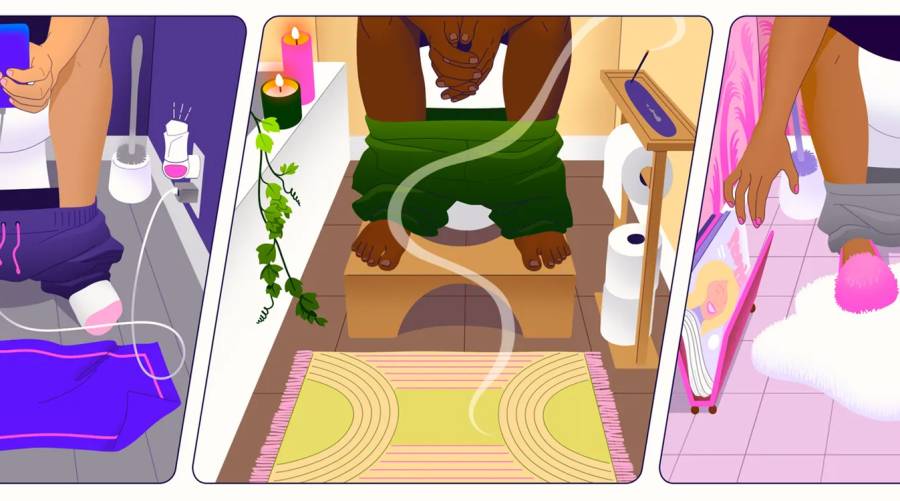
Survey finds millennials and Gen Z spend more time on the toilet, raising gut health concerns
KARACHI: How long does it take you to poop—from sitting down to washing? For many young Americans, the answer may be longer than experts recommend.
A new national poop survey reveals that nearly half of millennials (47%) and just over half of Gen Z (51%) spend at least six minutes on the toilet. In comparison, only 37% of Gen X and 23% of baby boomers report taking that long.
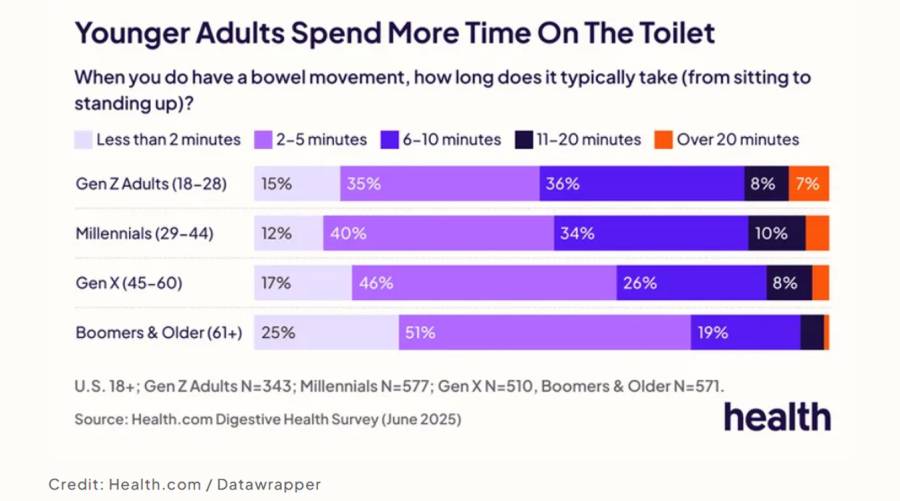
Expert guidelines on toilet time
“There is no specific, evidence-based ‘normal’ amount of time to spend on the toilet,” said Amit Ahuja, MD, head of gastroenterology at Cylinder Medical Group. But, he added, exceeding 10 minutes or struggling with prolonged straining could signal underlying issues.
According to Jim Cox, MD, co-director of gastroenterology and nutrition at the Anne Burnett Marion School of Medicine at Texas Christian University;
“Five minutes is a reasonable cutoff. If someone hasn’t had a bowel movement within that timeframe, they should get up and try again later.”
Why young adults are spending longer in the bathroom
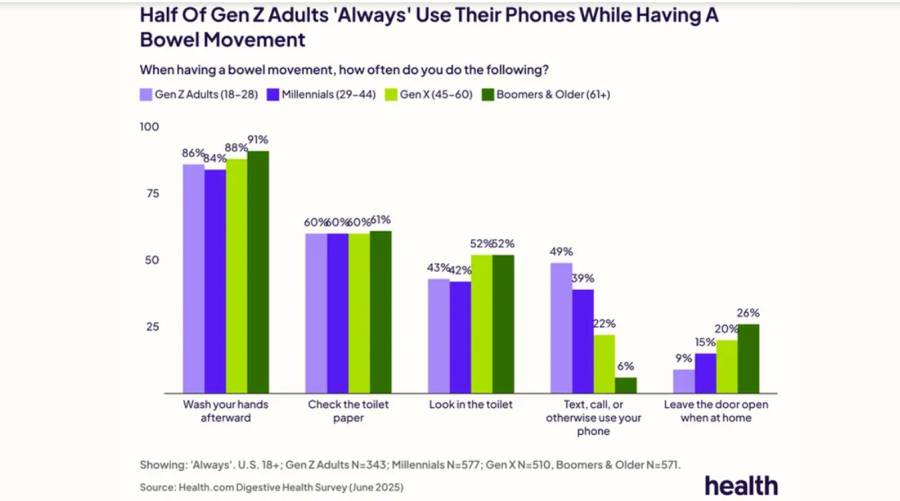 The survey linked prolonged bathroom sessions to multiple factors:
- Phone use: 49% of Gen Z and 39% of millennials reported always scrolling while on the toilet, compared to 22% of Gen X and just 6% of boomers.
- Constipation: 33% of millennials reported being constipated in the past month; 12% have been diagnosed with IBS-C, a constipation-predominant subtype of irritable bowel syndrome.
- Mental health: Anxiety and stress strongly affect bowel movements—83% of Gen Z and 80% of millennials reported their gut health was impacted by mental health, versus 69% of Gen X and 50% of boomers.
“The mind-gut connection can be easily overlooked,” said Amanda Sauceda, MS, RD, a dietitian specializing in gut health at California State University–Long Beach. “Mental stress can translate into constipation and longer toilet time.”
Health risks of prolonged toilet sitting
Extended toilet sessions can worsen hemorrhoids, compress nerves in the legs, and cause neck, back, and hip pain. Using phones in the bathroom also increases the risk of germ transmission, with mobile devices serving as “vectors for microbial contamination,” warned Dr. Ahuja.
Meanwhile, Cox added that poor diet plays a role. Too little fiber and too much processed food may be driving slower bowel movements.
How to reduce time spent on the toilet
Experts recommend lifestyle adjustments that promote healthier, quicker bowel movements:
- Eat more fiber: Women should aim for 25g per day, men for 38g. High-fiber foods include beans, lentils, peas, artichokes, raspberries, blackberries, popcorn, and high-fiber cereals.
- Stay hydrated: Drinking enough water helps fiber move through the digestive system.
- Don’t delay bathroom urges: “Holding stool allows the colon to absorb more water, making it harder to pass,” Cox noted.
- Manage stress: Adopt stress-reduction techniques that don’t involve scrolling on the phone.
When to seek medical advice
“If you experience changes in bowel habits, persistent constipation or diarrhea, rectal bleeding, weight loss, or abdominal pain, you should consult a healthcare professional,” Cox advised.
The survey, conducted from June 11–19, 2025, polled 2,001 US adults aged 18 and above. Sampling quotas were based on American Community Survey (ACS) data from the US Census Bureau, ensuring representation across age, race/ethnicity, and household income.
Stay informed. Stay ahead.
CLICK HERE TO FOLLOW Medical News Pakistan WhatsApp Channel for trusted healthcare updates, expert insights, clinical research, policy news, and medical breakthroughs—delivered directly to you.

Advertisement
E-PAPER

Trending
Popular
Pakistan’s Dr. Misha Tanveer takes air pollution research to Europe ...
-
Calorie deficit for weight loss: How to ...
06:00 PM, 24 Aug, 2026 -
Vaccine maker warns of wider TBE, ...
05:00 PM, 21 Aug, 2026 -
FDA authorizes first robot to draw ...
06:11 PM, 20 Aug, 2026 -
One blood test for multiple cancers ...
04:52 PM, 11 Aug, 2026
Follow us on Facebook
Follow us on Twitter
Copyright ©2026 Medical News. All Rights Reserved.