
After PIMS tragedy, Punjab orders fire-safety overhaul at hospitals
Maryam Nawaz orders fresh safety audits, monthly emergency drills and urgent checks of fire equipment, exits, hydrants, air conditioners and electrical systems across Punjab hospitals.
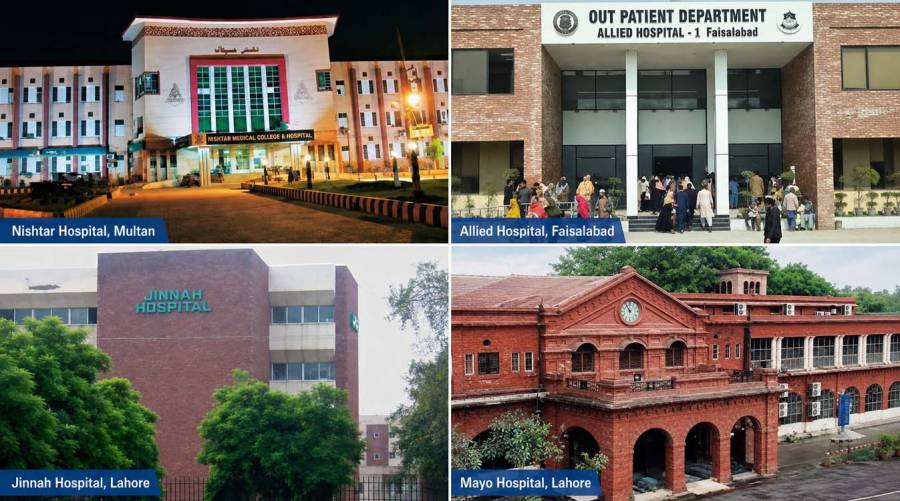
LAHORE: Punjab has ordered an urgent review of fire-safety arrangements across public hospitals and other health facilities following the deaths of 14 infants in a fire at the Pakistan Institute of Medical Sciences (PIMS) in Islamabad, putting emergency preparedness, evacuation systems and hospital safety infrastructure under renewed scrutiny.
The Punjab Healthcare Commission (PHC) has directed public and private hospitals across the province to immediately strengthen arrangements for responding to fire and other emergencies, while Punjab Chief Minister Maryam Nawaz has ordered a separate fresh audit of fire-safety arrangements at public-sector health facilities.
The moves come amid questions surrounding the emergency response to the PIMS blaze, where witnesses reported difficulties accessing the neonatal intensive care unit and alleged delays in obtaining assistance. Authorities have disputed aspects of those accounts.
Hospitals told to check fire equipment, staff and emergency systems
The PHC has directed hospital administrations to ensure the availability of trained emergency personnel, functional equipment, adequate resources and regular emergency drills so that staff can respond promptly during a crisis.
Hospitals have also been instructed to comply fully with the commission's prescribed Minimum Service Delivery Standards (MSDS), including requirements under the Facility Management System and Hospital Infection Control framework.
Among the measures ordered are the establishment of an emergency coding system, including “Code Red” for fire incidents, functional firefighting equipment, trained staff, regular emergency exercises and documented standard operating procedures.
Hospitals must also prominently display emergency exit maps and obtain the required building safety and fitness certificates.
Fire-safety inspections to cover public and private hospitals
The PHC has asked the Punjab Emergency Services Department (Rescue 1122) to inspect hospitals under the Punjab Community Safety Act, 2021, and the Punjab Community Safety Buildings Regulations, 2022.
Under the applicable framework, District Emergency Officers can inspect buildings including hospitals, verify the availability and installation of required fire-safety arrangements and issue a safety certificate valid for one year when the prescribed requirements have been met.
The PHC has further directed that fire-safety audits of all public and private-sector hospitals be completed without delay.
Hospitals found to be non-compliant are to receive inspection reports identifying areas requiring improvement, while details of such facilities are to be shared with the PHC.
Rescue 1122 has also been asked to provide details of hospital inspections conducted over the past three years, including a list of hospitals that failed to meet statutory requirements.
Maryam orders fresh hospital safety audit
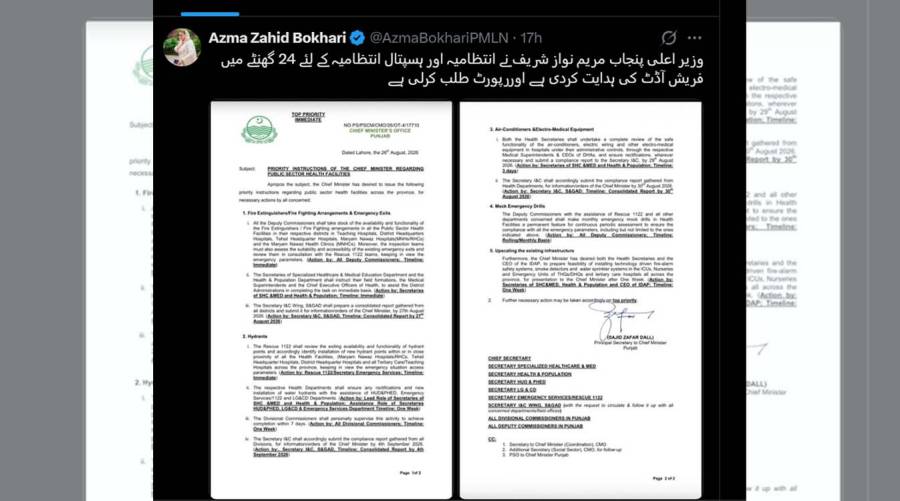
Separately, Punjab Information Minister Azma Bukhari said Maryam Nawaz had ordered a fresh audit of fire-safety arrangements at hospitals in the province and sought a report within 24 hours.
Under the chief minister's directives, deputy commissioners have been asked to immediately assess the availability and functionality of fire extinguishers and firefighting arrangements at public-sector health facilities in their districts.
Inspection teams must also examine whether emergency exits are suitable and accessible and review them with Rescue 1122 teams against emergency-response requirements.
The exercise is not limited to fire extinguishers.
Hydrants, emergency access and hospital infrastructure under review
Maryam has directed Rescue 1122 to review the availability and functionality of hydrant points at health facilities and identify locations where new hydrants are needed within or close to hospitals.
Health departments have been instructed to carry out any necessary rectification or new hydrant installations with the assistance of relevant government departments and emergency services.
Divisional commissioners have been tasked with personally supervising the work, with the activity to be completed within seven days.
A separate compliance report on the hydrant-related measures is due by September 4, 2026.
Air conditioners and electrical systems also face scrutiny
One of the most significant elements of the fresh review concerns the safety of equipment inside hospitals.
Health secretaries have been directed to conduct a complete review of the safe functionality of air conditioners, electrical wiring and other electro-medical equipment at hospitals under their administrative control.
Medical superintendents and chief executive officers have been tasked with identifying problems and ensuring necessary rectification.
The health departments are required to submit compliance information by August 29, after which a consolidated report is to be submitted to the chief minister by August 30.
The focus on electrical systems and air conditioners is particularly significant because preliminary information from the PIMS fire indicated that a spark in an air conditioner may have triggered the blaze. The cause remains subject to investigation.
Monthly emergency drills to become mandatory routine
Punjab's response also seeks to change how hospitals prepare for emergencies between incidents.
Deputy commissioners have been directed to make monthly emergency mock drills a permanent feature at health facilities.
The drills are intended to provide continuous, periodic assessment of compliance with emergency-response requirements rather than relying solely on written safety plans.
For hospitals caring for newborns, intensive-care patients and other people who cannot evacuate independently, the effectiveness of such preparedness can be especially critical.
New fire alarms, smoke detectors and sprinklers under consideration
The province is also looking beyond immediate inspections.
Maryam Nawaz has directed health secretaries and the Infrastructure Development Authority's chief executive officer to prepare a feasibility report for technology-driven fire alarm systems, smoke detectors and water sprinkler systems.
The proposed systems would specifically be assessed for intensive care units, nurseries and emergency units at tehsil headquarters, district headquarters and tertiary-care hospitals.
The feasibility report is expected after a week, with further action to be taken on priority.
The measures collectively point to a broader shift from simply checking whether hospitals possess firefighting equipment to examining whether their entire emergency-response chain — from detection and alarms to evacuation, staff preparedness, firefighting infrastructure and emergency access — can function when lives are at immediate risk.
The urgency follows the PIMS tragedy, where a hospital fire claimed the lives of 14 infants and raised serious questions about fire safety, emergency preparedness and access to critical-care areas.
For Punjab's hospitals, the coming days will therefore be critical: authorities are now expected not only to identify safety gaps but also to demonstrate that those gaps are being addressed.
Stay connected with Medical News Pakistan
CLICK HERE TO JOIN the official Medical News Pakistan WhatsApp Channel for verified updates on the PIMS nursery fire, government investigations, hospital safety and accountability, along with the latest breaking health news, medical developments and public-health stories from Pakistan and around the world.

Advertisement
E-PAPER
Trending
Popular
Pakistan’s Dr. Misha Tanveer takes air pollution research to Europe ...
-
Calorie deficit for weight loss: How to ...
06:00 PM, 24 Aug, 2026 -
Vaccine maker warns of wider TBE, ...
05:00 PM, 21 Aug, 2026 -
FDA authorizes first robot to draw ...
06:11 PM, 20 Aug, 2026 -
One blood test for multiple cancers ...
04:52 PM, 11 Aug, 2026
Follow us on Facebook
Follow us on Twitter
Copyright ©2026 Medical News. All Rights Reserved.