Why did the United States quit WHO, what does it mean for global health?
WHO says the US withdrawal makes the world less safe and defends its COVID-19 response and scientific independence
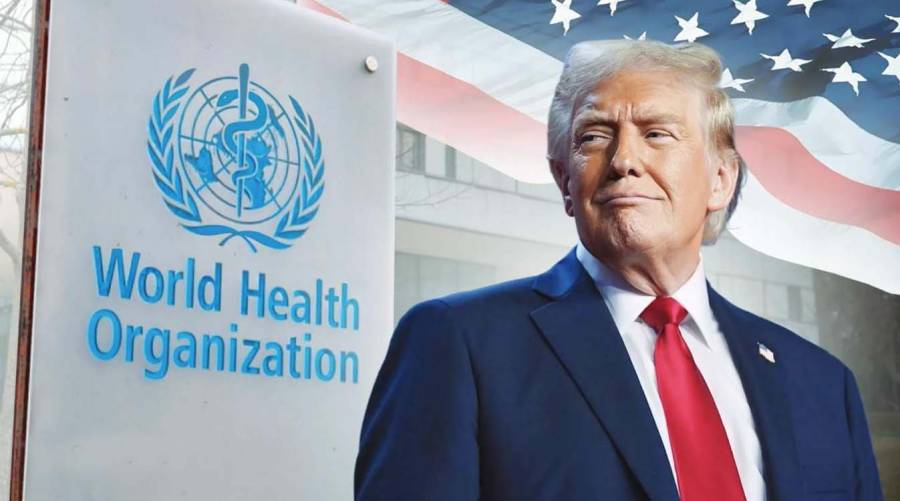
Why did the United States withdraw from the World Health Organization?
GENEVA: The World Health Organization (WHO) has formally acknowledged that the United States has notified its decision to withdraw from the global health body, a move the agency says will make both the US and the world less safe. The announcement has sent shockwaves through the international public health community, raising urgent questions about future pandemic preparedness and global disease surveillance.
In an official statement, released over the weekend, WHO expressed deep regret over the decision, noting that global health threats do not respect borders and can only be controlled through cooperation. The organization said the issue will be reviewed by the WHO Executive Board in February and by the World Health Assembly in May 2026.
A 75-year partnership in global health
As a founding member of WHO, the United States has played a central role in some of the world’s most significant public health victories. These include the eradication of smallpox and progress against polio, HIV, Ebola, malaria, tuberculosis, influenza, and antimicrobial resistance. WHO said these collaborations have helped protect not only vulnerable populations worldwide but also the American people themselves.
WHO emphasized that its relationship with the United States has always been based on mutual respect and national sovereignty, rejecting accusations that it compromised its independence or acted in bad faith.
WHO responds to COVID-19 criticism
The US government cited WHO’s handling of COVID-19 as a key reason for withdrawal, accusing the organization of delaying or concealing critical information. WHO strongly disputed this claim, stating that it shared data transparently and acted rapidly once the first reports of unexplained pneumonia emerged from Wuhan, China, on December 31, 2019.
According to WHO, it alerted the world through official channels by January 11, 2020, convened international experts, and issued guidance for countries on protecting health systems. When COVID-19 was declared a public health emergency of international concern on January 30, 2020, fewer than 100 cases had been reported outside China, with no deaths.
WHO also clarified that while it recommended masks, vaccines, and physical distancing based on scientific evidence, it never called for lockdowns or mandates. Those decisions, it said, were made independently by governments.
Independence, science-based governance
WHO rejected claims that it follows a politicized or hostile agenda, stressing that it is governed by 194 Member States and remains impartial. It said its sole mandate is to protect health without political bias or favoritism.
You may like to read: Meet Trump’s picks to lead health agencies under RFK Jr.
The organization added that lessons learned from COVID-19 have already strengthened global preparedness systems that operate around the clock to detect and respond to outbreaks.
What happens next?
Despite the US decision, WHO said its work continues with other Member States, particularly through the newly adopted WHO Pandemic Agreement. This international framework aims to improve early detection of dangerous pathogens and ensure fair access to vaccines, diagnostics, and treatments during future pandemics.
WHO said negotiations are now underway for a Pathogen Access and Benefit Sharing system, designed to prevent delays and inequities seen during COVID-19.
Hope for renewed engagement
WHO concluded its statement by expressing hope that the United States will return in the future, reaffirming its mission to uphold health as a fundamental human right for everyone, everywhere.
Public health experts warn that reduced engagement by the US could weaken global disease monitoring and emergency response, at a time when emerging infections and antimicrobial resistance continue to pose growing threats.
Stay informed, stay healthy!
CLICK HERE TO JOIN Medical News Pakistan on WhatsApp for latest stories, expert tips, health updates, and the medical research straight to your phone.

Advertisement
E-PAPER
Trending
Popular
Pakistan’s Dr. Misha Tanveer takes air pollution research to Europe ...
-
Calorie deficit for weight loss: How to ...
06:00 PM, 24 Aug, 2026 -
Vaccine maker warns of wider TBE, ...
05:00 PM, 21 Aug, 2026 -
FDA authorizes first robot to draw ...
06:11 PM, 20 Aug, 2026 -
One blood test for multiple cancers ...
04:52 PM, 11 Aug, 2026
Follow us on Facebook
Follow us on Twitter
Copyright ©2026 Medical News. All Rights Reserved.