
Karachi citizens demand accountability over urban flooding, health crisis
Experts and activists call for urgent structural reforms as recurring floods cause ₨15 billion losses and severe health risks.
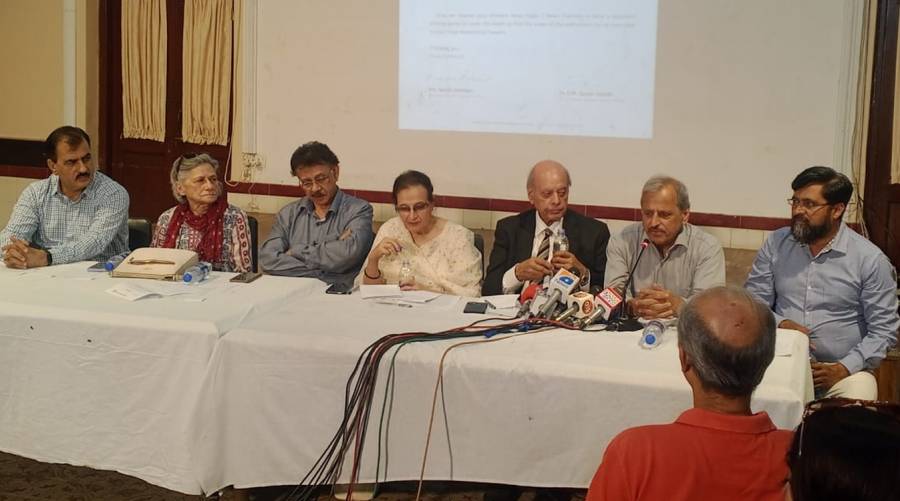
Karachi citizens demand accountability and reforms over urban flooding crisis
KARACHI: Citizens, experts, and activists gathered under the Karachi Citizens Forum (KCF) banner to express outrage over the recurring urban flooding in Karachi that cripples the city after every spell of rain.
The press conference, titled “Should Karachi Drown After Every Heavy Rainfall?”, was held at Pakistan Medical Association (PMA) House Karachi, symbolizing the deep health and medical concerns linked to the city’s recurring infrastructure collapse. The gathering brought together professionals from diverse fields who demanded urgent structural reforms, accountability, and long-term planning from both city and provincial authorities.
Experts highlight recurring failures
Speakers included Ms. Nargis Rahman, Convenor KCF; Dr. Qaisar Sajjad, Co-Convenor KCF; Dr. Ghafoor Shoro, Secretary General Pakistan Medical Association; Justice (R) Shaiq Usmani, Former Judge of Sindh High Court; Mazhar Abbas, Senior Journalist; Mohamad Tauheed, Urban Planner & Researcher, Karachi Urban Lab; Ms. Mahnaz Rahman, Council Member, Human Rights Commission of Pakistan; and Mahmood Alam, Climate Expert.
They noted that despite repeated warnings from the Meteorological Department and NDMA, the city remains unprepared for monsoon rains. Within just five days of downpours this month, Karachi suffered estimated losses of ₨15 billion, while neighborhoods remained submerged in sewage-contaminated floodwater, creating serious public health risks.
Medical experts at the PMA House stressed that disease will be a certain aftermath, as rusted sewage and drinking pipelines, as well as boring wells, face contamination. Stagnant pools of water and rotting garbage, they warned, provide a perfect breeding ground for mosquitoes carrying dengue and other vector-borne illnesses.
Ms. Nargis Rahman criticized the reactive approach of city officials, stating:
“Their presence during the downpour is a damning and damaging expression of Karachi’s administrative failure. The city deserves forward planning, not firefighting.”
Key recommendations to address urban flooding
The forum presented urgent recommendations to prevent recurring urban flooding:
- Establishment of an apex authority to coordinate land-owning agencies and civic bodies.
- Appointment of qualified town planners and consultants with transparency in project execution.
- Prioritization of essential infrastructure such as drainage and sewage over cosmetic projects like underpasses.
- Separation of sewage and rainwater drainage systems to prevent contamination.
- Acceleration of unfinished projects, including mass transit and water treatment plants.
- Accountability measures against negligent officials, encroachers, litterers, and plastic bag manufacturers.
Call for urgent reforms
Experts emphasized that while megacities like Mumbai can recover from exceptional deluges, Karachi drowns even after moderate rainfall due to institutional collapse and poor urban planning. They urged both federal and provincial governments to treat Karachi as Pakistan’s economic backbone rather than allowing it to become a “wasteland.”
The conference concluded with a call for transparency, digitization of civic management, and citizen-inclusive governance, alongside stronger public health safeguards, to protect Karachi’s future against climate change–induced disasters.
Stay updated with Medical News Pakistan
CLICK HERE TO JOIN Medical News WhatsApp community to get the latest updates on global health guidelines, medical research, and expert insights directly on your phone.

Advertisement
E-PAPER
Trending
Popular
Pakistan’s Dr. Misha Tanveer takes air pollution research to Europe ...
-
Calorie deficit for weight loss: How to ...
06:00 PM, 24 Aug, 2026 -
Vaccine maker warns of wider TBE, ...
05:00 PM, 21 Aug, 2026 -
FDA authorizes first robot to draw ...
06:11 PM, 20 Aug, 2026 -
One blood test for multiple cancers ...
04:52 PM, 11 Aug, 2026
Follow us on Facebook
Follow us on Twitter
Copyright ©2026 Medical News. All Rights Reserved.