
35 MLOs trained in forensic DNA techniques at SFDL-ICCBS
Sindh Health Department and ICCBS Karachi host medico-legal officers for capacity building in forensic DNA and crime investigation methods
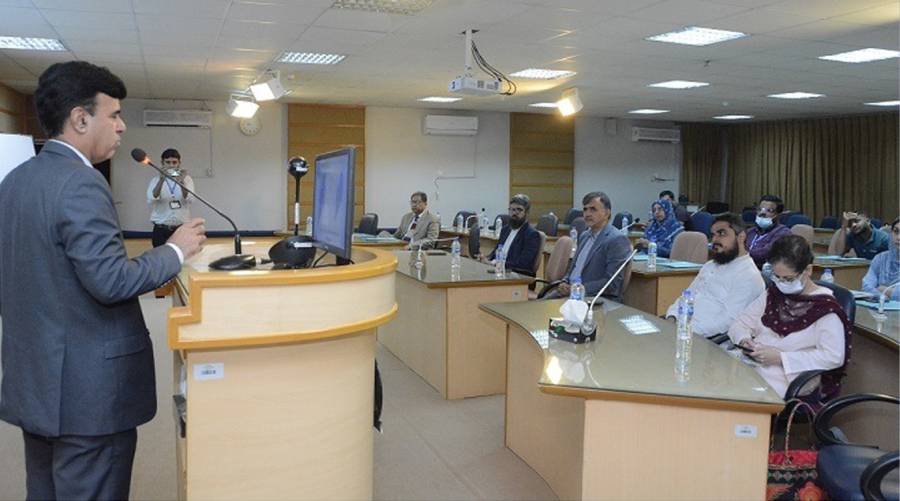
Forensic DNA training session held for 35 MLOs at SFDL-ICCBS Karachi
KARACHI: The Sindh Forensic DNA and Serology Laboratory (SFDL) at the International Center for Chemical and Biological Sciences (ICCBS), University of Karachi, organized a one-day training session for 35 medico-legal officers (MLOs), enhancing their expertise in forensic science and its vital role in criminal justice. The program was jointly conducted by the Sindh Health Department, Government of Sindh, and SFDL.
Prof. Dr. Muhammad Raza Shah, Director ICCBS, welcomed participants and praised the collaboration between ICCBS and the Sindh Health Department in managing Pakistan’s most advanced forensic facility. He highlighted that SFDL has handled over 9,000 DNA and forensic cases, playing a key role in major disasters and high-profile criminal investigations. He emphasized that forensic DNA analysis not only strengthens the judicial system but also projects a positive image of Pakistan through research and academic excellence.
Dr. Summaiya Syed, Police Surgeon Karachi, underscored the significance of correct evidence collection and preservation, particularly in cases involving sexual violence and postmortem examinations. She also stressed the accuracy of medico-legal certificates and postmortem reports as critical to justice delivery.
Dr. Ishtiaq Ahmad Khan, Project Director SFDL, outlined the laboratory’s operational ecosystem and its role as a hub for forensic capacity building. He noted that SFDL regularly trains judges, investigating officers, prosecutors, and medico-legal experts. He further detailed ICCBS’s progress in advancing forensic science research in Pakistan.
During the session, DIG IT Imran Yaqub introduced the SAFE Portal, explaining its role in modern policing through centralized data access and operational efficiency. Dr. Amir Hussain, Legal Advisor SFDL, spoke on the legal framework of forensic DNA in courts of law, reinforcing its utility in evidence-based justice.
The visiting MLOs toured SFDL, observed its cutting-edge operations, and praised the technical expertise and state-of-the-art facilities. The program concluded with a technical session and an interactive Q&A led by Dr. Ishtiaq Ahmad Khan and senior experts.
This training initiative reflects Pakistan’s growing emphasis on forensic science as a cornerstone of modern criminal investigations and justice.
Stay updated with Medical News Pakistan
CLICK HERE TO JOIN Medical News WhatsApp community to get the latest updates on global health guidelines, medical research, and expert insights directly on your phone.

Advertisement
E-PAPER
Trending
Popular
Pakistan’s Dr. Misha Tanveer takes air pollution research to Europe ...
-
Calorie deficit for weight loss: How to ...
06:00 PM, 24 Aug, 2026 -
Vaccine maker warns of wider TBE, ...
05:00 PM, 21 Aug, 2026 -
FDA authorizes first robot to draw ...
06:11 PM, 20 Aug, 2026 -
One blood test for multiple cancers ...
04:52 PM, 11 Aug, 2026
Follow us on Facebook
Follow us on Twitter
Copyright ©2026 Medical News. All Rights Reserved.