
AI-designed drugs enter human trials, signaling a seismic shift in global medicine
From algorithms to actual patients, artificial intelligence is now creating medicines faster than ever—experts say this could redefine how diseases are treated worldwide
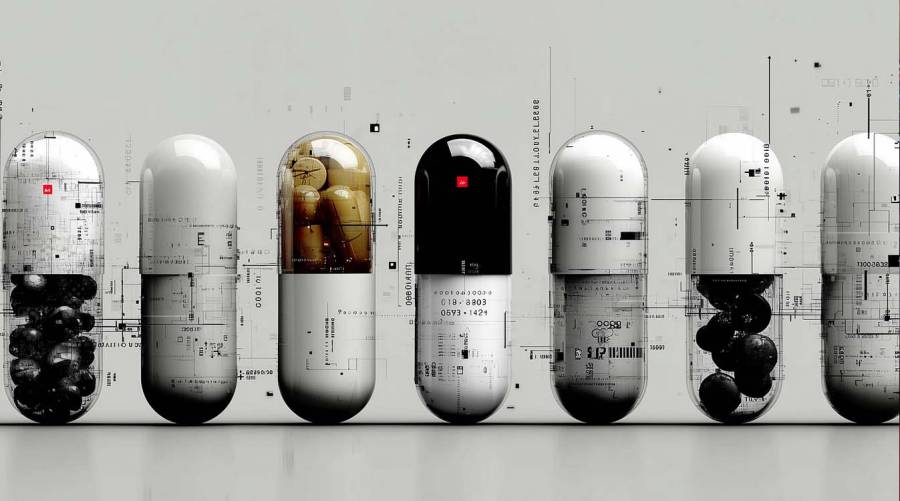
In what many scientists are calling a once-in-a-generation breakthrough, medicines designed entirely by artificial intelligence are no longer confined to research labs—they are now entering human trials.
This moment marks a profound shift in how the world may discover, develop, and deliver treatments. For decades, drug development has been a slow, expensive, and failure-prone process, often taking more than 10 years and billions of dollars to bring a single drug to market. Now, artificial intelligence is beginning to compress that timeline in ways that were once unimaginable.
And this is not a distant future scenario—it is already happening.
From code to cure: a new era begins
Traditionally, drug discovery has relied on years of trial-and-error experimentation. Scientists would identify potential targets, test thousands of compounds, and gradually narrow down candidates—a process with a high failure rate.
Artificial intelligence is rewriting that model.
By analyzing massive datasets—ranging from molecular structures to genetic information—AI systems can now predict how different compounds will behave in the human body. This allows researchers to design drugs with a level of precision and speed never seen before.
What once took years can now take months.
And for the first time, AI-designed drug candidates are advancing into real human clinical trials, a milestone that signals the technology’s transition from promise to practice.
Related story: Is artificial intelligence quietly rewiring your brain?
Why this changes everything
The implications are enormous.
AI-driven drug discovery has the potential to:
• Dramatically reduce the cost of developing new medicines
• Accelerate timelines for life-saving treatments
• Improve success rates by identifying better drug candidates early
• Enable highly personalized therapies tailored to individual patients
For diseases that have long resisted treatment—such as certain cancers, neurological disorders, and rare genetic conditions—this could be a turning point.
Experts believe AI can uncover patterns in biology that humans simply cannot detect, opening doors to entirely new classes of drugs.
Related story: Revolutionizing Genomic research: The synergy of artificial intelligence, CRISPR technology
The human trial milestone: a critical test
While AI-designed drugs entering human trials is a major breakthrough, it is also the most critical phase.
Clinical trials will determine whether these AI-created compounds are not only effective but also safe for patients. Historically, many promising drugs fail at this stage.
That is why this moment carries both excitement and caution.
If successful, these trials could validate AI as a reliable partner in medicine. If not, they will still provide crucial data to refine future models.
Either way, the trajectory is clear: AI is becoming deeply embedded in the future of healthcare.
Big tech meets big pharma
The rise of AI in drug discovery is being driven by a powerful convergence of technology companies, biotech startups, and pharmaceutical giants.
Major investments are pouring into AI-driven platforms that can:
• Simulate biological processes
• Identify drug targets faster
• Predict side effects before trials begin
This collaboration is reshaping the pharmaceutical landscape, creating a new ecosystem where data, computing power, and biology intersect.
The race is on—not just to develop new drugs, but to redefine how medicine itself is created.
A double-edged revolution?
Despite the optimism, experts caution that AI is not a magic solution.
Challenges remain:
• Ensuring data quality and avoiding algorithmic bias
• Validating AI predictions through rigorous clinical testing
• Navigating regulatory frameworks not yet fully adapted to AI-driven medicine
There are also ethical questions about transparency, accountability, and access—especially for developing countries.
Will these breakthroughs be accessible globally, or will they widen existing healthcare gaps?
What this means for the future
For patients, the promise is simple but powerful: faster access to better treatments.
For healthcare systems, it could mean reduced costs and improved outcomes.
And for the global scientific community, it represents a paradigm shift—one where machines are not replacing scientists, but amplifying their capabilities.
The fact that AI-designed drugs are now being tested in humans is more than just a milestone.
It is a signal that the future of medicine has already begun.
And if early results prove successful, this could be the moment history looks back on as the beginning of a new era—where diseases are not just treated, but predicted, prevented, and precisely targeted through the power of artificial intelligence.
Stay informed, stay alert
CLICK HERE TO JOIN Medical News Pakistan on WhatsApp for real-time health alerts, expert insights, and breakthrough medical discoveries.

Advertisement
E-PAPER
Trending
Popular
Pakistan’s Dr. Misha Tanveer takes air pollution research to Europe ...
-
Calorie deficit for weight loss: How to ...
06:00 PM, 24 Aug, 2026 -
Vaccine maker warns of wider TBE, ...
05:00 PM, 21 Aug, 2026 -
FDA authorizes first robot to draw ...
06:11 PM, 20 Aug, 2026 -
One blood test for multiple cancers ...
04:52 PM, 11 Aug, 2026
Follow us on Facebook
Follow us on Twitter
Copyright ©2026 Medical News. All Rights Reserved.