
AKU launches groundbreaking malaria elimination project in Thatta
Aga Khan University’s malaria elimination plan aims to eradicate malaria in Thatta, Pakistan, with global and local partnerships driving the initiative forward.
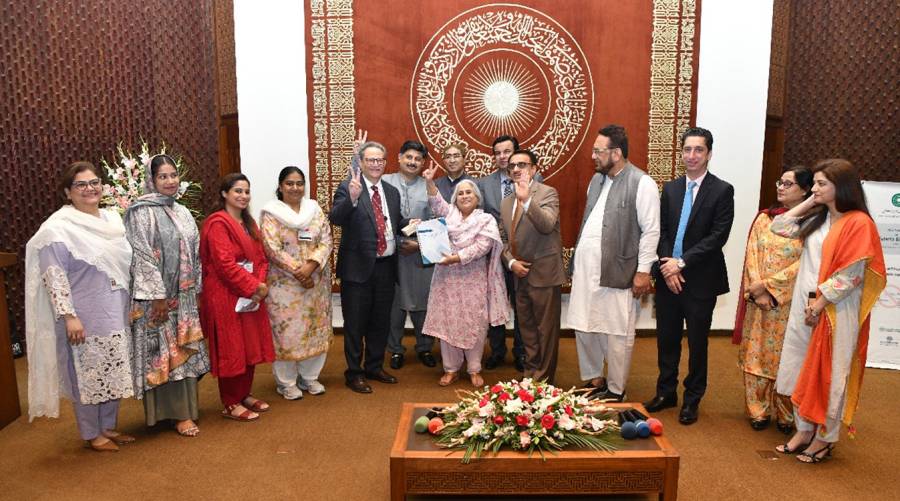
AKU launches Thatta malaria elimination project to combat Pakistan’s highest malaria burden
KARACHI: The Aga Khan University (AKU) has launched the Thatta Malaria Elimination Plan (TMEP) on World Malaria Day, a groundbreaking initiative aimed at eliminating malaria in one of Pakistan's most affected regions. In 2023, Thatta reported over 10,000 malaria cases, the highest number in the country, highlighting the urgent need for targeted intervention.
Tackling a global health crisis
Malaria remains a significant global health challenge, with over 247 million cases and 619,000 deaths reported worldwide. In the South-East Asia region, Pakistan stands as a major contributor to malaria transmission, with 95% of its population at risk. The disease places immense pressure on Pakistan’s healthcare system and has a devastating impact on social and economic development.
Prof. M. Asim Beg, Principal Investigator and TMEP Project Lead, emphasizes the multifaceted nature of the problem, stating:
"This is not just a health issue. It’s driven by socioeconomic vulnerabilities, post-flood consequences, limited healthcare access, and climatic changes that facilitate malaria transmission. Thatta is an ideal region to pilot intervention strategies."
A locally driven, data-backed approach to malaria elimination
The Thatta Malaria Elimination Plan is part of the broader Malaria Elimination Consortium formed by AKU in 2023. The consortium aims to support the national malaria elimination strategy by providing a data-driven, locally grounded response. The TMEP’s ambitious goal is to transform Thatta into a malaria-free zone and establish a sustainable model that can be replicated across Sindh, Pakistan, and other malaria-endemic regions globally.
You may like: Scientists develop tool to decode sticky malaria proteins
The project is spearheaded by AKU, in partnership with the Government of Pakistan, the Government of Sindh, and the Directorate of Malaria Control. It is also backed by international partners such as GLIDE, Zenysis Technologies, and Universidade NOVA de Lisboa, who bring in financial resources, technology expertise, and global insights.
Strengthening collaboration for scale-up across Pakistan
The TMEP emphasizes strengthening collaboration between national, provincial, and district-level actors, paving the way for broader scale-up efforts across Pakistan. Dr. Azra Pechuho, Sindh’s Minister for Health and Patron-in-Chief of the project, expressed the government’s pride in supporting this transformative initiative, which is expected to uplift communities across Sindh.
“We are proud to support this incredible initiative, which has the potential to uplift suffering communities across Sindh,” said Dr. Pechuho.
Innovation through novel treatments and community involvement
The TMEP also integrates findings from the international EFFORT clinical trial, which introduced novel treatments for malaria. The trial found that Tafenoquine, a single-dose treatment, shows significant promise in reducing malaria recurrence rates, particularly in Pakistan’s malaria hotspots like Karachi and Thatta.
Dr. Salim Virani, Vice Provost for Research at AKU, highlighted the unique approach of the trial:
“We tested treatment options under real-world conditions in Karachi and Thatta, where malaria rates are high. The results have shown a substantial reduction in recurrence rates, with Tafenoquine leading the charge.”
Alongside these innovations, the TMEP focuses on building a stronger health system with enhanced capacity for malaria diagnosis, treatment, and surveillance. The project also encourages community involvement, aiming for long-term behavioral change and grassroots-level ownership in malaria prevention and control.
Aligning with World Malaria Day's theme
The launch of the TMEP aligns with the 2025 World Malaria Day theme: “Malaria ends with us: reinvest, reimagine, reignite.” The TMEP is a bold step toward reinventing malaria control and creating lasting solutions for the disease, not just in Pakistan, but in regions worldwide that face similar challenges.

Advertisement
E-PAPER
Trending
Popular
Pakistan’s Dr. Misha Tanveer takes air pollution research to Europe ...
-
Calorie deficit for weight loss: How to ...
06:00 PM, 24 Aug, 2026 -
Vaccine maker warns of wider TBE, ...
05:00 PM, 21 Aug, 2026 -
FDA authorizes first robot to draw ...
06:11 PM, 20 Aug, 2026 -
One blood test for multiple cancers ...
04:52 PM, 11 Aug, 2026
Follow us on Facebook
Follow us on Twitter
Copyright ©2026 Medical News. All Rights Reserved.