
Uganda Ebola outbreak grows as WHO warns of high regional spread risk
Uganda confirms new Ebola infections linked to cross-border transmission from Congo as WHO raises alarm over the spread of the rare Bundibugyo strain across East Africa.
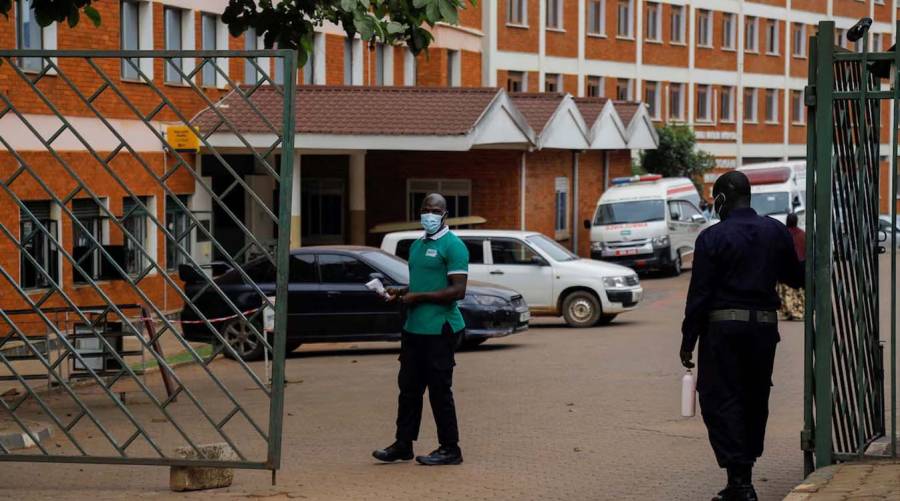
Health authorities in Uganda have confirmed three new Ebola infections, intensifying fears of wider regional transmission as the World Health Organization warns that the risk of spread linked to neighboring Democratic Republic of the Congo remains “very high.”
The latest cases bring Uganda’s total confirmed infections in the current outbreak to five, raising alarm among public health experts monitoring one of the world’s deadliest viral diseases.
The outbreak involves the rare Bundibugyo strain of Ebola virus disease — a variant for which there is currently no approved vaccine or virus-specific treatment, making early detection and rapid containment measures critically important.
According to Uganda’s health ministry, two of the newly confirmed patients were already identified among known contacts connected to the country’s first Ebola case.
One of the patients is a driver who transported the first confirmed Ebola patient, while the second is a healthcare worker exposed during treatment of the infected individual.
Both are currently receiving medical treatment and are under close monitoring.
The third confirmed case has heightened fears of cross-border transmission and undetected infection chains.
Related story: Sierra Leone launches first Ebola vaccine rollout in West Africa
Health officials said the patient, a woman from Congo, entered Uganda with mild abdominal symptoms before traveling from the border city of Arua to Kampala, where she later sought care at a private hospital.
Authorities said the woman initially appeared to recover and returned to Congo. However, follow-up investigations triggered by information from a pilot involved in transporting her later confirmed she had tested positive for Ebola.
The development has intensified concern over regional mobility and the possibility of infected individuals crossing borders before symptoms become severe enough for detection.
The WHO has described the outbreak as a major regional public health threat, warning that several conditions inside Congo could accelerate the spread of infections.
Related story: WHO declares Ebola outbreak in Congo, Uganda a global health emergency amid fears of wider spread
Health experts say delayed diagnosis, limited healthcare access, ongoing armed violence, high population mobility and the absence of approved vaccines for the Bundibugyo strain have created an especially dangerous situation.
According to international health authorities, nearly 750 suspected Ebola cases and 177 suspected deaths have already been recorded in Congo, the epicenter of the outbreak.
Public health specialists warn that Ebola outbreaks can escalate rapidly if early containment measures fail.
The virus spreads through direct contact with bodily fluids from infected individuals and can cause severe fever, internal bleeding, organ failure and death.
Early Ebola symptoms often resemble malaria, typhoid or flu-like illnesses, making diagnosis especially challenging in resource-limited healthcare settings where laboratory testing capacity may be limited.
Ugandan authorities say all identified contacts linked to confirmed cases are being actively monitored as emergency surveillance operations expand across border regions and high-risk districts.
The health ministry has urged the public to remain vigilant, report suspected symptoms immediately and avoid unnecessary physical contact with potentially infected individuals.
The growing outbreak has once again highlighted how quickly infectious diseases can spread across borders in highly mobile populations, particularly in regions already facing strained healthcare systems and humanitarian challenges.
Health experts warn that international preparedness remains critical because outbreaks involving highly infectious diseases can rapidly evolve into broader regional emergencies if surveillance and containment efforts weaken.
Wider global infectious disease concerns
The Ebola outbreak in East Africa comes at a time when multiple countries are simultaneously battling serious infectious disease threats.
In Bangladesh, health authorities are currently responding to one of the country’s worst measles outbreaks in decades, with suspected and confirmed deaths surpassing 500 this year.
According to officials in Dhaka, more than 62,000 suspected measles cases and nearly 8,500 laboratory-confirmed infections have been reported between March and May, placing severe pressure on healthcare services, especially in densely populated and low-income communities.
The World Health Organization has previously warned that declining immunization coverage in several countries is increasing the global risk of outbreaks involving vaccine-preventable diseases.
Public health experts say the simultaneous rise of Ebola and measles outbreaks in different parts of the world underscores growing concerns about weakened healthcare systems, vaccine gaps, cross-border disease transmission and the increasing pressure facing global disease surveillance networks.
Stay informed, stay alert
CLICK HERE TO JOIN Medical News Pakistan on WhatsApp for real-time health alerts, expert insights, and breakthrough medical discoveries.

Advertisement
E-PAPER
Trending
Popular
Pakistan’s Dr. Misha Tanveer takes air pollution research to Europe ...
-
Calorie deficit for weight loss: How to ...
06:00 PM, 24 Aug, 2026 -
Vaccine maker warns of wider TBE, ...
05:00 PM, 21 Aug, 2026 -
FDA authorizes first robot to draw ...
06:11 PM, 20 Aug, 2026 -
One blood test for multiple cancers ...
04:52 PM, 11 Aug, 2026
Follow us on Facebook
Follow us on Twitter
Copyright ©2026 Medical News. All Rights Reserved.