
29 bottled water brands declared unsafe in Pakistan: PCRWR
PCRWR testing of 230 bottled and mineral water samples from 20 cities found bacterial contamination in 22 brands, excessive sodium in nine and high total dissolved solids in four during April-June 2026.
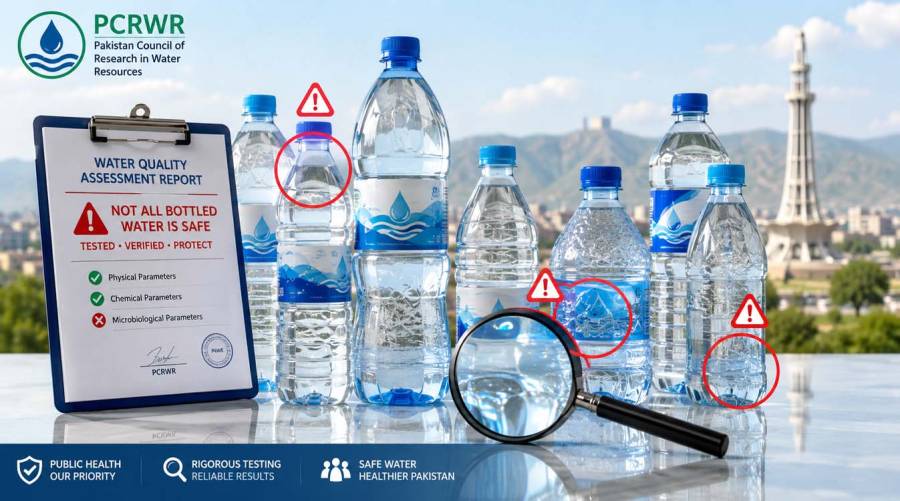
ISLAMABAD: Buying bottled water does not automatically mean buying safe drinking water. A new assessment by the Pakistan Council for Research in Water Resources (PCRWR) has found 29 bottled and mineral water brands unsafe for human consumption after testing samples collected across Pakistan during the second quarter of 2026.
PCRWR tested 230 samples from 20 major cities between April and June 2026 and compared the results with bottled water quality standards established by the Pakistan Standards and Quality Control Authority (PSQCA). The assessment identified both microbiological and chemical quality problems.
The findings matter because bottled water is often chosen by consumers precisely because it is perceived as a safer alternative to other drinking-water sources.
Bacterial contamination found in 22 brands
The biggest concern in the latest assessment was microbiological contamination.
PCRWR found 22 brands contaminated with bacteria, making them unsafe for drinking. The affected brands were:
- Mai Sial Bottled Drinking Water
- JERS Safe Life Bottled Drinking Water
- Natural Pure Life (not Nestle Pure Life)
- Natural Sip
- Al Meer Bottled Drinking Water
- Al Saha Drinking Water
- Al Shifa Pure Life
- Royal Fina Bottled Drinking Water
- Aqua Nice Pure Life
- Noor Aqua
- Aqua Pure
- Drinkwell Pure Drinking Water
- Imperial Pure Drinking Water
- Zalmi
- Deep Blue Pure Drinking Water
- Aab-e-Haram
- Vital Sip Bottled Drinking Water
- Hunza Ulter Water
- Rehydr8 Drink Pure Water
- Moya Mineral Water
- Tynant Aqua Bottled Drinking Water
- Aqua Pura Smart
The presence of bacterial contamination is particularly important from a public-health perspective because contaminated drinking water can expose consumers to waterborne infections.
PCRWR's water-quality laboratories assess microbiological parameters including total coliforms, fecal coliforms, E. coli, total plate count, Pseudomonas, Salmonella, yeasts and moulds, alongside a broad range of chemical and physical parameters.
Nine brands had excessive sodium
Chemical contamination was another reason several brands failed to meet the required standards.
PCRWR found sodium levels above the permissible limit of 50 parts per million (ppm) in nine brands:
- HR Water Healthy Life
- A2Z Pure Bottled Drinking Water
- Pure Drinking Water
- Deep Blue Pure Drinking Water
- Sip Nest Purified Drinking Water
- Aab-e-Haram
- Aqua Life Bottled Drinking Water
- Drinkly
- Alpha H2O Bottled Drinking Water
The 50 ppm threshold is the permissible sodium level cited in the PCRWR assessment.
Four brands exceeded the TDS limit
The assessment also identified excessive total dissolved solids (TDS) in four brands.
The affected products were:
- A2Z Pure Bottled Drinking Water
- Imperial Pure Drinking Water
- Aab-e-Haram
- Alpha H2O Bottled Drinking Water
All four exceeded the permissible TDS limit of 500 ppm cited in the bottled water standards.
Importantly, the categories overlap. Some brands were flagged for more than one problem. A2Z Pure Bottled Drinking Water, Aab-e-Haram and Alpha H2O, for example, were identified for excessive sodium and TDS, while several brands in the microbiological category also appeared in the chemical findings.
Why PCRWR tests bottled water every quarter
The latest findings are part of a much longer national monitoring programme rather than a one-off exercise.
According to PCRWR, the council has been conducting quarterly monitoring of different bottled water brands since 2005 under directions from the Ministry of Science and Technology. The results are shared with stakeholders including PSQCA, provincial governments and food authorities, as well as the public, for regulatory action and public awareness.
PCRWR says its water-quality network provides sampling, testing, quality assurance and interpretation services, while its laboratories analyse physical, chemical and microbiological characteristics of water. Its National Water Quality Laboratory in Islamabad maintains ISO/IEC 17025 accreditation, with regional and district laboratories also supporting water-quality testing.
The council's bottled-water monitoring therefore covers considerably more than whether water simply looks clear or tastes acceptable. Its testing capabilities include parameters such as pH, turbidity, conductivity, TDS, sodium, chloride, fluoride, iron, nitrate, sulphate, arsenic and other trace elements, as well as microbiological contaminants.
What consumers should know
PCRWR has encouraged consumers to check its detailed bottled-water quality reports before purchasing or consuming bottled water. The council publishes its quarterly findings online as part of its public-awareness effort.
The latest assessment should also be read carefully: a brand being absent from the unsafe list does not mean that every bottle of that brand, everywhere and at every time, is guaranteed safe. The findings relate to the samples tested during the specified monitoring period.
PCRWR's published bottled-water programme is intended to provide periodic surveillance of commercially available brands and identify products that fail applicable quality standards.
The full list is worth checking before your next purchase
For consumers who regularly rely on bottled or mineral water, the most useful takeaway is simple: check the PCRWR report rather than assuming a sealed bottle is automatically safe.
The second-quarter 2026 assessment found 29 unsafe brands out of the samples tested, with bacterial contamination emerging as the most widespread problem, while excessive sodium and TDS accounted for additional failures.
PCRWR's official bottled-water section provides access to its quarterly reports and allows consumers and healthcare professionals to review the council's findings over time.
Official PCRWR bottled-water reports: Check the PCRWR Bottled Water Reports.
Stay connected with Medical News Pakistan
CLICK HERE TO JOIN the official Medical News Pakistan WhatsApp Channel for verified global medical breakthroughs, FDA approvals, healthcare innovations, clinical research updates and the latest developments shaping medicine around the world.

Advertisement
E-PAPER
Trending
Popular
Pakistan’s Dr. Misha Tanveer takes air pollution research to Europe ...
-
Calorie deficit for weight loss: How to ...
06:00 PM, 24 Aug, 2026 -
Vaccine maker warns of wider TBE, ...
05:00 PM, 21 Aug, 2026 -
FDA authorizes first robot to draw ...
06:11 PM, 20 Aug, 2026 -
One blood test for multiple cancers ...
04:52 PM, 11 Aug, 2026
Follow us on Facebook
Follow us on Twitter
Copyright ©2026 Medical News. All Rights Reserved.