
NGO’s donations of used beds, ICU equipment to Karachi hospitals come under scrutiny
Health experts raise patient safety concerns after an NGO operating a Sindh government hospital under a public-private partnership donated previously used beds and ICU equipment to Civil Hospital Karachi and Jinnah Postgraduate Medical Centre.
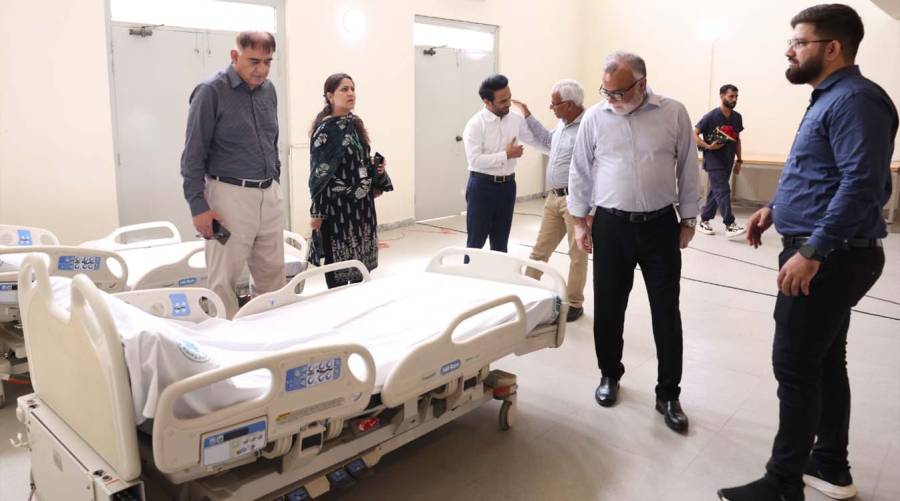
KARACHI: The donation of used hospital beds and medical equipment to two of Karachi’s largest teaching hospitals has triggered concerns among healthcare experts, who warn that inadequate quality control and certification procedures could potentially compromise patient safety.
The donations of used hospital beds, ICU equipment were made recently by a non-governmental organization (NGO) to Civil and Jinnah Hospitals in Karachi. This is the same NGO that has been operating the Sindh Government Children’s Hospital under a 10-year public-private partnership agreement since 2016. The agreement is scheduled to expire in September 2026.
According to information available, the organization has been importing previously used medical equipment from overseas hospitals and distributing some of these items to public healthcare institutions in Karachi.
Donations to Civil Hospital and JPMC
On June 20, the NGO provided medical supplies to Civil Hospital Karachi, including hospital beds, monitors, and gloves. Few days later, it donated 50 hospital beds and additional intensive care equipment to Jinnah Postgraduate Medical Centre (JPMC).
The donations were made in ceremonies attended by Pakistan Peoples Party Senator and Chairman Senate Standing Committee on Finance and Revenue, Senator Saleem Mandviwalla, who said the equipment was intended to help public hospitals cope with increasing patient loads and shortages of beds.
Addressing the event at JPMC, Senator Mandviwalla acknowledged that the donated equipment had previously been used.
“If the hospital administration finds the equipment suitable, it can use it; otherwise, it may return it to the NGO,” he said.
The senator also disclosed that a draft proposal for a health insurance program for Sindh residents had been prepared but had yet to move forward due to technical issues.
Health experts raise questions over quality control
Healthcare experts expressed concern over the redistribution of used hospital equipment without clear evidence that the items had undergone comprehensive inspection, testing, and certification by relevant provincial authorities.
They noted that used beds and medical devices require stringent quality assurance procedures before being deployed in healthcare facilities to minimize the risks of infection and ensure patient safety.
Experts further pointed out that no representatives of the Sindh Health Department or the provincial government were present during the donation ceremonies held at Civil Hospital Karachi and JPMC.
According to specialists, internationally accepted standards generally require rigorous evaluation, disinfection, maintenance records, and technical verification before reused medical equipment is placed into clinical use.
Public-private partnership approaching conclusion
The NGO at the center of the controversy assumed responsibility for the Sindh Government Children’s Hospital in 2016 under a public-private partnership arrangement with the Sindh government. The agreement is due to conclude in September 2026.
Over the years, hospital employees have staged repeated protests, alleging delays of up to six months in salary payments.
Staff members have also complained about shortages of medicines and claimed that the pediatric hospital becomes largely non-functional during evening hours, limiting access to care.
Despite receiving an annual allocation of approximately Rs440 million from the Sindh government, the hospital has continued to face operational challenges, according to employees.
Prior to the public-private partnership arrangement, the hospital reportedly operated with an annual budget of Rs100 million.
Debate over oversight and accountability
The controversy has reignited discussions about oversight mechanisms governing donated medical equipment and the role of public-private partnerships in managing healthcare facilities.
Health experts maintain that while donations can help address shortages in resource-constrained settings, transparent quality assurance processes and regulatory oversight are essential to ensure that donated equipment meets safety standards and does not expose patients to unnecessary risks.
As scrutiny grows over the latest donations, questions are likely to intensify regarding inspection procedures, certification requirements, and accountability mechanisms governing medical equipment entering public hospitals.
Stay informed, stay alert
CLICK HERE TO JOIN Medical News Pakistan on WhatsApp for real-time health alerts, expert insights, and breakthrough medical discoveries.

Advertisement
E-PAPER
Trending
Popular
Pakistan’s Dr. Misha Tanveer takes air pollution research to Europe ...
-
Calorie deficit for weight loss: How to ...
06:00 PM, 24 Aug, 2026 -
Vaccine maker warns of wider TBE, ...
05:00 PM, 21 Aug, 2026 -
FDA authorizes first robot to draw ...
06:11 PM, 20 Aug, 2026 -
One blood test for multiple cancers ...
04:52 PM, 11 Aug, 2026
Follow us on Facebook
Follow us on Twitter
Copyright ©2026 Medical News. All Rights Reserved.