
WHO boosts Pakistan immunization efforts with 800 motorbikes to reach zero-dose children
Targeting 65 high-priority districts, WHO and Gavi support aims to protect over 32 million people—especially children—with lifesaving vaccines
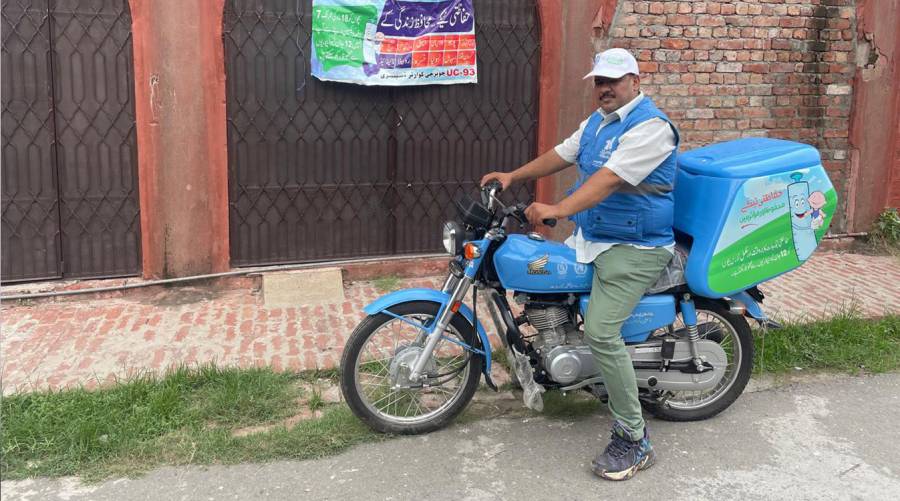
WHO delivers 800 motorbikes to strengthen Pakistan’s immunization outreach in vulnerable districts
ISLAMABAD: In a significant move to improve access to routine immunization in underserved regions, the World Health Organization (WHO), with the support of Gavi, the Vaccine Alliance, has distributed over 800 motorbikes to Pakistan’s Expanded Programme on Immunization (EPI). The vehicles will help vaccinators reach hard-to-access areas in 65 high-priority districts, covering a population of more than 32.5 million people, including children with zero or under-immunization records.
Starting in March 2025, the handover of motorbikes began across the country and continues in a phased rollout to support the government’s efforts to eliminate vaccine inequity and leave no child behind.
“These motorbikes aim to support the vaccinators who work tirelessly to reach the most vulnerable, wherever they are. Every 10 seconds vaccination saves a life,” said Dr Dapeng Luo, WHO Representative in Pakistan.
He added, “Since the foundation of Pakistan’s Expanded Programme on Immunization in 1978 in partnership with WHO, vaccines have saved and protected millions of lives. WHO will continue to support Pakistan to protect every child with lifesaving vaccines, including those in hard-to-reach areas.”
You may read: WHO recommends twice-yearly Lenacapavir injection to help prevent HIV
Regional distribution of 800 motorbikes:
- Sindh: 300 motorbikes across 21 districts
- Punjab: 200 motorbikes to 10 districts
- Balochistan: 108 motorbikes to 24 districts
- Azad Jammu and Kashmir (AJK): 80 motorbikes in 4 districts
- Islamabad: 80 motorbikes in 2 districts
- Gilgit Baltistan: 60 motorbikes in 4 districts
The initiative is strategically guided by micro-plans developed with WHO’s technical assistance, tailored down to the union council level. These micro-plans identify and prioritize neighbourhoods with high concentrations of zero-dose children and immunization dropouts. They also account for geographical barriers, local cultural contexts, and underserved populations.
People also read: WHO urges global ban on flavored tobacco to protect youth
As part of its seven-decade-long partnership with Pakistan, WHO supports routine immunization for more than 7 million children and 5 million mothers annually, reinforcing health equity through practical tools like enhanced transport and mobile vaccination units.
This mobility initiative builds on the country’s long-standing challenges in reaching remote communities due to terrain, distance, and logistical constraints—now being tackled through sustained international collaboration.
Stay informed. Stay ahead.
CLICK HERE TO FOLLOW Medical News Pakistan WhatsApp Channel for trusted healthcare updates, expert insights, clinical research, policy news, and medical breakthroughs—delivered directly to you.

Advertisement
E-PAPER
Trending
Popular
Pakistan’s Dr. Misha Tanveer takes air pollution research to Europe ...
-
Calorie deficit for weight loss: How to ...
06:00 PM, 24 Aug, 2026 -
Vaccine maker warns of wider TBE, ...
05:00 PM, 21 Aug, 2026 -
FDA authorizes first robot to draw ...
06:11 PM, 20 Aug, 2026 -
One blood test for multiple cancers ...
04:52 PM, 11 Aug, 2026
Follow us on Facebook
Follow us on Twitter
Copyright ©2026 Medical News. All Rights Reserved.