
PHC webinar highlights data-driven solutions to improve MNCH outcomes in Pakistan
Experts call for evidence-based policy, stronger health systems and collaboration to reduce maternal and neonatal mortality
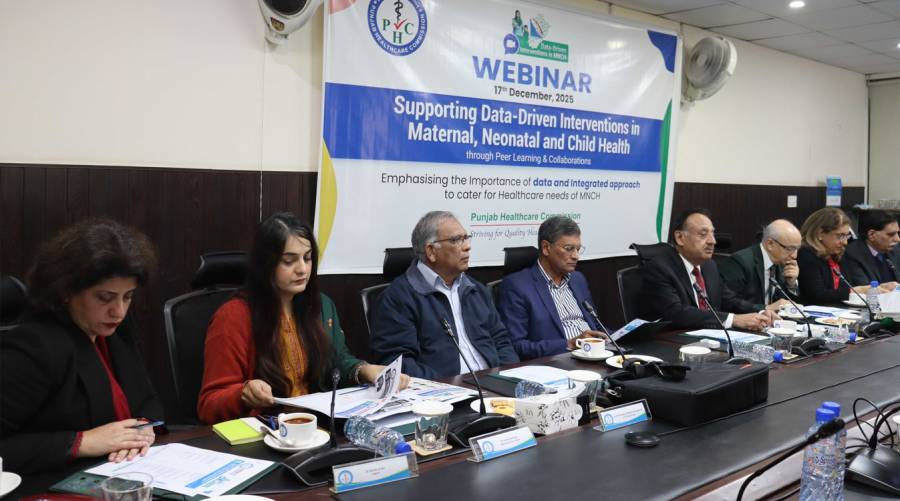
PHC hosts high-level webinar on data-driven interventions for MNCH
LAHORE: Effective policies for maternal, neonatal and child health (MNCH) depend on reliable data, coordinated action and sustained investment—especially in settings facing persistently high mortality rates. This was the central message emerging from a recent expert-led webinar hosted by the Punjab Healthcare Commission (PHC), which brought together national and international stakeholders to discuss how data-driven interventions can strengthen MNCH outcomes in Pakistan.
The virtual session focused on peer learning and collaboration, highlighting how evidence-based planning can address long-standing challenges such as delayed care-seeking, weak referral systems, shortages of skilled health workers and socio-cultural barriers that limit access to quality care.
Why data matters for MNCH
Speakers emphasized that Pakistan’s maternal and neonatal mortality figures reflect systemic gaps in service delivery and quality of care. Robust data systems, they noted, are essential to identify trends, allocate resources effectively and design targeted interventions that save lives.
Opening the webinar, PHC Chief Executive Officer Dr Muhammad Saqib Aziz underscored the role of reliable data and intersectoral collaboration in shaping effective MNCH policies. He highlighted Punjab’s progress through data-led initiatives such as the Expanded Programme on Immunization (EPI), District Health Information System (DHIS) and digital reporting platforms, while stressing that high mortality rates point to areas requiring urgent improvement.
Strengthening health systems, regulation
Dr Aziz also outlined PHC’s regulatory role in MNCH, including integrating maternal and child health standards across healthcare facilities, training healthcare providers and introducing mechanisms for mortality self-reporting. Drawing on reported data, he flagged emerging trends in obstetric and neonatal outcomes and raised concerns about the growing prevalence of non-medically indicated caesarean sections.
People also read: Sindh launches AI-enabled ultrasound pilot to boost maternal health
The session was chaired by PHC Commissioner Prof Dr Mahmood Shoukat, with Dr Huma Rasheed, Additional Director Monitoring, Evaluation and Quality Assurance at PHC, moderating the discussions. Representatives from UNICEF, the Directorate General of Health Services Punjab and the Institute of Public Health also participated, reflecting the multi-sectoral nature of MNCH challenges.
Maternal health: Progress and persistent gaps
Highlighting regional disparities, Vice-Chancellor Nishtar Medical University Prof Dr Mehnaz Khakwani pointed to the urgent need for data-driven maternal health interventions in South Punjab. While Pakistan has reduced its maternal mortality ratio from 276 to 155 per 100,000 live births, she noted that the rate remains unacceptably high. Key barriers include delayed care-seeking, weak referral pathways, limited skilled workforce and socio-cultural constraints.
Experts called for strengthening emergency obstetric care, expanding antenatal coverage, increasing skilled birth attendance and implementing maternal death surveillance and response (MPDSR) mechanisms to guide timely action.
The role of family physicians and preventable deaths
Prof Dr Muhammad Tayyab highlighted the pivotal role of family physicians in reducing maternal mortality through early risk identification, continuity of care and timely referrals. He stressed that most maternal deaths, often caused by haemorrhage, hypertension, infection or unsafe abortion, are preventable with structured antenatal assessment, adherence to clinical guidelines and alignment with PHC standards.
Newborn survival and emerging threats
Addressing neonatal health, Prof Dr Khawaja Ahmad Irfan Waheed drew attention to Pakistan’s high neonatal mortality rate of 38 deaths per 1,000 live births, with newborn deaths accounting for nearly two-thirds of under-five mortality. Most of these deaths occur within the first week of life and can be prevented through timely, low-cost interventions.
Related story: Pakistan among top four nations with highest maternal mortality rates: UN report
Experts also discussed emerging challenges, including the impact of antimicrobial resistance on child survival, underscoring the need for stronger surveillance systems and rational use of medicines.
Looking ahead: From dialogue to action
Concluding the session, Prof Dr Mahmood Shoukat urged stakeholders to move beyond fragmented efforts and “reinventing the wheel,” calling for scalable, evidence-based solutions in the face of rapid population growth. He reaffirmed PHC’s commitment to knowledge exchange and data-driven healthcare governance.
The webinar attracted over 1,000 viewers and invited abstract submissions, encouraging healthcare professionals and researchers to contribute evidence-based insights for future scientific engagements—signalling growing momentum for collaborative action on MNCH.
Stay informed and protect your health!
CLICK HERE TO JOIN Medical News Pakistan on WhatsApp for expert tips, health updates, and the latest medical research straight to your phone.

Advertisement
E-PAPER
Trending
Popular
Pakistan’s Dr. Misha Tanveer takes air pollution research to Europe ...
-
Calorie deficit for weight loss: How to ...
06:00 PM, 24 Aug, 2026 -
Vaccine maker warns of wider TBE, ...
05:00 PM, 21 Aug, 2026 -
FDA authorizes first robot to draw ...
06:11 PM, 20 Aug, 2026 -
One blood test for multiple cancers ...
04:52 PM, 11 Aug, 2026
Follow us on Facebook
Follow us on Twitter
Copyright ©2026 Medical News. All Rights Reserved.