
Former US health official pleads guilty to hiding COVID records
David M. Morens, a former senior adviser at the US National Institute of Allergy and Infectious Diseases, admitted conspiring to evade public-records laws by using personal email to conceal communications over COVID-19 research funding and efforts to counter the lab-leak narrative.
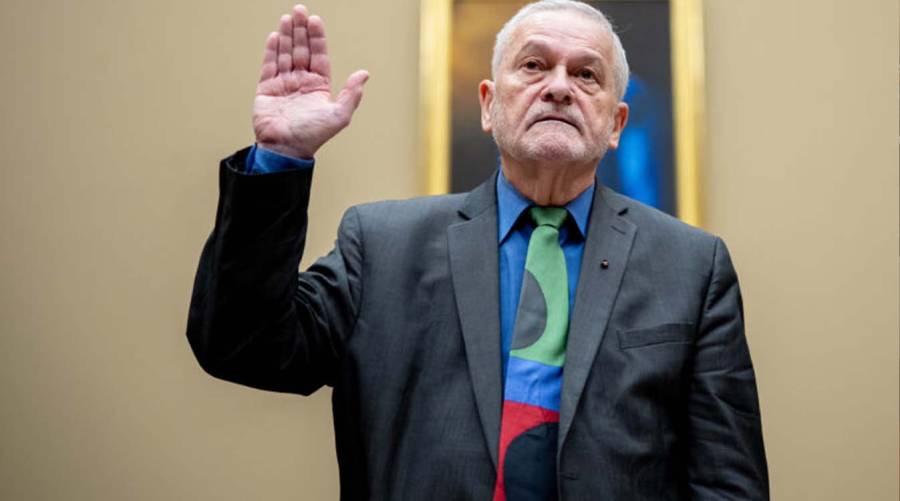
GREENBELT, Maryland: A former senior US health official who worked as an adviser to Dr. Anthony Fauci has pleaded guilty to conspiring to defraud the US government by concealing federal records related to COVID-19 research during the pandemic, bringing a criminal case over hidden communications into a new and consequential phase.
David M. Morens, 78, a former senior adviser in the Office of the Director at the National Institute of Allergy and Infectious Diseases (NIAID), pleaded guilty on Tuesday to conspiracy to commit offenses and to defraud the United States in federal court in Greenbelt, Maryland. He served in the NIAID director's office from 2006 through 2022.
The guilty plea is significant because the records at issue were not simply routine government correspondence. According to the US Department of Justice, they involved COVID-19 research grants, efforts to restore a controversial bat-coronavirus research grant and attempts to counter the narrative that COVID-19 had leaked from a laboratory.
Morens is scheduled to be sentenced on November 12 and faces a maximum of five years in prison on the conspiracy charge.
What exactly was allegedly hidden?
The core of the case was an effort to keep government-related communications away from the public-records system.
According to Morens' guilty plea, he and two co-conspirators agreed during the pandemic to communicate through his personal Gmail account instead of his official NIH email account, anticipating that their government communications could be sought through Freedom of Information Act (FOIA) requests.
The communications concerned coronavirus research grants and matters that fell within Morens' official responsibilities. Prosecutors said they therefore constituted federal records that should have been created, maintained and exchanged through government systems.
The alleged scheme involved exchanging non-public NIH information, discussing efforts to influence NIH funding decisions, editing draft letters intended for NIH leadership and providing "back-channel" information to a senior NIAID official.
In other words, the issue was not simply that an official used a personal email account. Prosecutors said the personal account was deliberately used to keep government business outside the reach of public-records laws.
The grant at the center of the case
The communications were connected to a controversial NIH-funded project called "Understanding the Risk of Bat Coronavirus Emergence."
According to the Justice Department, NIH terminated the grant after allegations emerged that COVID-19 had originated from the Wuhan Institute of Virology (WIV) in Wuhan, China.
NIAID had awarded the grant to a company and one of the co-conspirators, who then made a subaward to the WIV. Following the termination, prosecutors said Morens and another co-conspirator pledged to help restore the grant and counter the narrative that COVID-19 had leaked from a laboratory.
That connection is likely to draw particular attention because the origin of COVID-19 remains one of the most contested questions of the pandemic.
However, Morens' guilty plea does not establish that COVID-19 originated in a laboratory.
Rather, it establishes his admission to a conspiracy involving the concealment of federal records and efforts related to a grant and the competing narratives about the virus's origin. The underlying question of whether the pandemic began through a laboratory-related incident or natural transmission remains unresolved.
A striking allegation involving a medical journal
One of the most unusual elements of the case involves an alleged exchange of favors.
According to the Justice Department, one co-conspirator gave Morens wine for his "behind-the-scenes" assistance and offered additional benefits, including meals at Michelin-starred restaurants in Paris, New York and Washington.
The guilty plea further states that Morens identified an official act he could perform to "deserve" the gift: writing a scientific commentary for a prominent medical journal advocating that COVID-19 had natural origins.
The Justice Department had previously alleged in the indictment that these arrangements constituted illegal gratuities. The latest plea means Morens has now admitted to the conspiracy charge described by prosecutors.
This does not, however, mean that the scientific debate over COVID-19's origins has been legally settled.
Does this prove the COVID lab-leak theory?
No.
The guilty plea provides evidence of an effort to conceal government communications and influence matters surrounding a coronavirus research grant. It does not prove that SARS-CoV-2 came from the Wuhan Institute of Virology or that a laboratory caused the pandemic.
The distinction is important.
The Justice Department said the grant was terminated based on allegations that COVID-19 emerged from the WIV and that Morens and others sought to counter the lab-leak narrative. But the criminal charge to which Morens pleaded guilty concerns conspiracy to commit offenses and defraud the United States—not the origin of the virus itself.
The case therefore provides a new and significant piece of evidence about how information and government records were handled during the pandemic, while leaving the biological origin of COVID-19 an unresolved scientific question.
Where does Anthony Fauci fit into the case?
Morens worked as a senior adviser at NIAID while Dr. Anthony Fauci was director of the agency and became one of the most prominent faces of the US response to COVID-19.
The connection to Fauci has made the case particularly politically charged, but Fauci has not been charged in Morens' case. The criminal case is against Morens. The Justice Department's guilty-plea announcement does not accuse Fauci of participating in the conspiracy.
Fauci has separately faced intense congressional scrutiny over his handling of the pandemic. In July, he repeatedly invoked his Fifth Amendment right against self-incrimination during a Senate hearing, according to AP. He subsequently declined a request to appear voluntarily before another Senate panel after Republican members voted to hold him in contempt of Congress.
Those developments are separate from Morens' criminal case and should not be interpreted as evidence that Fauci has been charged or found guilty of wrongdoing in connection with it.
What Morens previously said about the emails
The guilty plea also represents a significant development from Morens' earlier public position.
During congressional scrutiny of his communications, Morens had denied attempting to evade federal transparency requirements by using his personal email account. AP reported that the investigation by House Republicans into COVID-19's origins had focused heavily on his communications.
The Justice Department subsequently indicted him in April 2026 on charges including conspiracy against the United States, destruction, alteration or falsification of records in federal investigations, concealment of records, and aiding and abetting. At that stage, the department explicitly noted that an indictment was not a finding of guilt.
His guilty plea now changes the legal status of the central conspiracy allegation.
Why the case matters for public health
The case goes beyond the political debate surrounding Fauci, NIH or the origins of COVID-19.
During a global health emergency, government agencies rely heavily on scientific evidence, research grants, internal communications and transparent decision-making. Federal records laws are intended to preserve that institutional record and allow legitimate public and congressional scrutiny.
The Justice Department said deliberately circumventing those requirements undermines public trust, particularly during a pandemic when the public depends on health authorities for reliable information.
For the scientific community, the episode also highlights the importance of maintaining clear records around research funding, conflicts of interest and scientific communication—particularly when research involves pathogens with pandemic potential.
What happens next?
Morens is due to be sentenced on November 12 by US District Judge Paula Xinis in Greenbelt, Maryland. He faces a maximum of five years in prison for the conspiracy charge, although the eventual sentence will be determined by the court after consideration of the US Sentencing Guidelines and other statutory factors.
The case leaves two separate questions in its wake.
One is now answered in court: Morens has admitted participating in a conspiracy to conceal federal records and evade public-records requirements.
The other remains unresolved: how exactly did COVID-19 emerge?
The guilty plea may intensify scrutiny of the people and institutions involved in pandemic-era research and decision-making, but it does not by itself resolve the scientific question of COVID-19's origins.
Stay connected with Medical News Pakistan
CLICK HERE TO JOIN the official Medical News Pakistan WhatsApp Channel for verified global medical breakthroughs, FDA approvals, healthcare innovations, clinical research updates and the latest developments shaping medicine around the world.

Advertisement
E-PAPER
Trending
Popular
Tea for a healthier heart? Read this before your next sip
-
37 AKU researchers join world's top 2% ...
06:47 PM, 16 Oct, 2026 -
Could a heart calcium scan reveal your ...
01:36 PM, 13 Oct, 2026 -
One blood test, 50+ cancers: What the ...
05:27 PM, 12 Oct, 2026 -
WHO rules out weight-loss drugs for ...
04:38 PM, 9 Oct, 2026
Follow us on Facebook
Follow us on Twitter
Copyright ©2026 Medical News. All Rights Reserved.