
Three-minute test shows promise for early Alzheimer’s diagnosis
Fastball EEG offers a quick, stress-free way to detect early memory loss in people with mild cognitive impairment, potentially identifying Alzheimer’s years earlier.
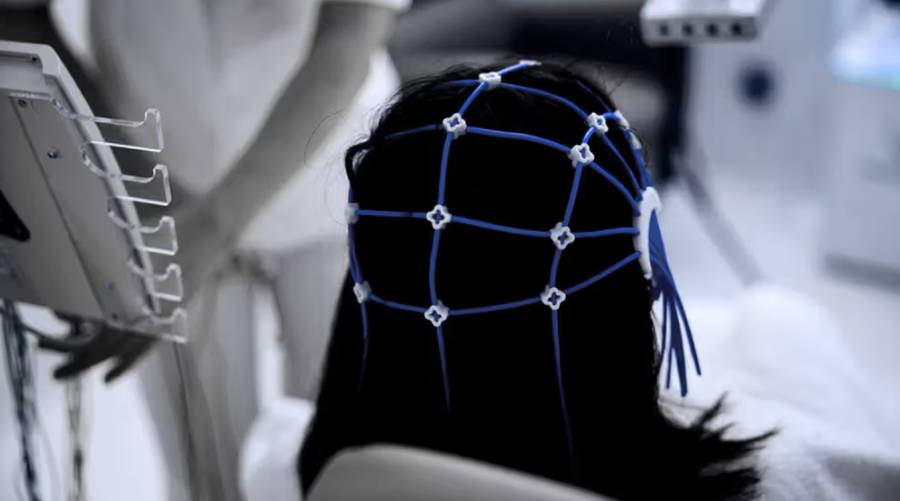
Three-minute noninvasive test may help detect Alzheimer’s disease early
Early detection of Alzheimer’s disease is crucial for effective treatment and lifestyle interventions that may slow its progression. A new study published in Brain Communications introduces a breakthrough tool — a three-minute noninvasive brain test called Fastball EEG — which may help detect early signs of memory decline in people with mild cognitive impairment (MCI).
Cognitive neuroscientist George Stothart, PhD, senior lecturer at the University of Bath and principal scientist at Cumulus Neuroscience Ltd., led the study. “Alzheimer’s disease is diagnosed up to 20 years too late,” he explained. “Early diagnosis allows people to implement lifestyle changes, access new disease-modifying drugs earlier, and improve drug development through better patient selection for clinical trials.”
How the fastball EEG test works
The Fastball EEG is a passive memory recognition test that measures brainwave responses while a person views a series of flashing images. Participants wear an EEG cap, and the test captures electrical activity in the brain to assess recognition memory.
For the study, researchers recruited 53 older adults with diagnosed mild cognitive impairment (MCI) and 54 healthy participants as controls. Each completed the three-minute Fastball EEG test along with standard neuropsychological memory and attention assessments.
Results showed that Fastball EEG reliably detected memory issues in participants with MCI, who are statistically more likely to develop Alzheimer’s disease.
Benefits of a home-based, stress-free test
One major advantage of Fastball EEG is that it can be used outside a hospital or clinic, potentially even at home. This is important because stress can interfere with memory test performance. “Testing at home keeps people comfortable and relaxed, helping ensure we measure true memory function rather than stress response,” said Stothart.
Currently, two large-scale clinical validation studies involving more than 2,000 participants are underway in the UK, with results expected in 2027. These studies will establish the test’s sensitivity and specificity before clinical rollout.
Expert opinions and future directions
Neurologists are cautiously optimistic about the new approach. Peter Gliebus, MD, director of cognitive and behavioral neurology at Marcus Neuroscience Institute, called the test “a practical and equitable tool for early diagnosis” because it is quick, noninvasive, and not dependent on language or culture.
He suggested integrating Fastball EEG with blood-based biomarkers and testing across larger, more diverse populations to improve diagnostic accuracy.
However, not all experts are fully convinced. Clifford Segil, DO, neurologist at Providence Saint John’s Health Center, cautioned that EEG-based findings could lead to false positives. He stressed the need to validate results across multiple brain regions and combine them with other clinical assessments before replacing traditional evaluations.
Why early diagnosis matters
Early detection of Alzheimer’s disease is vital because symptoms often appear years after brain changes begin. Current diagnostic methods such as PET scans and cerebrospinal fluid tests are expensive, invasive, and not widely available.
If validated, Fastball EEG could revolutionize Alzheimer’s screening by offering:
✅ Quick, accessible, and noninvasive testing
✅ Equitable assessment across education and language barriers
✅ Stress-free testing suitable for home environments
✅ Earlier access to treatments and clinical trials
Takeaway
The Fastball EEG test represents an exciting leap toward early Alzheimer’s detection. While more research and validation are needed before widespread clinical use, this innovation could help millions of people worldwide get an earlier diagnosis, plan for their future, and access potentially life-changing treatments sooner.
Stay connected with Dental News Pakistan
CLICK HERE TO JOIN our WhatsApp Community to get expert clinical tips, industry updates, and research insights straight to your phone.

Advertisement
E-PAPER
Trending
Popular
Pakistan’s Dr. Misha Tanveer takes air pollution research to Europe ...
-
Calorie deficit for weight loss: How to ...
06:00 PM, 24 Aug, 2026 -
Vaccine maker warns of wider TBE, ...
05:00 PM, 21 Aug, 2026 -
FDA authorizes first robot to draw ...
06:11 PM, 20 Aug, 2026 -
One blood test for multiple cancers ...
04:52 PM, 11 Aug, 2026
Follow us on Facebook
Follow us on Twitter
Copyright ©2026 Medical News. All Rights Reserved.