
Forged radiology reports, fraud claims - AI now spots every fake
Breakthrough AI tool can detect fake X-ray reports, protecting doctors, insurers, and patients from massive medical fraud.
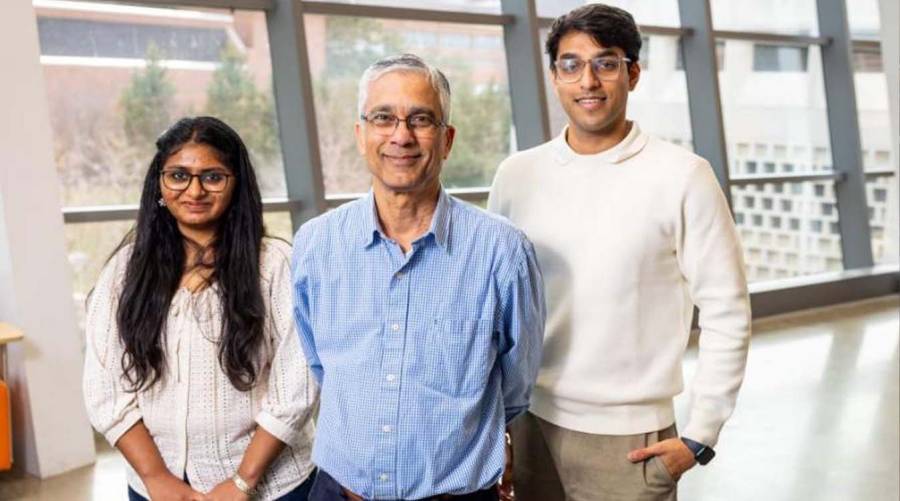
BUFFALO, N.Y.: Imagine someone impersonating a doctor to create a fake radiology report, or inserting fractures that never existed into real X-ray images. It sounds like a plot from a thriller, but in today’s AI era, such fraud is not just possible—it’s becoming alarmingly feasible.
While rare, AI-generated medical reports can wreak havoc on the healthcare and insurance industries, leading to fraudulent disability claims, malpractice disputes, and massive financial losses. Now, a first-of-its-kind AI system from the University at Buffalo (UB) promises to stop these scams before they reach hospitals or insurers.
How it works: Spotting fakes before they hurt anyone
Led by Dr. Nalini Ratha, SUNY Empire Innovation Professor, along with PhD students Arjun Ramesh Kaushik and Tanvi Ranga, the UB team developed a detection framework specifically designed for radiology. Unlike generic AI detectors, this system can tell whether a radiology report was written by a real clinician or generated synthetically.
“Radiology reports have highly specialized structure, vocabulary, and stylistic norms,” Dr. Ratha explained. “General-purpose AI detectors fail here. Our goal was to create a system that detects fakes before they enter clinical or insurance workflows.”
Building a first-of-its-kind dataset
The team compiled 14,000 pairs of chest X-ray reports, both real and AI-generated, using two approaches:
• Text-to-text: Paraphrasing real radiologist reports using advanced language models.
• Image-to-text: Generating full reports directly from X-ray images with medical vision-language models (VLMs).
The dataset focused on the findings section, the critical part of a report most vulnerable to fraud. It’s also central for determining who actually authored the report.
Detecting AI fakes with near-perfect accuracy
The researchers used a BERT–Mamba–based AI model to separate stylistic fingerprints from clinical content. Subtle cues like phrasing, punctuation, and word choice allowed the system to spot fakes even when AI reports closely mimicked real ones.
• Text-to-text detection: Accuracy exceeded 99%
• Image-to-text detection: MCC scores ranged 92–100%
• The system even recognized AI-generated reports from models it had never seen before.
“LLMs tend to write polished, expansive language, while radiologists use concise, direct terms,” said Ranga. “Our model identifies these stylistic gaps to flag synthetic reports with exceptional precision.”
Beyond radiology: Fraud prevention for every industry
Although developed for healthcare, this technology has far-reaching implications. Any field reliant on written records—insurance, finance, law, education, journalism—can benefit from AI that verifies human authorship. Dr. Ratha emphasized:
“AI is being used to generate quick reports, essays, or briefs. In low-stakes settings, errors may be minor—but in healthcare, law, and finance, stakes are enormous. Detecting fake reports early protects people, organizations, and trust itself.”
The future: Trustworthy AI in critical workflows
The UB team continues to refine their dataset and detection model, planning public release and expansion to other radiology categories. As AI tools become more sophisticated, this framework could become a standard safeguard against synthetic fraud, ensuring patients, insurers, and doctors are never left vulnerable to fake medical documents.
Stay ahead of medical fraud!
CLICK HERE TO JOIN Medical News Pakistan on WhatsApp for instant updates on cutting-edge healthcare technology, fraud prevention, and AI breakthroughs.

Advertisement
E-PAPER
Trending
Popular
Pakistan’s Dr. Misha Tanveer takes air pollution research to Europe ...
-
Calorie deficit for weight loss: How to ...
06:00 PM, 24 Aug, 2026 -
Vaccine maker warns of wider TBE, ...
05:00 PM, 21 Aug, 2026 -
FDA authorizes first robot to draw ...
06:11 PM, 20 Aug, 2026 -
One blood test for multiple cancers ...
04:52 PM, 11 Aug, 2026
Follow us on Facebook
Follow us on Twitter
Copyright ©2026 Medical News. All Rights Reserved.