JSMU study exposes unsafe medicine disposal practices across Karachi
Research involving 2,000 Karachi residents finds most people throw expired medicines into household trash, raising concerns about environmental pollution, water contamination, accidental poisoning, and antimicrobial resistance
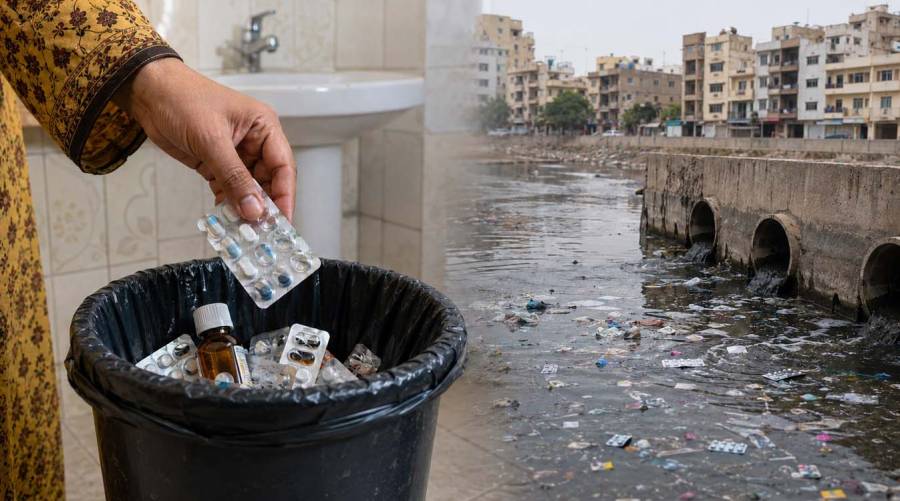
KARACHI: A major public health study conducted by researchers at Jinnah Sindh Medical University (JSMU) has revealed widespread unsafe disposal of expired and unused medicines among Karachi residents, raising concerns about environmental contamination, water pollution, accidental poisoning, and the growing threat of antimicrobial resistance.
The research, conducted by the Institute of Pharmaceutical Sciences (IPS-JSMU) and published in the Allied Medical Research Journal, surveyed 2,000 adults from various localities across Karachi to evaluate public awareness, attitudes, and practices regarding pharmaceutical waste disposal.
The findings paint a concerning picture of how medicines are being discarded in Pakistan’s largest city. According to the study, 86% of respondents reported throwing expired or unused medicines into regular household trash, while 8% said they dispose of medicines by flushing them down sinks or toilets. Only 4% of participants were aware of medicine take-back programs, and an overwhelming 96% had no knowledge that such disposal systems exist.
The findings highlight a significant gap between public awareness of pharmaceutical waste risks and the practical knowledge needed to dispose of medicines safely.
A hidden environmental and public health challenge
Healthcare experts increasingly recognize pharmaceutical waste as an emerging environmental and public health issue worldwide. When medicines are discarded improperly, active pharmaceutical ingredients can enter soil, waterways, and ecosystems, potentially affecting wildlife, drinking water quality, and human health.
Improper disposal can also increase the risk of accidental poisoning, particularly among children and vulnerable populations who may come into contact with discarded medications.
Researchers warn that inappropriate disposal of antibiotics and other medications may contribute to the broader challenge of antimicrobial resistance (AMR), one of the most pressing global health threats identified by international health authorities.
Despite these risks, the study found that safe disposal practices remain poorly understood among the general public.
Universities can help shape better public health policies
Commenting on the findings, JSMU Vice Chancellor Prof. Dr. Amjad Siraj Memon said the research demonstrates the important role academic institutions can play in identifying overlooked public health and environmental challenges.
“Universities have a responsibility to generate evidence that contributes to better policies and healthier communities. This research highlights an important yet neglected issue that requires coordinated efforts from healthcare professionals, policymakers, educational institutions, regulatory bodies and the public. Addressing pharmaceutical waste is essential for protecting both environmental sustainability and public health,” he said.
His remarks underscore the growing importance of evidence-based policymaking in addressing environmental health concerns that often receive limited public attention despite their long-term consequences.
Awareness exists, but knowledge gaps remain
According to the study, many respondents acknowledged that pharmaceutical waste can be harmful to both human health and the environment. However, researchers found that awareness alone does not necessarily translate into safe disposal practices.
Professor Dr. Huma Ali, Principal of the Institute of Pharmaceutical Sciences at JSMU, said the findings reveal a critical disconnect between understanding the problem and knowing how to address it responsibly.
“Many people understand that pharmaceutical waste can be harmful, yet they lack information about proper disposal methods. There is an urgent need for public awareness campaigns, stronger regulatory frameworks and accessible medicine return systems. Through research and community engagement, institutions such as IPS-JSMU can play a vital role in promoting responsible medication use and disposal practices,” she said.
The findings suggest that educational interventions could play a significant role in improving public behavior and reducing environmental risks associated with pharmaceutical waste.
Improper disposal linked to broader health risks
Lead researcher Dr. Erum Zaheer emphasized that pharmaceutical waste management should be viewed as both an environmental and public health priority.
“The study underscores the need for practical guidance and accessible disposal mechanisms for the public. Safe pharmaceutical waste management is not only an environmental issue but also an important public health priority,” she said.
Researchers noted that improper disposal contributes to environmental pollution, contamination of water sources, accidental exposure to medications, and the growing challenge of antimicrobial resistance.
Globally, health authorities have increasingly highlighted the need for responsible pharmaceutical waste management as part of broader efforts to improve environmental sustainability and safeguard public health.
Public supports stronger action
One of the study’s most encouraging findings was the strong public support for greater awareness and education on the issue.
Nearly all participants expressed support for educational initiatives involving schools, universities, healthcare professionals, government agencies, and media organizations to improve public understanding of safe medicine disposal practices.
Researchers believe this willingness to learn provides an opportunity for policymakers and healthcare institutions to introduce targeted awareness campaigns and practical disposal solutions.
Recommendations for safer pharmaceutical waste management
Based on the findings, the study recommends several measures to address the growing problem of pharmaceutical waste in Karachi and beyond.
These include large-scale public awareness campaigns, clear national guidelines for medicine disposal, stronger regulatory frameworks, and the establishment of accessible medicine take-back programs that allow consumers to return expired or unused medications safely.
Experts say such initiatives could significantly reduce environmental contamination while helping prevent avoidable health risks associated with improper disposal practices.
As healthcare systems worldwide increasingly focus on sustainability, the JSMU study serves as a timely reminder that responsible medication use does not end when treatment is complete. Safe disposal of unused and expired medicines may be a small action for individuals, but collectively it represents an important step toward protecting public health, preserving environmental resources, and building healthier communities.
Stay informed, stay alert
CLICK HERE TO JOIN Medical News Pakistan on WhatsApp for real-time health alerts, expert insights, and breakthrough medical discoveries.

Advertisement
E-PAPER
Trending
Popular
Pakistan’s Dr. Misha Tanveer takes air pollution research to Europe ...
-
Calorie deficit for weight loss: How to ...
06:00 PM, 24 Aug, 2026 -
Vaccine maker warns of wider TBE, ...
05:00 PM, 21 Aug, 2026 -
FDA authorizes first robot to draw ...
06:11 PM, 20 Aug, 2026 -
One blood test for multiple cancers ...
04:52 PM, 11 Aug, 2026
Follow us on Facebook
Follow us on Twitter
Copyright ©2026 Medical News. All Rights Reserved.