
Young adults are aging faster biologically, study links it to rising early-onset cancers
A major study published in Nature Medicine found that younger generations are biologically older than previous generations at the same age, with accelerated aging strongly linked to higher risks of colorectal, lung, digestive and other early-onset cancers.
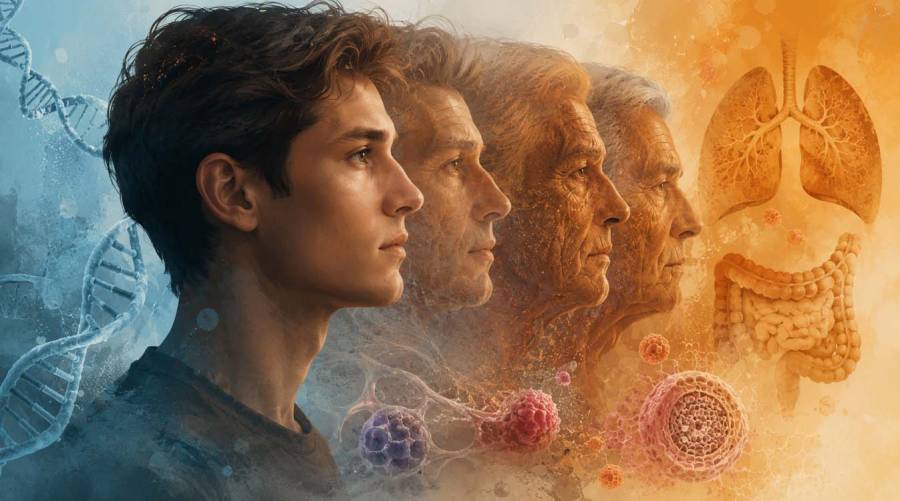
A growing body of evidence suggests that today's young adults may be aging faster than previous generations—and scientists now believe this accelerated biological aging could be one of the key reasons behind the alarming global rise in early-onset cancers.
The findings come from a large international study published in the journal Nature Medicine, where researchers from Washington University School of Medicine in St. Louis reported that people born in more recent decades appear biologically older than people from earlier generations at the same chronological age.
The researchers say this accelerated aging may help explain why cancers that were once considered diseases of older adults are increasingly being diagnosed in people under the age of 50.
The study adds an important new piece to a growing scientific puzzle as healthcare systems worldwide grapple with rising cases of colorectal, lung, digestive, uterine and several other cancers among younger adults.
What is biological aging—and why does it matter?
Unlike chronological age, which simply measures how many years a person has lived, biological age reflects how rapidly the body's cells and organs are actually aging.
Cancer develops when genetic damage gradually accumulates within cells. As DNA damage builds over time, abnormal instructions can disrupt normal cell division, increasing the likelihood that cancerous cells will develop.
Because this process is traditionally associated with aging, researchers wanted to determine whether today's younger generations are actually aging faster at the cellular level.
Their findings suggest the answer may be yes.
Researchers analyzed more than 160,000 people across the UK and US
To investigate the relationship between biological aging and cancer risk, scientists examined data from two of the world's largest health research databases.
The first included blood biomarker data from more than 150,000 adults enrolled in the UK Biobank.
Researchers compared participants born between 1950 and 1954 with individuals born between 1965 and 1974.
They then validated their findings using health information from more than 10,000 participants in the All of Us Research Program in the United States, comparing adults born during 1965-1969 with those born in the 1990s.
Younger generations showed dramatically higher biological age
The researchers assessed biological aging using PhenoAge, an internationally recognized measure that combines chronological age with nine blood biomarkers associated with aging and disease.
Using this method, they calculated an "age gap"—the difference between a person's biological age and their actual age.
The results were striking.
People born in the United Kingdom between 1965 and 1974 had a 23% higher standardized PhenoAge-defined age gap than those born during the early 1950s.
The difference was even greater in the United States.
Americans born during the 1990s had a 92% higher standardized age gap compared with those born between 1965 and 1969, indicating substantially faster biological aging.
Higher biological age linked to increased cancer risk before age 55
The researchers then examined whether accelerated biological aging translated into higher cancer risk.
It did.
Individuals with higher age-gap scores were significantly more likely to develop early-onset cancers before the age of 55.
The strongest associations were observed for:
• Lung cancer
• Digestive system cancers
• Uterine cancer
Overall, every increase in age-gap score increased the risk of developing early-onset solid cancers by approximately 8%.
For lung cancer, the association was particularly striking.
Researchers found that the risk increased by 57% with higher biological age-gap scores.
Importantly, these associations remained significant even after researchers adjusted for numerous well-established cancer risk factors, including:
• Smoking
• Obesity
• Genetic predisposition
• Telomere length
This suggests accelerated biological aging itself may independently contribute to cancer development.
Experts say the findings are a wake-up call
Commenting on the research, Dr. Ketan Thanki, MD, a colorectal surgeon specializing in benign and malignant diseases of the colon, rectum and anus at the MemorialCare Todd Cancer Institute at Long Beach Medical Center, California, described the study as an important step toward understanding the surge in cancers among younger adults.
"The study shows that using established markers of biological age, we have evidence that younger generations are aging faster than previous generations," Dr. Thanki said.
Although the study does not identify one single cause, he noted that its findings support concerns scientists have raised for years regarding modern lifestyle and environmental exposures.
"The study doesn't pinpoint exactly why but points toward factors that research has been suggesting for years," he explained.
Dr. Thanki also warned that accelerated aging could fundamentally change healthcare over coming decades.
"Age-related morbidities—diseases that we have previously associated with the elderly—will become more and more common in younger people," he said.
"Beyond the burden on individual quality of life, this will lead to greater healthcare costs as a society and potentially even a shortening of life expectancy."
He added that healthcare systems may also need to rethink screening strategies because clinicians are increasingly encountering younger adults presenting with advanced cancers.
"We are already facing clinical and diagnostic challenges in younger adults, meaning unless we change how and how well we screen, we will miss more cases and see more patients presenting with advanced disease."
Why are younger adults aging faster?
While researchers say more studies are urgently needed, previous research has already identified several factors that may accelerate biological aging.
A 2021 study cited by the researchers linked faster aging to:
• Obesity and metabolic dysfunction
• Poor-quality diets
• Prolonged sedentary behavior
• Circadian rhythm disruption
• Exposure to environmental chemicals
The researchers stressed that understanding these generational differences has become increasingly urgent.
"A better understanding of how generational differences in accelerated aging relate to early-onset cancers is needed urgently," the authors wrote.
"This question is central because early-onset cancers show strong birth-cohort effects, with more recent generations experiencing higher risk as they age."
The global rise in early-onset cancers continues
The new findings arrive amid mounting evidence that cancers traditionally seen in older adults are becoming increasingly common among younger populations.
A 2023 global study reported that early-onset cancers increased by 79% worldwide between 1990 and 2019.
Meanwhile, another 2025 study found that people born during the 1990s in Australia, Canada, the United Kingdom and the United States face at least a fourfold higher risk of developing early-onset colorectal cancer than people born during the 1960s.
Adding to these concerns, the American Cancer Society (ACS) reported in January 2026 that colorectal cancer has become the leading cause of cancer-related death among adults younger than 50 years in the United States.
Paradoxically, these trends are occurring despite remarkable progress in cancer control.
Overall cancer mortality among adults under 50 has fallen by 44% during the past three decades, while cancer rates among adults over 50 continue to decline.
Can lifestyle changes lower cancer risk?
Experts say lifestyle remains one of the few modifiable factors that individuals can control.
Many of the same habits associated with healthy aging may also reduce cancer risk.
These include:
• Eating a balanced diet rich in minimally processed foods
• Limiting ultra-processed foods and refined sugars
• Exercising regularly with both aerobic and strength training
• Avoiding tobacco
• Limiting alcohol intake
• Maintaining healthy body weight
• Getting sufficient, regular sleep
Screening also remains one of the most effective tools for reducing cancer deaths because many cancers can be successfully treated when detected early.
Dr. Thanki believes healthier lifestyles must become a public health priority.
"We really need to start rethinking our lifestyles," he said.
"Our consumption of processed foods, alcohol, and environmental toxins, our levels of physical activity or inactivity, and what we consider healthy levels of body fat will all need to be modified."
"The best interventions are often the simplest, though not necessarily the easiest."
As researchers continue investigating the biology behind accelerated aging, the study provides fresh evidence that oral lifestyle choices, metabolic health and environmental exposures during early adulthood may have long-lasting consequences—potentially influencing not only how quickly people age but also when they develop life-threatening diseases such as cancer.
Stay informed, stay alert!
CLICK HERE TO JOIN Medical News Pakistan on WhatsApp for real-time health alerts, expert insights, and breakthrough medical discoveries.

Advertisement
E-PAPER
Trending
Popular
Pakistan’s Dr. Misha Tanveer takes air pollution research to Europe ...
-
Calorie deficit for weight loss: How to ...
06:00 PM, 24 Aug, 2026 -
Vaccine maker warns of wider TBE, ...
05:00 PM, 21 Aug, 2026 -
FDA authorizes first robot to draw ...
06:11 PM, 20 Aug, 2026 -
One blood test for multiple cancers ...
04:52 PM, 11 Aug, 2026
Follow us on Facebook
Follow us on Twitter
Copyright ©2026 Medical News. All Rights Reserved.